The Book of Hebrews

The Book of Hebrews

"The Book of Hebrews: A Journey into Grace"

I’m excited to take you on a journey as we explore the Book of HebrewsWelcome, friends. I’m excited to take you on a journey as we explore the Book of Hebrews—a profound letter that reveals how Jesus Christ is the fulfillment of everything that the Old Covenant pointed toward. Our journey will lead us to an understanding that, while the Old Covenant law served its purpose, we now live by grace, and that grace comes through Jesus Christ, the ultimate High Priest and Sacrifice.

As we walk together, I invite you to think deeply about the significance of this transition from law to grace. You see, Hebrews is not just a theological treatise; it’s a call to us to fully embrace the new way that Jesus has made possible—a way that grants us access to God, not through our works or adherence to the law, but through faith in Christ’s perfect sacrifice.

Let’s begin with the first chapter. Hebrews 1:1-2 opens with a powerful statement: “In the past, God spoke to our ancestors through the prophets at many times and in various ways, but in these last days, He has spoken to us by His Son…” This simple yet profound verse establishes the first key point of Hebrews: the supremacy of Christ over the old ways. The law, as important as it was, was never meant to be the final word. Jesus is the final revelation of God to humanity.

As we continue our walk, think about the significance of the high priest. Hebrews 4:14-16 tells us that Jesus is the great High Priest, able to sympathize with our weaknesses, and that we can approach God’s throne of grace with confidence. Why? Because Jesus, through His death and resurrection, has made a new and living way for us to come to God. No longer do we need a human mediator to offer sacrifices on our behalf. Jesus Himself has taken that role, once and for all.

And let’s not forget what Hebrews teaches about the law. In Hebrews 7:18-19, the writer makes it clear: “The former regulation is set aside because it was weak and useless. For the law made nothing perfect, and a better hope is introduced, by which we draw near to God.” The Old Covenant was never intended to bring ultimate salvation—it was always pointing forward to Christ, the better hope. The law could show us our sin, but it could never remove it. Only grace, given through Christ, could do that.

I want to challenge you with this truth: The law is dead. It served its purpose, but now we live by grace. Consider Hebrews 10:1-10, where the writer explains that the sacrifices of the old covenant were only a shadow of the good things to come. Jesus, through His one sacrifice, has perfected us forever. We are no longer under the condemnation of the law. We are free to live in the grace and forgiveness that Christ offers.

The importance of this cannot be overstated. Too often, we find ourselves trying to live by the law, striving to be good enough, to do enough, to earn God’s favor. But Hebrews calls us to stop looking at our performance and start looking at Christ’s finished work. Hebrews 12:2 says, “Let us fix our eyes on Jesus, the author and perfecter of our faith.” He is the one who has done it all.

As we reach our retreat, I want you to take a moment to reflect. Consider how your life has been shaped by the law—the do’s and don’ts that seemed to define your relationship with God. And then, hear the voice of Hebrews calling you to freedom, to a relationship with God that is not based on what you can do, but on what Christ has already done.

Grace is not a permission to sin; it is the power to live as God intended—freely, joyfully, and in constant communion with Him. Hebrews calls us to move beyond the shadow of the law into the light of Christ’s grace. It’s an invitation to walk in freedom, to enter boldly into God’s presence, and to live the life that He has called us to, by grace, through faith.

So, as we gather for this retreat, let’s allow the message of Hebrews to shape us: the law is dead, and we live by grace. May this understanding transform the way we live, the way we relate to God, and the way we see ourselves. Jesus is the greater sacrifice, the greater priest, and the greater hope. Let’s walk forward in that truth.

"From Shadows to Substance: The Fulfillment of Grace in Christ"

As we sit here together, friends, awaiting the others to join us, I feel the weight of this moment—a moment to reflect deeply on something that’s not only central to the Christian faith but also profoundly personal. I want to share something with you that has been on my heart: the importance of the Book of Hebrews, and how it fits so intricately with the writings of Paul, especially in the letters to the Romans and the Galatians. But also, how it ties into the rich tapestry of prophecy that began long before Christ’s earthly ministry.

You see, Hebrews is a letter that stands as a bridge, connecting the old and the new. It brings clarity to what has been obscured for centuries. And when we read it in light of Romans and Galatians, the full picture begins to emerge—a picture of grace, freedom, and a transformed life through Jesus Christ. This is why I believe that, despite the anonymity of the author of Hebrews, the work bears the unmistakable marks of Paul’s theological insights. Let me walk you through why I hold this view.

Consider Romans 3:21-24. In this passage, Paul makes it clear that the righteousness of God comes apart from the law, through faith in Jesus Christ, to all who believe. He says, “This righteousness is given through faith in Jesus Christ to all who believe.” There’s a remarkable similarity in tone and purpose to Hebrews 10:14, where the author writes, “For by one sacrifice He has made perfect forever those who are being made holy.” The language of righteousness through faith and the completion of salvation in Christ resonates in both letters. It’s not the law that brings salvation, but faith in Jesus—this is central to both Romans and Hebrews.

Then, let’s look at Galatians 3:23-25, where Paul explains that the law was a guardian, a tutor, guiding us until Christ came. “Now that faith has come, we are no longer under a guardian.” And in Hebrews 7:18-19, we read a strikingly similar message: “The former regulation is set aside because it was weak and useless. For the law made nothing perfect, and a better hope is introduced, by which we draw near to God.” The parallels are undeniable. Both writings echo the same truth: the law was never the end goal. It was always pointing forward to something better, something greater, someone greater—Jesus Christ.

As I speak, I can’t help but feel that Paul’s hand is behind much of the theology of Hebrews. These two letters—Romans and Galatians—are often seen as the clearest expressions of Pauline thought, and Hebrews fits so naturally within that framework. It’s like the final piece of a puzzle, showing us the complete picture of what Paul was proclaiming: that we are justified by faith alone, apart from the works of the law.

But here’s the kicker—Hebrews doesn’t just speak to the truth of grace, it also roots this new reality in the fulfillment of prophecy. The Old Testament was filled with shadows of the things to come—shadows that find their fulfillment in Christ. Hebrews 1:1-2 opens with a reference to how God has spoken to us in various ways in the past, but now, in these last days, He speaks through His Son. That’s a direct nod to the prophetic tradition. Christ’s coming was not an accident. It was the fulfillment of promises made long ago.

And don’t we see this in Romans 15:8? Paul writes that Jesus was the “servant of the Jews” to confirm the promises made to the patriarchs. Jesus is the culmination of everything the prophets foretold. He is the “better sacrifice,” the “better High Priest,” the fulfillment of the law’s demands and the prophets’ declarations. Everything that was hoped for in the Old Testament finds its “Yes” in Jesus, as Paul beautifully explains in 2 Corinthians 1:20.

So, friends, when I reflect on the rich truth found in Hebrews—this letter that reveals Christ as the ultimate fulfillment of prophecy, as the ultimate High Priest, as the ultimate sacrifice—I can’t help but see the fingerprints of Paul all over it. Hebrews is an extension of Paul’s gospel: the gospel of grace, the gospel that says no one can be justified by works, but only by faith in Jesus Christ.

As we continue this retreat, let’s keep this in mind: The law has done its work, and now we live by grace. But that grace is not something new—it’s the fulfillment of the promises that God has made to us from the very beginning. Romans, Galatians, and Hebrews all proclaim the same message: Christ is the center, and we are saved by faith in Him alone.

This is not just an academic pursuit. This is life. This is freedom. Let us walk in the light of these truths, and let our hearts be open to the fullness of grace that has been revealed in Christ Jesus.


I feel the weight of this moment—a moment to reflect deeply on something that’s not only central to the Christian faith but also profoundly personal.
The views are magnificent, but what of the view within us? Do we see clearly the difference between the Old and the New? Between law and grace?”

"Oil and Water: The Unyielding Divide Between Law and Grace"

As the group reached the summit of the Razorback Ridge, the air thick with anticipation and the scent of pine, the teacher turned to face the gathered disciples. The final stragglers, weary but resolute, had finally caught up, their footsteps quiet against the forest floor. They had made the climb, and now, standing together in the stillness of this sacred place, it was time to reflect.

The teacher raised his hand to signal for everyone to pause, the wind catching his cloak, his eyes scanning the faces of those who had gathered. “Now that we are all here,” he said, his voice calm but carrying weight, “I want you to think on these things. As we stand at the peak of this ridge, let’s look inward. The views are magnificent, but what of the view within us? Do we see clearly the difference between the Old and the New? Between law and grace?”

The group stood in quiet reverence, the weight of his question sinking in.

“The law, dear friends,” the teacher continued, “is like oil. Grace, like water. And no matter how hard we try to mix them, they will never truly blend. Oil and water remain separate, no matter how we stir. So too, when we try to mix the law with grace, the two cannot coexist as one. They are fundamentally different.”

He paused and then quoted Galatians 5:1: “It is for freedom that Christ has set us free. Stand firm, then, and do not let yourselves be burdened again by a yoke of slavery.” “The law, while good, has no power to free you, only to enslave you. It shows you your sin, but it cannot save you. Grace, on the other hand, sets you free, empowers you, and enables you to live righteously.”

The group began to murmur softly, reflecting on the weight of these words.

“But some of you,” the teacher said, turning to the disciples, “still try to mix the two. You hold to the law in some areas and to grace in others. Perhaps you know you are saved by grace, but you live as though you must still earn God’s favor in other parts of your life.” He looked into the eyes of his disciples. “This, my friends, is like trying to pour water into a bottle of oil and expecting them to become one. It’s impossible. And it will leave you frustrated, confused, and weary.”

He turned to one of his disciples, a seasoned follower, and asked, “Do you remember when we first learned this?” The disciple nodded, his eyes filled with understanding.

“I recall when we were caught in that struggle,” the disciple began, “trying to follow both the law and the grace of Christ. It was exhausting. We would try to please God by obeying the law, but every time we failed, we felt condemned. Then, one day, the teacher showed us Romans 7:6, which says, ‘But now, by dying to what once bound us, we have been released from the law so that we serve in the new way of the Spirit, and not in the old way of the written code.’”

The teacher nodded, a smile crossing his face. “Yes, that was the moment of revelation. The old way of the law binds us, but Christ has freed us. The law, good as it is, cannot save you. Grace does.”

Turning to the group again, the teacher quoted Romans 6:14: “For sin shall no longer be your master, because you are not under the law, but under grace.” He let the words settle into the air.

“Grace transforms us from the inside out,” he said. “It frees us to live in a way that pleases God, not out of obligation or fear, but because we are deeply loved and accepted by Him through Christ. The law cannot do that—it only shows us how far short we fall.”

As the disciples began to walk along the forest trail, following the teacher’s lead, he spoke again. “Think on this as we walk. How many of you are still living as though you need to earn God’s favor through your actions, your good works, your adherence to rules and regulations? Is your walk still mixed with oil and water? Or are you living in the freedom of grace, knowing that God’s love for you is not based on your performance but on Christ’s finished work?”

The trail was narrow, the trees towering overhead, their branches swaying gently in the breeze. “If you’ve been living as though grace is not enough—if you’ve been mixing the law with the freedom Christ offers—today is the day to let go,” the teacher urged. “Step into the freedom of grace, and leave behind the burden of trying to earn what has already been given to you.”

He paused, watching the group closely. “Christ has done it all. The law has been fulfilled in Him. And now we live, not by law, but by grace.”

The disciples, walking quietly now, reflected deeply on his words, their hearts stirred as they moved along the trail. The forest was quiet, save for the gentle rustling of leaves, and the teacher’s voice carried softly, leading them deeper into the journey.

Grace, they realized, was not just a concept. It was the way of life Christ had invited them into. The law could not provide that, but grace—grace was the living water, flowing freely, washing them clean.

And so, the group walked on, each person stepping more fully into the freedom of grace, leaving behind the oil of the old law, and allowing the water of Christ’s love to wash over them.

"Clarity and Freedom in Christ"

“Let’s think on these early chapters of Hebrews, my friends,” As the group of eleven hiked slightly uphill, the teacher led them through the thickening woods, each step taking them deeper into the forest. The air was fresh and crisp, and the sound of their footsteps was muffled by the soft earth beneath them. The teacher, with a steady and knowing stride, spoke as though the very earth beneath their feet echoed the truths he shared. His voice was calm, yet it carried the authority of the scriptures, inviting all to listen carefully.

“Let’s think on these early chapters of Hebrews, my friends,” the teacher began, his eyes sweeping across the group as they followed closely behind. “Hebrews 1-5 sets the stage for the greatness of Christ. It is the foundation upon which everything else in this letter is built. These chapters reveal the supremacy of Christ over angels, the importance of His incarnation, and the fact that He is the ultimate High Priest.”

As the group continued up the trail, the teacher spoke with ease, quoting scripture from memory, each verse coming to life with meaning and depth. “Consider Hebrews 1:1-2, where we are told that in the past, God spoke through the prophets, but in these last days, He speaks through His Son. The Old Covenant was a series of shadows, but Jesus is the reality, the final word. John 1:14 tells us that the Word became flesh, and we have seen His glory, the glory of the One and Only, who came from the Father, full of grace and truth.”

The disciples, intrigued by the teacher’s fluency with the scriptures, tested him, asking for further clarifications and cross-references. The teacher paused and answered with ease, his words flowing like a river of knowledge. “Ah, yes, Colossians 1:15 describes Jesus as the ‘image of the invisible God, the firstborn over all creation.’ This reinforces what Hebrews 1:3 says—that the Son is the radiance of God’s glory and the exact representation of His being.”

The disciples nodded, impressed by the teacher’s seamless ability to connect these truths from both the Old and New Testaments.

“As we continue through Hebrews, we see the emphasis on Christ’s humanity,” the teacher continued, the path now beginning to open up as they reached the crest of the hill. “In Hebrews 2:14-18, we are reminded that Jesus, in becoming flesh, was able to experience our struggles, to be tempted in every way as we are, yet without sin. He is the perfect High Priest because He knows our weaknesses firsthand. This is not just a theological concept—this is how we are invited to relate to Him. Romans 8:3 says, ‘For what the law was powerless to do because it was weakened by the flesh, God did by sending His own Son in the likeness of sinful flesh to be a sin offering.’”

The path grew steeper as they entered a more dense part of the forest, and the teacher’s voice became almost meditative as he continued. “In Hebrews 3:1-6, we are reminded that Jesus is greater than Moses. He is worthy of more honor than even the greatest servant of God. While Moses was faithful as a servant in God’s house, Jesus is faithful as a Son over God’s house. Matthew 17:5, when the Father speaks from the cloud, affirms this: ‘This is my Son, whom I love; with Him I am well pleased.’ Moses was a servant; Jesus is the Son.”

As the teacher spoke, the disciples absorbed every word. The land before them seemed to open up like a vast canvas, the towering trees parting to reveal a breathtaking sight below—a turquoise lake, its waters glistening under the sunlight. The beauty of the lake was overwhelming, and for a moment, all eyes turned to the stunning view. But the teacher, ever focused, continued without missing a beat.

“As we near the top,” the teacher said, “remember that in Hebrews 4:14-16, we are invited to approach the throne of grace with confidence, knowing that our High Priest has gone before us. He sympathizes with our weaknesses. He is not distant or removed from us. He is the one who has made it possible for us to come boldly before God, not because of our works, but because of His finished work.”

The group paused, taking in the scene as the teacher’s words settled into their hearts. “Consider this: 2 Corinthians 5:21 tells us that ‘God made Him who had no sin to be sin for us, so that in Him we might become the righteousness of God.’ This is the ultimate exchange—Christ, who knew no sin, became sin for us, and we, through His grace, become the righteousness of God.”

As they stood on the ridge, the turquoise lake sparkling below, the teacher’s voice rang clear, his final words resonating deeply within each person’s soul.

“Jesus, the Son, the perfect High Priest, greater than angels, greater than Moses, has completed the work that we could never do. He has opened the way for us to be fully reconciled to God. He is the fulfillment of every promise, every prophecy. And through Him, we live—not under the law, but under grace.”

The disciples stood in awe, the enormity of these truths settling into their hearts, as the beauty of the land before them mirrored the beauty of the revelation they were beginning to grasp. They had come seeking knowledge, and now, as they gazed upon the lake, they realized they had found something even greater: the deep peace and freedom that comes only through Christ.

The teacher smiled, sensing the transformation taking place among them, and with a quiet nod, he beckoned them to follow him down the path toward the valley below, where they would continue their journey—this time, with hearts that had begun to understand the fullness of grace.

"Harvest of Grace: Persevering in Faith and Bearing Fruit"

“Hebrews 6—it’s been heavy on my heart. It speaks of falling away,As the group settled by the tranquil shores of the turquoise lake, the moment was one of stillness and reflection. The sun dipped lower, casting its golden light across the waters, and each person found their own way to connect with the teachings that had been shared. Some wandered to the water’s edge to swim, their laughter mingling with the soft ripples of the lake. Others sat quietly, writing in journals or reading the scriptures, deep in thought. The teacher, ever present, wandered among them, watching as his disciples processed the truths of Hebrews and the grace they had been invited to embrace.

In this moment of calm, the teacher approached one of his disciples who had been sitting with open scriptures, reading intently. “What is it you’re pondering?” the teacher asked, a gentle smile on his face.

The disciple, lifting her eyes from the page, answered, “Hebrews 6—it’s been heavy on my heart. It speaks of falling away, of being enlightened and tasting the heavenly gift, yet still turning back. I feel the weight of it. What does it mean for us who have come to know Christ? Could we really fall away, after all that has been done for us?”

The teacher nodded thoughtfully, his gaze turning to the others who had gathered in small circles around the lake, exchanging their thoughts on the same passage. “Ah, Hebrews 6:4-6,” he said. “A passage that has caused much confusion and concern. Let’s walk through it together. It says, ‘For it is impossible, in the case of those who have once been enlightened, who have tasted the heavenly gift, and have shared in the Holy Spirit, and have tasted the goodness of the word of God and the powers of the age to come, and then have fallen away, to restore them again to repentance.’”

The disciple nodded, and the teacher continued, “It seems to suggest a dire possibility—that someone who has experienced the fullness of God’s grace and presence could fall away. But the key here, my friend, is understanding what is meant by falling away. This is not a warning to those who are struggling or faltering in faith; it’s speaking to those who have willfully rejected the very foundation of Christ’s work.”

Another disciple, sitting nearby, overheard the conversation and added, “I’ve always heard it explained that this refers to those who have tasted the gospel but never truly embraced it. It’s not that they couldn’t come back, but that they deliberately choose to walk away after knowing the truth.”

The teacher smiled at the insight, nodding. “Exactly. The author of Hebrews is warning against the rejection of Christ after knowing Him—after fully experiencing His grace. It’s a dire warning to never take lightly the grace we have been given, and to never turn our back on the Savior who has redeemed us. The passage isn’t about those who stumble or struggle, but about those who, in their hearts, willfully turn away and choose the darkness over the light.”

Another disciple, who had been sitting on a rock, chewing on some bread, spoke up, “But if grace is so complete, can someone really fall away like this? I thought once saved, always saved.”

The teacher considered this question carefully before answering. “Ah, yes. This is a common misunderstanding. While it is true that nothing can separate us from the love of God in Christ Jesus, we must also recognize that salvation is not a passive state. It is a relationship, a living relationship. The grace of God is sufficient, yes, but it’s also something we must continually receive. Hebrews 6:9 gives us hope, where the author writes, ‘Though we speak in this way, yet in your case, beloved, we feel sure of better things—things that belong to salvation.’ There is always hope for those who remain in Christ and persevere.”

He paused as he saw the group beginning to gather around, the scent of a meal now drifting through the air, signaling the end of their reflective time. “This is what Hebrews 6 is about—assurance for those who endure, those who persevere in faith. The author contrasts the danger of falling away with the hope and certainty of God’s promise to those who hold fast to Christ.”

As the group gathered around the meal, platters of bread, fruits, and cheese laid out before them, the conversation continued. Some chewed thoughtfully, others sipped from their cups, but all were engaged in the depth of their reflections. The scriptures, especially Hebrews 6, had sparked a new awareness in each heart.

The teacher, now seated with them, smiled warmly as he looked around at the engaged faces. “What we must remember,” he said, raising his cup, “is that while the warning in Hebrews 6 is real, it’s not meant to paralyze us with fear. It’s meant to inspire us to press forward with unwavering faith. The grace we stand in is sufficient—but we must stand in it, holding fast to the hope we profess, for He who promised is faithful.”

One disciple, with a thoughtful look, raised her hand and asked, “Teacher, what about the part in Hebrews 6:7-8? About the land that drinks in the rain and produces a crop, versus the land that thorns and thistles grow? What does that mean?”

The teacher nodded, pleased with the question. “It’s an agricultural metaphor. The land that produces a good crop represents a heart that responds to God’s word, bearing fruit for His kingdom. The land that produces thorns represents a heart that, though receiving the rain of grace, rejects it and allows sin to take root. It is not about God’s failure to water the land, but about the response of the soil—the heart.”

He glanced around at the group, his eyes meeting each one of theirs. “Our hearts must be fertile, responsive to the grace that comes from God. And if we endure, if we continue to respond to His word, there is a harvest to come—a harvest of righteousness, peace, and joy in the Holy Spirit.”

As the group continued to eat and talk, the conversation flowed from the scriptures to the personal struggles they had each faced in their walks of faith. There was a new sense of unity and understanding, a deeper trust in God’s grace, and a shared commitment to not mix the old law with the freedom they had found in Christ. The lessons from Hebrews 6 had begun to take root in their hearts.

The meal ended, and as the group lingered by the lake, they knew this moment of reflection would shape their walk in the days to come. They had tasted grace, and they would not let go of it. The teacher had given them a vision of hope, and now, they could see clearly the path forward—the way of Christ, the way of grace.

"Enlightened by Grace: The Ongoing Transformation of Salvation"
“James 2:19,” one disciple began, his voice steady, “says, ‘You believe that there is one God. Good! Even the demons believe that—and shudderAs the evening settled in, the group gathered around a crackling fire, the warmth of the flames contrasting with the crisp night air. The firelight flickered in their eyes, casting long shadows across their faces as the conversation turned toward the deeper mysteries of faith. The weight of their discussions hung in the air, each participant reflecting on what had been revealed to them in the previous days. The teacher, ever watchful, listened intently as one of the disciples spoke.

“James 2:19,” one disciple began, his voice steady, “says, ‘You believe that there is one God. Good! Even the demons believe that—and shudder.’ This verse makes me wonder: is belief enough? What does it really mean to believe, if even demons can believe but still remain lost?”

Another disciple, who had been contemplating the question, chimed in. “I’ve been thinking about 1 Timothy 1:12-13, where Paul says, ‘I thank Christ Jesus our Lord, who has given me strength, that he considered me trustworthy, appointing me to his service. Even though I was once a blasphemer and a persecutor and a violent man, I was shown mercy because I acted in ignorance and unbelief.’ And then in 1 Timothy 6:4-6, Paul warns about those who have an unhealthy interest in controversy and arguments. How does this tie in with James 2:19? Does belief alone change us?”

The teacher, sitting near the fire, watched the disciples closely, sensing the depth of the conversation and the weight of the questions being asked. He raised his hand to speak, and the group turned toward him, awaiting his guidance.

“Belief, my friends, is only the beginning,” the teacher said, his voice calm yet filled with authority. “James 2:19 is a sobering reminder that mere intellectual assent to the existence of God is not enough. Even demons believe in God, yet they do not submit to Him. True faith, the faith that leads to salvation, goes beyond acknowledgment. It is faith that transforms, that changes the heart and life.”

He paused, looking at each face around the fire, then continued. “In 1 Timothy 1:12-13, Paul speaks of his own transformation—from a blasphemer, a persecutor, and a violent man—to one who was shown mercy. That mercy was not just for the sake of forgiveness but for transformation. It’s the same with all of us. Salvation doesn’t just mean having our sins forgiven; it means being made new, empowered by the Holy Spirit to live in a way that reflects God’s grace.”

Another disciple spoke up, “But what about 1 Timothy 6:4-6? It warns against those who are puffed up with pride, those who cause quarrels and arguments. It seems to point to the danger of false knowledge. How does this connect with Hebrews 6:4-6?”

The teacher nodded, understanding the concern. “In Hebrews 6:4-6, the author speaks of those who have experienced the fullness of God’s grace—the enlightenment, the tasting of the heavenly gift, the sharing in the Holy Spirit—but then fall away. It’s a dire warning. Those who have experienced such deep spiritual realities and yet choose to reject them are in a dangerous place. But what we must remember is that true salvation and the work of the Holy Spirit are not about a momentary experience—they are about the ongoing transformation of the heart.”

The teacher looked at the fire, the flames dancing in the night. “Enlightenment, salvation, and the Holy Spirit are not just external experiences or knowledge. They are internal, heart-changing realities. Hebrews 6 speaks of tasting the word of God, experiencing the powers of the age to come. Romans 6:23 reminds us, ‘For the wages of sin is death, but the gift of God is eternal life in Christ Jesus our Lord.’ This gift is not just for the future—it transforms us now.”

One of the disciples, sitting on a log by the fire, nodded in agreement. “But if we can experience the Holy Spirit and then turn away, what does that mean for those who struggle with sin or doubt? Does it mean they have fallen away? How do we understand this tension?”

The teacher turned to face the group directly. “That’s a good question, and it brings us to Romans 1:28-32. Paul describes people who, though they knew God, chose to reject Him and pursue sin. Romans 1:28 says, ‘Furthermore, just as they did not think it worthwhile to retain the knowledge of God, so God gave them over to a depraved mind, so that they do what ought not to be done.’ These individuals chose to reject the truth they had been given, and their actions followed that rejection.”

He looked around at the disciples, their faces filled with understanding. “However, the reality for those of us who are in Christ is different. We may struggle, but if we remain in Christ, we are being transformed by the Spirit. 2 Corinthians 5:17 tells us, ‘Therefore, if anyone is in Christ, the new creation has come: The old has gone, the new is here!’ We are not condemned by our struggles; we are being renewed.”

A disciple who had been quietly listening spoke up. “So, the key is remaining in Christ. Even when we stumble, we can be sure that the work of transformation is ongoing?”

The teacher smiled, a look of deep assurance in his eyes. “Exactly. Salvation is not just a past event; it is a present reality. We are saved, but we are also being saved. We are a new creation, and the Holy Spirit is continually working within us to conform us to the image of Christ. 2 Corinthians 13:6 reminds us, ‘Examine yourselves to see whether you are in the faith; test yourselves.’ We are to persevere, to hold fast to Christ, knowing that the Holy Spirit is at work within us.”

He paused, allowing the truth to sink in as the group pondered the implications. “True salvation is marked by an ongoing work of the Holy Spirit—an ever-deepening experience of God’s grace, an ever-growing transformation in our hearts. We must never mistake the initial experience of enlightenment for the final work of salvation. The power of God is at work in us, and that work continues throughout our lives.”

The fire crackled as the night deepened, and the group, now fully engaged, continued to discuss the profound truths of Hebrews 6, Romans, and 2 Corinthians. With every scripture shared, the light of understanding grew brighter, and the warmth of God’s promise filled the air around them.

As the meal came to a close and the group settled into their blankets for the night, there was a shared sense of peace. They were beginning to grasp the full scope of what it meant to be enlightened by the Spirit, to taste the word, to experience the power of God’s promises. Their journey was far from over, but now, more than ever, they understood that the way forward was not by the law, but by grace, empowered by the Holy Spirit to live out the life they had been called to.

"Access Granted: The Power of Christ’s Sacrifice and the Temple Within"

“We’ve talked of many things, but now I want to speak plainly about something that many struggle with—sin, guilt, and how we stand before God.”The fire crackled, sending small embers into the cool night air as the group quieted, the weight of the conversation pressing into their hearts. The teacher, ever steady, stood before them, his voice calm yet filled with deep conviction. His words were purposeful, each one designed to cut through the confusion that so often surrounds matters of sin, forgiveness, and salvation. His presence brought clarity, and as the group listened intently, they began to feel a deeper sense of the truth.

“Listen closely, my friends,” the teacher began, his voice carrying in the stillness of the evening. “We’ve talked of many things, but now I want to speak plainly about something that many struggle with—sin, guilt, and how we stand before God.”

He paused, his gaze meeting each disciple’s eyes, ensuring they were paying attention. “In Hebrews 6 and 7, the author reminds us that we no longer live under the shadow of the old covenant, with its repeated sacrifices and endless rituals. The old system was flawed, incomplete. But the new covenant, the one established by Jesus, is perfect, and it changes everything.”

The teacher walked a few steps closer to the fire, the glow casting a warm light on his face. “Hebrews 6:12 speaks of the certainty we have in God’s promises, and Hebrews 7 emphasizes that Jesus is the eternal high priest, the one who makes us right with God. We no longer need to rely on sacrifices that could never take away sin, for Jesus has done that for us. And in Hebrews 10:2, we are told that the sacrifices under the old law could never cleanse the conscience. But with Jesus’ sacrifice, we are fully cleansed, once and for all.”

He paused again, letting the weight of those words settle in. The group sat in silence, some with their eyes closed, reflecting deeply on the profound truth of Christ’s finished work.

“Now,” the teacher continued, “we must understand that sin, though a reality in our world, no longer separates us from God in the way it once did. Hebrews 10:10 tells us, ‘We have been made holy through the sacrifice of the body of Jesus Christ once for all.’ And Romans 6:16 reminds us that when we offer ourselves to God, we are no longer slaves to sin. Sin does not define us. We are free in Christ, and His righteousness has been imputed to us.”

The teacher’s voice grew stronger, with an urgent conviction. “John 10:10 is clear—the thief comes only to steal, kill, and destroy, but Jesus came that we might have life and have it to the full. Satan will try to accuse you, to tell you that you are still guilty, but remember this: only Jesus makes you right with God. It is His sacrifice that redeems you, and it is in Him that you find your true worth.”

He looked around at the group, noting their attentive faces. “And Psalm 32:2 reminds us that, ‘Blessed is the one whose sin the Lord does not count against them.’ There is no sin that can keep you from God when you are in Christ. The old system of sin offerings, of guilt and shame, is gone. Hebrews 8:12 says, ‘For I will forgive their wickedness and will remember their sins no more.’ This is the promise we cling to—the forgiveness of sins and the restoration of our relationship with God.”

The teacher walked over to a large rock near the fire, his presence commanding the group’s full attention. “Remember this, and let it sink deep into your hearts: Satan comes for you, not God. God does not condemn you. It is Satan who accuses, who seeks to remind you of your past and make you feel unworthy. But remember what Jesus has done. His work is final, and it is enough.”

A disciple, still wrestling with this, asked, “But what about when I sin again? How do I stand before God then?”

The teacher smiled gently and answered, “Mark 7:15 tells us that nothing that enters from the outside can defile a person—it is what comes from within. Your sin is not what defines you before God. It is your faith in Christ and His righteousness that matters. And even when you stumble, Hebrews 8:15 assures us that Jesus’ sacrifice is sufficient. He is the mediator of the new covenant, and His blood cleanses us continually.”

He took a deep breath, speaking with both tenderness and authority. “Hebrews 9:6-7-8 reminds us that the old covenant was temporary, that the way into the holy of holies was not yet open. But now, in Christ, that veil has been torn. We have access to God directly through Jesus. The barriers are gone. There is no longer any separation. You are forgiven, and you are free.”

The group sat in hushed silence, the truth of the teacher’s words settling deeply into their hearts. The fire crackled, the night air was cool, and the stars above seemed to shine brighter. The teacher’s words had touched the very core of their beings, and they now understood that their righteousness was not dependent on their performance, but on the perfect work of Jesus Christ.

As the teacher finished speaking, he said quietly, “The question is not, ‘What have you done?’ The question is, ‘What has Christ done for you?’ And His work is finished. Rest in that truth.”

The group remained quiet, each person reflecting on the immense grace that had been extended to them. The struggle with sin, the fear of condemnation, and the guilt that often weighed so heavily on their hearts began to fade as they embraced the truth of God’s grace and the sufficiency of Christ’s sacrifice.

In this moment, around the fire, they were free.

UNVEILING HIS PRESENCE IN OUR LIVES
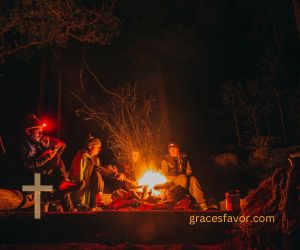
“You see, my friends, our understanding of sin, forgiveness, and the temple of God must be seen in the full light of the gospel.As the group sat around the fire, the teacher continued, his voice growing even more profound and full of clarity. The flickering light from the flames illuminated their faces, and the night air seemed to hold a deep stillness, as if the very earth were waiting for the next words that would fall from the teacher’s lips.

“You see, my friends, our understanding of sin, forgiveness, and the temple of God must be seen in the full light of the gospel. We often live as if we’re still bound by the old system, as though sin has the power to separate us from God in a way that it no longer does. But the reality is this: our sin has been dealt with once and for all.”

He paused, letting that sink in, and then he began. “Isaiah 59:2 says, ‘But your iniquities have separated you from your God; your sins have hidden His face from you, so that He will not hear.’ This was true in the old covenant. Sin created a barrier between us and God. But in Christ, that separation is gone. Hebrews 10:20 tells us that Jesus ‘opened for us a new and living way through the curtain, that is, His body.’ This means the veil that separated us from God, that kept us distant and unable to approach His holiness, has been torn through Christ’s sacrifice.”

The teacher’s voice grew softer but more intense. “In Him, we are forgiven. Past, present, and future. All sins—fully forgiven. Not by anything we’ve done, but by what Jesus has done for us. This is the essence of Hebrews 10:20. Jesus’ body, broken for us, is the curtain that was torn, granting us direct access to God. There is no longer any separation. No more sin that can keep us from Him. The work is finished, and it is perfect.”

He looked out into the group, eyes full of compassion and conviction. “But there’s more. This is not just about access to God; it’s about the transformation that occurs in us. It’s about a new way of living, and it’s about the reality of God dwelling within us. The temple, which was once a physical structure in Jerusalem, is no longer just a building. Acts reveals that the Spirit of God now dwells in us. We, as the body of Christ, have become the temple of God.”

The teacher raised his hands slightly as if gesturing to the space around them. “You are the temple of the living God. And the temple that was once in Jerusalem was a mere shadow of the true temple, which is now within you. This is why in Hebrews 9:2, the writer speaks of the earthly tabernacle—the structure where sacrifices were made—yet, we know the true tabernacle is now in heaven, and it is within us through the Holy Spirit.”

There was a pause, and the teacher allowed these deep truths to settle in. “You are not distant from God. The temple is not a place you visit. It is within you, and you carry the presence of God with you wherever you go. The old systems, the rituals, the sacrifices—none of them are needed anymore. We have access to God directly, and the Holy Spirit now resides within us, guiding, comforting, and transforming us. The power of forgiveness, the promise of His presence, and the reality of salvation are not future promises alone—they are present realities.”

One disciple, inspired and curious, asked, “But how do we live in this truth, knowing that the temple is within us? How do we embrace this reality day by day?”

The teacher smiled, acknowledging the depth of the question. “By faith. By believing what Christ has done, by resting in the truth that you are forgiven, and that God’s Spirit dwells within you. Living in that awareness transforms your thoughts, your actions, and your very identity. No longer do we need to fear the separation of sin or the condemnation of the law. We are free in Christ, and His presence is with us always.”

Another disciple added, “And this is how we can live a life that pleases God—by walking in the power of the Holy Spirit, in the knowledge that we are already made righteous through Christ’s sacrifice?”

“Exactly,” the teacher responded. “We no longer live as slaves to sin. We live as those who have been made new. Hebrews 10:10 says it plainly: ‘We have been made holy through the sacrifice of the body of Jesus Christ once for all.’ This is the foundation of our new life. It’s not about striving to be holy through our own efforts, but resting in the holiness that Christ has already provided for us.”

The teacher looked around at the group, his voice now gentle and firm. “And remember, we are forgiven in full. Past, present, and future. Your sin no longer has the power to separate you from God. The work is done. Christ is enough.”

As the night grew deeper, the group sat in reflective silence, the fire now low, casting only the faintest glow. Each person felt the weight of the teacher’s words, and each one began to embrace the profound reality that God had made a way for them to draw near—through the perfect sacrifice of Jesus, through the Holy Spirit, and through the truth that the temple of God now dwelled within them.

Their hearts were full, and the quiet peace of knowing they were forgiven, deeply loved, and eternally free settled over them like a blanket.

"No Barrier, No Separation: Embracing God's Presence Through Christ"

cherubim of glory, and the divine plan, the young ones retreated to their tents,As the elders continued their deep reflection into the mysteries of Hebrews 9, cherubim of glory, and the divine plan, the young ones retreated to their tents, carrying the truths of the day in their hearts. The elder’s voices, though quiet and thoughtful, were a steady flow of wisdom, pointing to the eternal significance of the cherubim in Scripture and the truth that no being, not even an angel, stands between the believer and God anymore.

The teacher, speaking as if unveiling the holy mysteries, turned to Hebrews 9, and the image of the cherubim guarding the way. “Remember,” he said, “that the cherubim in Genesis 3:24 were placed at the east of Eden to guard the way to the tree of life. Their purpose was to prevent humanity from returning to that access to God through works or striving. In a sense, they symbolized the barrier of sin—one that Christ has now removed.”

He continued with deep passion. “Look at Ezekiel 1-10, and you’ll see the same cherubim and the warrior angels who guard the glory of God. But in Christ, there is no need for such guardians to block the way. Jesus has made a way. Hebrews 9 brings us to the understanding that the way to God is now open to us. No angel, no guardian, no veil stands between us. The veil in the temple, torn at Jesus’ death, shows us that through His sacrifice, we now have direct access.”

The teacher paused to let the words settle in. “Isaiah 59:2 clearly states, ‘But your iniquities have separated you from your God; your sins have hidden His face from you.’ But remember Matthew 27:51—the moment Jesus died, the curtain in the temple was torn in two, from top to bottom. That curtain represented the division between humanity and God, but now, in Christ, no barrier exists. Hebrews 10:20 says, ‘By a new and living way, opened for us through the curtain, that is, His body.’ No one, not even an angel, can stand between you and God. Only Satan, the accuser, would seek to separate you from Him.”

The teacher’s voice softened as he spoke of the glorious invitation God had given through Jesus. “God, in His grace, has offered redemption, and you, my friends, have accepted it in His Spirit, in Jesus alone. No work, no ritual, no guardian, no sin can take away your standing in Christ. It is finished. You are clean.”

He quoted Mark 7:13, where Jesus rebukes those who try to make the word of God void by their traditions. “Nothing can separate you from God’s love when you accept Jesus. It is by His grace alone that you are redeemed. And remember: in Him, there is no separation.”

As the fire slowly burned down to embers, the group, inspired and deeply moved by the teacher’s words, made their way to their tents, their hearts heavy with peace, the understanding of their access to God through Christ firmly planted in their spirits.

“Come, Holy Spirit, Amen,” whispered one of the disciples, as the others echoed softly. The night air was still, and the group soon drifted into rest, their dreams filled with visions of God’s unbreakable presence with them.

In this moment, they knew—nothing, no one, no angel, no sin, could ever separate them from the love of God in Christ Jesus.

"The Way to God: Through Jesus, By the Spirit"

lifting his hands in a quiet prayer, asking for the guidance of the Holy SpiritAs the first rays of morning light bathed the campsite, the teacher rose before the group, his presence steady and full of purpose. The fire flickered as he stood, lifting his hands in a quiet prayer, asking for the guidance of the Holy Spirit. His eyes were clear and unwavering as he watched the flames dance, the deep truth of the Scriptures stirring within him.

He turned to face the group, who had gathered around the fire. Breakfast was being prepared, tea was steeping, and the group was expectantly awaiting the next lesson. The teacher’s voice, deep and powerful, broke the silence. “Your own conscience condemns you, even the saints after the cross,” he began. “But be not afraid, for in Jesus, there is no condemnation.”

The disciples shifted, sensing the gravity in his words. The teacher continued, his tone firm and compassionate. “Your conscience, which has been weighed down by sin and guilt, has been silenced through the work of Christ. It is not your conscience that condemns you, but the lies of the enemy. Look to Jesus, for He is the way, the truth, and the life. As He says in John 14:6, ‘I am the way and the truth and the life. No one comes to the Father except through me.’

He paused, letting that truth settle in. The teacher then turned to the group, speaking of the power and necessity of the name of Jesus. “Acts 4:12 affirms that ‘salvation is found in no one else, for there is no other name under heaven given to mankind by which we must be saved.’ No one, no system, no ritual can bring you to God except through the name of Jesus. Only in Him do we have access to the Father.”

The teacher stood tall as he continued, his words ringing with authority. “In Hebrews 9:8-9, we are told that the way into the Most Holy Place was not yet disclosed as long as the first tabernacle was still standing. But when Jesus came, He became the way. Hebrews 10:20 tells us that Jesus opened the way for us by a new and living way through the curtain, which is His body.”

One of the younger disciples, overwhelmed by the depth of the teaching, asked, “What does it mean for us now, after Jesus has opened the way?”

The teacher smiled gently, his voice filled with the knowledge of truth. “It means that we are no longer separated from God. Hebrews 9:10 speaks of the old system—rituals and sacrifices that could never truly cleanse the conscience. But now, through Jesus’ sacrifice, we are cleansed, and the veil is torn. We have direct access to God, and we are the temple of His presence.”

The teacher looked around at the group, his gaze softening. “1 Corinthians 3:16 tells us, ‘Don’t you know that you yourselves are God’s temple and that God’s Spirit dwells in your midst?’ And 1 Corinthians 6:19 says, ‘Do you not know that your bodies are temples of the Holy Spirit, who is in you, whom you have received from God?’ God’s Spirit dwells in you, and you are His holy temple. You no longer need to go to a physical building to encounter Him. You carry His presence wherever you go.”

The teacher’s voice grew stronger as he spoke of the significance of Jesus’ work. “Before Jesus, the way to speak to God was not yet made clear. The sacrificial system, the temple rituals—they were all temporary. But now, through Jesus and the Holy Spirit, the path to God is open, and it is in Him that we find redemption. Hebrews 9:10 says, ‘These are only a matter of food and drink and various ceremonial washings—external regulations applying until the time of the new order.’ The old order was temporary. The new order, established through Jesus, is eternal.”

The teacher then turned to Genesis 3:11, where Adam and Eve first realized their sin and felt ashamed before God. “In the garden, they hid because of their sin. But in Christ, there is no shame. There is no separation. He has covered our sin, and we stand before God, redeemed and whole.”

He looked at the group, the truth of God’s redemption resonating in his heart. “Galatians 3:23-25 says, ‘Before this faith came, we were held in custody under the law, locked up until the faith that was to come would be revealed. So the law was our guardian until Christ came that we might be justified by faith.’ The law was a tutor, pointing to Christ. But now, through Jesus, the way is clear, and we are justified by faith, not by works.”

The teacher’s voice softened, yet the weight of his words carried the full power of Scripture. “Isaiah 40:3-5 speaks of a voice crying in the wilderness, preparing the way for the Lord. And in Luke 3:3-6, John the Baptist fulfilled this prophecy, making a way for the people to return to God. But now, through Jesus, the way is made for everyone. The path to God is direct and open to all who will believe.”

The teacher’s final words rang out, full of finality and hope. “In Jesus, the way to God is made clear. No more barriers, no more ritual, no more separation. Through Him, we are redeemed. Through Him, we are made new. Through Him, we have the Holy Spirit, and through Him, we are the temple of God.”

As the teacher finished, a deep, sacred silence fell over the group. They felt the weight of his words and the immense privilege of the access they had to God through Jesus. Their hearts were filled with peace, knowing that the path to God was no longer a distant dream but a present reality.

After a moment of stillness, the group whispered in unison, “Come, Holy Spirit, Amen.” With that, they were ready to continue their journey, knowing that their path was secure, their redemption assured, and the Spirit of God was with them, always.

"Eternal Redemption: Walking in the Finished Work of Christ"

If you declare with your mouth, ‘Jesus is Lord,’ and believe in your heart that God raised him from the dead, you will be saved.”The group walked together, their steps light but thoughtful, the morning air crisp around them as they neared the retreat. Their conversation flowed freely, not just about Hebrews but also about the many Scriptures that affirmed the profound truths of their faith. As they walked, the words of Romans 10:9 echoed in their hearts, “If you declare with your mouth, ‘Jesus is Lord,’ and believe in your heart that God raised him from the dead, you will be saved.” Their confidence was unwavering, for they knew that salvation was secure in Jesus alone.

One of the younger disciples spoke up, “It’s amazing to think that no matter what, we have access to God. Hebrews 10:20 says, ‘by a new and living way opened for us through the curtain, that is, His body.’ The path has already been made for us, and it’s through Jesus.”

Another voice added, “And we know there’s no rebuke for us based on our own works. It’s all about Jesus—what He did, not what we do.” The teacher smiled at that, acknowledging the truth of their words. “Exactly. The law no longer condemns us. Hebrews 9:12 says that Jesus entered the Most Holy Place once for all by His own blood, thus securing eternal redemption.”

A deeper understanding began to dawn on the group. One of the elders, thoughtfully, added, “And that’s why we can be so confident in 1 John 2:2—that Jesus is the atoning sacrifice for our sins, and not only for ours but for the sins of the whole world. His sacrifice covers all.”

As they walked along the forest path, the truth of Romans 4:8 seemed to echo in the air: “Blessed is the one whose sin the Lord will never count against them.” The past was forgiven, and the present was free from the weight of guilt. There was no condemnation, for Christ had taken it all.

Another disciple shared their wonderment, “Romans 5:13 says that before the law was given, sin was in the world, but it wasn’t charged against anyone’s account until the law came. And now, in Christ, there’s no charge of sin against us—only redemption.”

“Yes,” the teacher interjected. “Through Christ, we have perpetual redemption. It’s not just a one-time thing. It’s not something that we need to constantly ask for again. Hebrews 9:26 says that Jesus ‘appeared once for all at the culmination of the ages to do away with sin by the sacrifice of Himself.’ Once and for all—He took away our sin. No need to ever repeat that work.”

One of the younger disciples, their eyes full of wonder, added, “It’s incredible that this applies to all sin, past, present, and future. Hebrews 9:28 says, ‘so Christ was sacrificed once to take away the sins of many; and He will appear a second time, not to bear sin, but to bring salvation to those who are waiting for Him.’ Our sin is not just covered—it’s completely taken away.”

The group moved forward, the truth of Hebrews 10:2 deepening within them: “For the worshipers would have been cleansed once for all, and would no longer have felt guilty for their sins.” There was no guilt, no shame, no need for ongoing sacrifices. Jesus had finished the work.

As the retreat loomed into view, groomed and stately in the distance, one of the disciples reflected, “Our faith, our identity, and our purpose are all secured in Christ. Everything we are—everything we do—is rooted in what He has already accomplished. It’s all about faith in Him, and living out our purpose as His redeemed people.”

“Faith, identity, and purpose,” the teacher repeated, nodding. “That is the life of the redeemed. No longer slaves to sin, but heirs to the kingdom. The path to God is open, and our redemption is secure. It’s eternal, never-ending, and ever-present. Through Christ, we are made new.”

As they arrived at the magnificent retreat, a deep sense of peace and gratitude settled over the group. The beauty of the place reflected the beauty of their redemption—gracious, full, and complete. The lesson was clear: no matter what, no matter where, they were secure in the eternal redemption given to them by Jesus.

Together, they looked toward the horizon, hearts full of faith, resting in the truth that the way to God was wide open, and their redemption, given once and for all, would carry them forever.

"Rest and Reflection: Embracing the Gift of Eternal Forgiveness"

‘Jesus forgave you all sin—past, present, and future—for the asking, and it was done only once.'”The teacher, ever thoughtful, gave the group a well-deserved moment of rest. “Take some free time, find a bunk, and settle in,” he instructed, his voice steady and kind. “We’ll meet in the great hall at 1 p.m. until then, think on these things, especially the most powerful truth: ‘Jesus forgave you all sin—past, present, and future—for the asking, and it was done only once.'”

As the teacher’s words hung in the air, the group dispersed with excitement and anticipation. Some raced ahead to claim the best bunks, while others lingered in small groups, each absorbed in lively conversations, their hearts eager to discuss the weighty truth they had just received. This time, this moment of quiet reflection, was precious—each person sought out a quiet corner, journal in hand, to capture their thoughts, or perhaps posted their questions as they meditated on the depth of God’s forgiveness.

It was as though the atmosphere itself pulsed with a renewed sense of purpose and understanding. The simplicity of Jesus’ offer—once, for all sin—had stirred each of them to a deeper place of faith and gratitude. Some wrote down verses that had caught their attention, like Hebrews 10:10, which reaffirmed that “we have been made holy through the sacrifice of the body of Jesus Christ once for all.” Others reflected on their past struggles and the significance of knowing that Jesus had already taken care of it. No guilt, no shame, no condemnation.

In the stillness of the retreat, as the clock moved closer to the appointed hour, discussions flowed freely. Some asked questions—”How does this eternal forgiveness change the way we live?”—while others questioned the implications of being so fully loved by God, wondering how such a simple act could have such vast eternal power. A few discussed the power of God’s grace in their lives, while others quietly marveled at how this gift of forgiveness felt both overwhelming and liberating.

Their hearts were full as they filled the time with personal reflection, journaling, and shared moments of discovery. The spirit of the gathering was one of lightness, freedom, and joy. The truth of Jesus’ sacrifice was not only an intellectual understanding for them—it was sinking deep into their hearts, bringing a fresh revelation that would stay with them long after they left the retreat.

As the time passed, the group became energized, preparing to meet the teacher in the great hall. Their minds were full of thoughts on how this one-time, eternal forgiveness could transform their lives, how it would shape their identity and their relationship with God moving forward. One thing was clear: they were all growing in their understanding of the grace that had already been given, and it was changing them.

At 1 p.m., they would gather once again, ready to discuss what they had reflected upon. But for now, they enjoyed the precious moment of rest, knowing they were secure in the eternal forgiveness of Jesus. The retreat was a place not just for learning, but for rest in the truth that they were forever loved, forever forgiven, and forever free.

"Faith, Forgiveness, and the Fullness of Redemption"

“Today, I wish you to understand,” the teacher began, his voice commanding yet gentle,The group had arrived early, a sense of eager anticipation filling the room as they settled into the soft lounges and day beds, the light of the afternoon sun streaming through the windows, casting a peaceful glow over the gathering. On one side of the great hall, a table of cold delights—fruits, cheeses, breads, and refreshments—was laid out, inviting them to partake in simple sustenance before the deeper feast of wisdom and truth. The room hummed with quiet conversations, but as the teacher walked in, a stillness settled, all eyes turning toward him.

“Today, I wish you to understand,” the teacher began, his voice commanding yet gentle, pulling the group’s attention fully into the present. He took a moment, letting the weight of his words settle. “Hebrews 9:12-14 and 9:15 tell us that Jesus entered the Most Holy Place once for all, not by the blood of goats and calves, but by His own blood, thus obtaining eternal redemption for us. His sacrifice was complete, sufficient, and final.”

A hush fell over the group as the teacher continued, “Consider what this means. In Genesis 2:17, God told Adam that in the day he ate from the tree of knowledge, he would surely die. The penalty for sin was death. But in Romans 6:23, we are reminded, ‘For the wages of sin is death, but the gift of God is eternal life in Christ Jesus our Lord.'”

The teacher paused, letting these truths echo in their minds before he went on. “Hebrews 9:18-22 speaks of how the first covenant was established through blood, but Jesus brought about the new covenant with His own, once-for-all sacrifice. No more animal blood, no more rituals—only faith in Jesus.” He let these words sink in deeply. “Romans 14:23 makes it clear that ‘everything that does not come from faith is sin.’ And James 4:17 says, ‘Anyone, then, who knows the good they ought to do and doesn’t do it, sins.'”

Hands were raised, eager to grasp the depth of what was being taught. The teacher gestured toward them with a slight nod, continuing, “In Hebrews 4:16, we are told to approach the throne of grace with confidence, knowing that through Jesus, we have bold access to God. And in Hebrews 9:14, it says, ‘How much more then, will the blood of Christ, who through the eternal Spirit offered Himself unblemished to God, cleanse our consciences from acts that lead to death, so that we may serve the living God!’”

As the teacher spoke, the group listened intently, absorbing each line, their hearts open. “In Exodus 29, the consecration of the priests was done with blood, marking them as holy and set apart for God. But that was only a shadow of what was to come. In Leviticus 23:37-38, we see the festivals of God, commands that pointed toward a greater fulfillment in Christ. Ezekiel 46:6 and 2 Chronicles 7:5 speak of offerings and sacrifices, but these rituals were never meant to be the end, only a preparation for the perfect offering that was Jesus.”

The teacher’s tone grew more intense. “Jesus came, not to abolish the law, but to fulfill it. He is the perfect High Priest, the final and eternal sacrifice. Hebrews 10:2 says that ‘if it had been possible for the blood of bulls and goats to take away sins, they would not have been needed anymore.’ But Jesus’ sacrifice is different. It is the only one we need.”

The teacher walked among the group, making eye contact with each person, ensuring the gravity of the message was understood. “Faith in Jesus, not works, is the key to the new covenant. It’s not about rituals or what you do—it’s about who you trust. Romans 14:23 reminds us that whatever is not from faith is sin. It is faith in the finished work of Jesus that brings us to God, not our efforts, not our deeds.”

“Leviticus 4:1-3, 23:27, and so many other scriptures point us to the reality of sin and atonement, but the ultimate atonement is found in Jesus. Jesus Himself, in John 14:6, said, ‘I am the way, the truth, and the life. No one comes to the Father except through Me.’ There is no other way—only Jesus.”

The room was quiet now, each person reflecting deeply on the profound truth they were hearing. The teacher’s words had penetrated to their hearts, laying bare the simplicity yet depth of the gospel—the forgiveness of sins once and for all through Jesus.

“Through Jesus,” the teacher continued, “we are offered eternal redemption. It’s done. It’s finished. Hebrews 9:12 tells us that He entered once and for all to secure this redemption. Hebrews 10:2-10 reminds us that we no longer need sacrifices or offerings because Jesus’ sacrifice was the final one, perfect and complete.”

The teacher paused and let that thought settle in their hearts. “You don’t have to strive, you don’t have to work your way to God. Jesus has already made the way, and by faith, you simply walk in it.”

With that, the group sat in silence, the enormity of the message fully realized. They had come to understand that through Jesus, all had been made right. They had been set free from the law, from the works of their hands, and now, in the grace of Jesus, they were given access to God forever.

"Living in the Fullness of Christ's Sacrifice: Reflecting, Resting, and Rejoicing"

The time had come to delve into Hebrews 10, and as always, As the teacher stood before the group, the afternoon sunlight cast warm beams through the windows, illuminating the space filled with eager listeners. The time had come to delve into Hebrews 10, and as always, the teacher was ready to unpack its depth, bringing new life to the familiar passages.

He began with Hebrews 10:10, reminding them of the monumental truth: “We have been made holy through the sacrifice of the body of Jesus Christ once for all.” The words hung in the air, each person feeling the weight of their significance. Then, he continued, “By this one sacrifice, Jesus perfected forever those who are being made holy” (Hebrews 10:14).

“Do you see?” he asked, his voice gentle yet firm. “It is finished. This is the power of the cross—Jesus has done it all. There is no more need for sacrifice, for atonement. Jesus’ sacrifice is the final and perfect offering, once for all. This is the truth of our redemption.”

The teacher took a moment to share a song, one that had been passed down for generations in the early church—a song of freedom, of grace, and of victory over sin. The group joined in, their voices rising in harmony, filling the room with praise. The simple, powerful melody echoed the words of Hebrews 10:19-22, which say, “Therefore, brothers and sisters, since we have confidence to enter the Most Holy Place by the blood of Jesus, by a new and living way opened for us through the curtain, that is, his body… let us draw near to God with a sincere heart and with the full assurance that faith brings.”

As the song came to a close, the teacher shared a poem, one that he had written during his own journey of understanding the depth of Christ’s sacrifice.

“No more need for endless striving,
No more guilt, no more denying.
The path is clear, the veil is torn,
In Christ alone, we’re reborn.”

“Once for all, the price is paid,
In the blood of Christ, we’re saved.
No condemnation, no more fear,
In His grace, we now draw near.”

The group, moved by the song and the poem, sat quietly for a moment, letting the beauty of the words sink in. The teacher’s voice broke the silence. “This is the life we are called to live. Not one of striving, not one of fear, but one of confidence in what Jesus has already accomplished for us. The sacrifice is complete. We stand before God, washed clean, and clothed in Christ’s righteousness.”

With that, the group was dismissed for free time, the mood light but reflective. Some made their way to the showers, eager to refresh themselves after the deep teachings. Others chose to take a nap, reflecting on all they had learned. For those with energy to spare, the lake called with its calm waters and inviting dock. Some ventured out onto the lake in canoes, paddling gently through the stillness of the water, while others relaxed on the shore, enjoying the peaceful surroundings.

As they spent their time in rest and recreation, their conversations still lingered on the Scriptures they had discussed—Hebrews, Romans, Proverbs, and Corinthians. The truths of these sacred words had taken root in their hearts, and their reflections continued, both during the quiet moments of solitude and the conversations shared with one another.

One young disciple, while paddling on the lake, spoke to a companion. “You know, I’ve been thinking about 1 Corinthians 6:19-20, where Paul says, ‘Do you not know that your bodies are temples of the Holy Spirit, who is in you, whom you have received from God? You are not your own; you were bought at a price.’ It’s like Hebrews 10:19-22—because of Jesus, we are now the temple of the Holy Spirit. And that changes everything.”

Another responded thoughtfully, “Exactly. And it ties back to Romans 12:1—’Therefore, I urge you, brothers and sisters, in view of God’s mercy, to offer your bodies as a living sacrifice, holy and pleasing to God—this is your true and proper worship.’ Our worship, our lives, should be a reflection of the freedom we’ve been given through Jesus. Not because we have to, but because we get to.”

Others gathered on the shore, their conversation drifting from Hebrews to Proverbs 3:5-6—“Trust in the Lord with all your heart and lean not on your own understanding; in all your ways submit to Him, and He will make your paths straight.” One person shared how these words connected to the idea of living by faith in Jesus, not by works or human effort.

The beauty of the retreat and the simplicity of the teachings brought a deep sense of peace and renewal to the group. They were learning not just about theology, but about living out the grace of God in their daily lives—through rest, through reflection, and through the quiet joy of knowing that their redemption was secure, now and forever.

As the day wound down, they gathered again for supper, refreshed and ready for more discussions. The teacher, smiling at their bright faces, knew that the seeds of truth had been planted deeply in their hearts. And though the retreat would soon come to an end, the lessons of faith, forgiveness, and the fullness of Christ’s sacrifice would continue to grow and bear fruit in their lives.

"Living in Grace: Moving Beyond Temptation to the Fullness of Christ"

“Sin,” he said, “is never going to be about resisting temptation.” As the evening unfolded, the group gathered around the fire, the aroma of freshly baked bread and hearty meals from the outdoor forno oven filling the crisp evening air. The warmth of the flames flickered, casting soft shadows over their faces as they found their places around the fire. Some chose the hall, but most decided to sit in the quiet intimacy of the outdoors, eager to continue the conversation from earlier in the day.

The teacher, with a reflective yet authoritative tone, began, “Sin,” he said, “is never going to be about resisting temptation.” The group grew quiet, as these words hung in the air, challenging their preconceived notions. “Resisting temptation—that’s the law. And you are no longer under the law. In Jesus, you are under grace.”

He paused for a moment, letting the weight of his words sink in. “If we make it about resisting temptation, then we’ve misunderstood the message. Sin is not about struggling to hold back desires or fighting urges. Sin is about not moving forward in our walk with Jesus, about remaining stuck in the old patterns. It’s about not embracing the grace He’s already given us.”

A few eyes widened, as the teacher continued, his voice steady and resolute, “It’s about starting to live or, sadly, continuing to die. If you think it’s about just avoiding sin, then you’re still living under the law. Grace is not about measuring up, it’s about living out the truth of what Jesus has done for you. It’s about saying, ‘I am forgiven. I am free.’ And with that freedom comes the invitation to walk forward.”

The fire crackled, and the teacher continued, “As you will think in your heart, so it will be. This is why your thoughts matter so much. How do you see yourself? How do you see Jesus? You must speak carefully, for your words are the reflection of what’s truly inside you. If you believe the lie that you’re still bound by sin or the law, then you’ll live as though you’re still in chains. But if you believe the truth of grace, you’ll walk in freedom.”

The group was deeply engaged now, each person feeling the tension between old patterns of thought and the fresh understanding of grace that the teacher was bringing to light. “This is why,” the teacher continued, “I want to take you through Hebrews 10. Let’s look deeper, together, at what it really means to be free.”

He began his commentary on Hebrews 10, the words flowing with precision and insight, touching on themes they had been discussing over the past days but now delving into them with a more expert-level understanding.

“Hebrews 10:1 says, ‘The law is only a shadow of the good things that are coming—not the realities themselves.’ The law was always meant to point us to something greater. It was never meant to be the end-all. Jesus is the fulfillment. He is the substance, the reality.”

He turned to Hebrews 10:10 and explained, “We are sanctified through the offering of the body of Jesus Christ once for all. This is the perfect and eternal sacrifice. There is no need for repetition. This is finished. You are free. Jesus did it all.”

“Now,” the teacher continued, pausing to look each person in the eyes, “ask yourselves: if sin is no longer about resisting temptation, but about walking in the fullness of grace, what does that mean for your life? For your choices? For your relationships? If Jesus has dealt with sin once and for all, then living out of that grace is the only thing that makes sense. It’s time to move forward, not backward.”

“Grace,” he continued, “is not about avoiding temptation—it’s about living the new life that Jesus has made available to you. Hebrews 10:22 calls us to ‘draw near to God with a sincere heart and with the full assurance that faith brings.’ That’s what we’re called to do—live out of the fullness of Jesus’ sacrifice, knowing that we can boldly approach the throne of grace.”

The teacher’s voice softened. “You are not the sum of your past mistakes. You are not bound by your failures or shortcomings. You are free in Christ, and that’s what you’re called to live out. If you are truly in Christ, temptation no longer has the hold on you that it once did. Sin no longer defines you. Jesus does.”

Then, turning to the group with a warm smile, the teacher issued a challenge: “Before you go to bed tonight, write a parable or a poem that reflects your understanding of the truth we’ve discussed today. In the morning, we’ll share them with each other. These exercises will help you grasp the fullness of the freedom you have in Christ and how you are to live it out.”

The group nodded, some already pulling out their journals, ready to put pen to paper. The elders, ever eager to learn and grow, began to dive deeper into discussions amongst themselves. Their conversations turned into expert-level discipleship, examining the deeper theological implications of the freedom they had in Christ. They marveled at how these truths from Hebrews, Romans, and Corinthians were coming together in ways that were both powerful and transformative.

As the night wore on, the fire burned low, and the group quietly reflected on the teacher’s words. The challenge to live out of grace, to stop resisting temptation and instead step fully into the freedom that Jesus offers, lingered in their minds.

The day had been rich with teaching, and as they each retired for the night—some to sleep, some to journal, and others still deep in conversation—their hearts were filled with a renewed sense of purpose. They had begun to grasp the fullness of what it meant to live in grace, and they knew that this truth would continue to transform them as they walked with Jesus in the days ahead.

The challenge had been set, and the dawn of a new understanding was already beginning to break in their hearts.

"Perpetual Peace: Walking the Path of Grace, Living in the Presence of God"

“There is only one place and one time for you now,”The morning sun streamed through the windows of the great hall, casting a warm glow over the group as they gathered after breakfast. The teacher, standing before them, radiated a quiet authority, as if the words about to come were not just lessons, but life itself. The room fell silent, each person feeling the sacredness of the moment.

“There is only one place and one time for you now,” the teacher began, his voice steady and commanding. “The time is now, and the place is here—in the presence of God. You know your heart. You know God’s desire for you. You are already part of something eternal, a journey that has no end. Seek peace. Renew. Enter the Holies of Holies.”

He paused, letting the weight of these words settle in the hearts of the group. “This is the path you are on. The time you are given is perpetual, lasting throughout all eternity. The work has been done. There is nothing left to strive for. So now, seek to live fully in that peace. Commune with God and His Spirit. Talk to Him. Accept the fullness of the Holy Spirit, and be renewed in the Word.”

The teacher’s words seemed to lift off the page of Scripture, alive and real in the moment. “This is a great journey we are on—one that began with Jesus, and one we walk together. We’ve been called to stay the path, to live in the reality of what has already been accomplished. You see, Hebrews 9 and Hebrews 10 remind us that sin is not the issue anymore—the cross dealt with that.”

He turned to Hebrews 10 and spoke with clarity: “If the law had been enough, it would have ceased to exist. Think about that. If the law had worked—if it could truly change the heart—it would have been finished. But it hasn’t, and it never could. The law only pointed us toward the need for something more, something greater. That’s why Jesus came.”

The group sat quietly, digesting the depth of this truth. The teacher gave them a moment to reflect, then continued: “But now, through Christ, we have perpetual peace. It’s not about works, not about striving to keep the law. It’s about living in the grace and freedom that Jesus has already secured for us. So, what do you think is meant by this? What does it say to you that the law would have ceased to exist if it had worked?”

Hands went up, eager to contribute. One student spoke first, “It means the law was never the final answer, that we were always meant for something greater. The law couldn’t give us peace or change our hearts—it pointed to Jesus as the solution.”

“Yes!” the teacher affirmed, nodding in approval. “The law pointed to Jesus, the perfect sacrifice. He is the one who brings lasting peace, the one who fulfills what the law could never do. Sin is not the issue. The law could never make you right with God. But Jesus, through His once-for-all sacrifice, made you perfect in God’s eyes.”

The teacher’s voice softened, almost as though he were speaking directly to each person’s soul. “This is why you must stay the path. Let nothing cause you to limp through life, thinking you’re not good enough or not worthy of God’s grace. No, in Jesus, you are made perfect. Rest in that.”

He then pointed to Hebrews 11, where the author speaks of the faith of those who came before. “Now, as we walk this path, we are surrounded by a great cloud of witnesses. Just as they walked by faith, we too are called to walk by faith. Faith in Jesus, faith in His grace, faith in the assurance that we have access to God’s presence at any moment.”

The teacher paused and looked around at the group. “So, today, take time to reflect. Think on these things, and let nothing cause you to limp through life. The path is open to you now—don’t let anything hold you back. Stay the path, walk in grace, and live in the peace that Jesus has already given you.”

He gave them a few moments of quiet reflection. The room fell into a comfortable stillness, as each person internalized the profound truth of what had just been said. Then, with a gentle smile, the teacher added, “You will face challenges, no doubt, but remember this: the law is not the path. Jesus is. Stay the course. You will be tempted to doubt, tempted to return to the old ways of thinking, but remember who you are in Christ. You are free. You are loved. You are made perfect. Stay the path.”

With that, the group dispersed, taking time to reflect quietly on Hebrews 10, the words from the teacher still echoing in their minds. Some began journaling, others meditating, and some praying softly, their hearts filled with a new resolve. This was not just a study of Scripture—it was an invitation to live in the fullness of grace. And they were all walking it together.

"The Challenge of Faith: Understanding Hebrews 12 and Living the New Birth"

What does it mean to live by faith? What does it mean to be truly born again, to have your heart changed by the power of God?”After a satisfying lunch, the group gathered in the great hall, energized and ready to continue their deep dive into the teachings of Hebrews. The room buzzed with anticipation as the teacher began, “Today, we are going to look at Hebrews 12 and ask ourselves some important questions: What does it mean to live by faith? What does it mean to be truly born again, to have your heart changed by the power of God?”

The teacher paused for a moment, allowing the group to settle in. “Let’s begin with a foundational truth,” he said, his voice full of conviction. “Belief and reception are at the heart of our walk with Jesus. In order to fully understand Hebrews 12, you need to understand that to believe in Jesus is to receive His life in you.”

The group listened attentively as the teacher referenced Matthew 11:15, “Whoever has ears, let them hear.” “Jesus is calling us to understand something beyond the physical. He is calling us into the spiritual, into the transformation of our hearts. When you hear the message of Christ, it’s not just for your mind; it’s for your heart, the deepest part of who you are. The way you receive that message is the way you’ll live it out.”

One student raised their hand, and the teacher nodded in recognition. “What does it mean, really, to be born again? And how does Hebrews 12 fit into that?”

The teacher smiled, acknowledging the deep question. “Great question. Being born again is a heart change. It’s not about intellectual assent or understanding, though those things are important. It’s about a deep, inward transformation that the Holy Spirit brings. In Matthew 11 and Luke, Jesus calls us to come to Him and find rest for our souls. He offers us a new heart—a heart that is alive to God, fully capable of living out His will. To be born again is to receive the Spirit and be made new.”

The group began discussing, reflecting on what they had been taught. Scriptures flew back and forth across the room as the group dove deeper into the idea of a changed heart, a rebirth that happens when a person truly encounters Jesus.

The teacher continued, “This concept isn’t new to Hebrews. It is echoed throughout the Bible. In Acts, we see the apostles calling people to repentance, to receive the Holy Spirit. In Exodus, God promises a new heart for His people. In Deuteronomy, the covenant is renewed and reiterated—God desires a relationship, one where our hearts are transformed. This is not about following rules, but about receiving a new way of living, a new identity in Christ.”

Another student chimed in, referencing 1 Kings and Genesis, “But how do we reconcile the Old Testament law with this new birth? Isn’t it still about obeying the law?”

The teacher paused, looking out across the room. “The law was always meant to point us to the need for a Savior. It was never about being good enough on your own; it was a tutor to show us that we needed Jesus. Hebrews 12 reminds us that we have been disciplined, but that discipline is a part of God’s fatherly love for us. It’s not about condemnation. We are no longer under the law, but under grace, and this grace changes everything.”

He looked back at them, eyes shining with the truth of his words. “The challenge for each of you today is this: Believe—believe that Jesus has made a way for you to be born again, to receive His new life. But it’s more than believing in your mind; it’s a belief that changes your heart. Receive His life. Let your heart be transformed. This is the power of grace.”

The group, now fully engaged, discussed the implications of grace, the transformation of the heart, and how to live out this new birth. What did it look like practically, to walk in this new heart? How could they stop living under the law and fully embrace the freedom of grace?

“Let’s not just talk about it,” the teacher encouraged. “I want you to think about where you’re at in your own walk. Are you truly living as someone who’s been born again? Is your heart truly changed? What in your life needs to be transformed in order to walk out Hebrews 12?”

He then issued the challenge: “Tonight, as we gather again for supper, I want you to reflect on this question: What does it mean for you to be born again in your heart, in your actions, in your life? What does it mean to receive this new life in Christ? How can you live that out?”

The room became quiet as the group took a moment to reflect on these challenging questions. As the discussions continued, each person began to make deeper connections with the Scripture and their personal walk with Jesus. It was clear that they were beginning to understand not just the intellectual truth of salvation, but the deep, life-changing reality of being born again.

The teacher smiled, sensing the depth of the moment. “Remember this—when your heart is changed, everything changes. And that’s the point of Hebrews 12: it’s about receiving the discipline of the Lord as a father, being refined, and walking in the newness of life He offers. The law may not work, but grace does. It’s through grace that your heart is truly changed, and from that, you live a life that reflects Jesus.”

With the afternoon drawing to a close, the group was sent off with one last instruction: to reflect deeply, to ponder what it meant to be born again, and to consider how they could each live that out as they continued their journey in Christ. A new chapter was unfolding for them, one that would continue with their reflections and discussions around supper.

As they broke for the day, each person had a renewed sense of purpose and a deeper understanding of their identity in Christ—alive, transformed, and free in grace.

"Faith in Action: Living What We Believe"

Tonight, you will each stand before the group,” As the sun began to set, the group gathered for supper—an activity that encouraged creativity, as each person made their own pizza, choosing from a variety of toppings. The air was filled with the savory scent of baking dough, but the real feast had already begun. Teacher, in his calm yet commanding way, invited each member of the group to share their reflections on the journey so far.

“Tonight, you will each stand before the group,” he said. “And share what you’ve learned, what you understand, and what has touched your heart. This is not just about knowledge; it’s about living out what we’ve talked about. Faith is power, and hope abounds.”

One by one, the group stood and recited their thoughts, each person reflecting on their understanding of the teachings, the Scriptures, and how their own walk with Jesus was changing. The first person shared from 1 John 5:4, declaring, “For everyone born of God overcomes the world. This is the victory that has overcome the world, even our faith.” Their voice was steady, confident, reflecting a newfound conviction.

Another person shared from John 20:25-29, where Thomas declares, “Unless I see the nail marks in His hands and put my finger where the nails were, I will not believe.” But Jesus responds, “Because you have seen me, you have believed; blessed are those who have not seen and yet have believed.” The speaker paused, their eyes bright with the realization: faith is not about sight—it is about belief, about trusting without seeing.

The teacher nodded thoughtfully after each reflection, offering quiet affirmations. “Faith,” he said, “is the power that fuels our walk with Jesus. As Hebrews 11:6 says, ‘Without faith, it is impossible to please God.’ It’s not just a belief in something, it’s the thing that makes everything possible in your life. Without it, you cannot move forward in the path you’ve been called to.”

Hope, the teacher continued, “is the unwavering companion to faith. While faith moves mountains, hope sustains us when we cannot see the mountain top. Hope is the Word, and it is steadfast. It is rooted in the promises of God, in His unchanging character.” He quoted Hebrews 6:19: “We have this hope as an anchor for the soul, firm and secure.”

The students nodded, some reflecting quietly on these truths. Faith and hope were not abstract concepts—they were daily tools for living, for standing firm in Christ.

“See in your heart to see with your eyes,” the teacher added with a smile. “This is the key. You must first believe with your heart before you will see with your eyes. This is how the Kingdom of God operates.”

After each of the eleven had shared, the teacher spoke to the group once more. “What you’ve shared tonight is beautiful. But now, I’m going to challenge you all: Do not stay by the fire alone. Don’t get comfortable with what you know. Don’t let it just be something you talk about tonight or tomorrow. Practice your faith. Live it out before you need it. In the days ahead, you will encounter challenges—opportunities for your faith to grow and to be exercised. You must practice before you might really need it.”

He looked over the group, seeing both puzzled and knowing expressions. “What do I mean by practice?” he asked. “It’s simple: don’t wait for the ‘big moment’ to step out in faith. Practice your faith in small moments, in ordinary situations. Speak your faith, act on your faith, and in doing so, you will strengthen it. And when the greater tests come, you will be ready.”

The group sat in silence for a moment, the weight of the challenge sinking in. The teacher, sensing their readiness, concluded, “In the morning, we’ll gather and reflect on how you’ve practiced your faith. Each of you will share how you stepped out in trust—how you put your faith into action, no matter how small it seemed.”

After a long pause, he added softly, “This is the heart of discipleship, the heart of walking with Jesus: Faith, hope, and practice. They must be lived, not just spoken. Tomorrow, we will hear your stories. Don’t wait for tomorrow to start.”

With that, the evening’s discussion tapered off, and the group shared quiet conversations around the fire, each person meditating on what they had heard. As they went to bed, their hearts were full—full of the challenge, full of the possibilities that practicing their faith could bring.

And as the teacher had urged, they went to sleep thinking about how they could live out their faith in the morning, in the hours ahead, ready to face the day, prepared to step forward on the path of grace.

"Living by Promise: Understanding Hebrews 13 and the Power of Faith"

“How did you practice your faith yesterday? What did you do to live it out?”The morning sun filtered softly through the trees as the group gathered in the great hall for breakfast, the room filled with the aromas of fresh fruits, scones, cereals, and savory meats. The table was spread with abundance, a fitting start to a day of reflection and learning. The teacher, standing at the head of the table, smiled and asked, “How did you practice your faith yesterday? What did you do to live it out?”

A gentle murmur spread through the group as each person reflected on their day. One by one, the group shared their experiences—small acts of kindness, moments of trust in God when faced with uncertainty, and times when they stepped out in faith, not knowing exactly how it would turn out but trusting God to guide them.

The teacher listened attentively, affirming their stories and then, with a subtle shift, said, “Now, let’s continue our journey through Hebrews. Today, we’ll look at Hebrews 13 in light of the entire book, and we’ll bring in key scriptures that help illuminate its meaning.”

He paused for a moment, ensuring that the group was ready for the depth of the discussion to follow. “Hebrews 13 is all about living out the faith we’ve discussed over the last few days—it’s about practical, everyday living. It’s about love, hospitality, contentment, and trust in God’s provision. It brings everything we’ve learned into real-life action. We are reminded of the importance of our actions, our conduct, and our relationships, and how they reflect our faith in Jesus.”

The teacher opened his Bible and began to summarize, drawing from Hebrews 13:1-2, “Let mutual love continue. Do not neglect to show hospitality to strangers, for thereby some have entertained angels unawares.” He smiled, making eye contact with those around the table. “This verse calls us to live out our faith in everyday moments, showing love and kindness to others, especially those we may not know. Love is a powerful way to practice our faith.”

Next, the teacher transitioned to Hebrews 13:5-6, where the writer urges believers to be content with what they have, knowing that God will never leave nor forsake them. “This is a crucial part of living by faith. We are called to trust in God’s provision, even when the world around us tells us to chase after more and more. Hebrews 13 reminds us that we have everything we need in Christ. Contentment is not found in circumstances but in knowing God’s presence and promises.”

He continued, adding, “Now, let’s connect this to other key scriptures that reinforce the message of Hebrews. Romans 8 speaks of the power of the Spirit in us, enabling us to live by faith and to overcome the challenges of life. Romans 5:4 reminds us that perseverance produces character, and character leads to hope, and hope does not disappoint. This is a cycle of growth, a continual process that happens when we live by faith.”

The group listened intently as the teacher linked these verses together. “Matthew 11:15 says, ‘Whoever has ears, let them hear.’ In other words, the call to faith is clear, but are we listening? Are we truly hearing what God is saying to us?”

He moved on to Hebrews 11:1, a verse that has become known as the “faith chapter”: “Now faith is the assurance of things hoped for, the conviction of things not seen.” The teacher paused, allowing the weight of this truth to settle on the group. “Faith is not based on what we can see. It is the confidence that God will fulfill His promises, even when we cannot yet see the full picture.”

The teacher’s voice grew deeper as he continued, “1 Peter 2:24 reminds us that ‘by His wounds, you have been healed.’ Healing is part of the promise we receive through Jesus. It is not just spiritual healing but wholeness in every area of life. Ephesians 1:19-20 shows us the immeasurable greatness of God’s power in us, a power that raised Jesus from the dead. That same power is available to us, to live by faith and walk in His promises.”

The group was quiet, deep in thought as the teacher moved to another powerful scripture: John 6:63. “It is the Spirit who gives life; the flesh is of no help at all. The words that I have spoken to you are spirit and life.” The teacher emphasized, “We live by the Spirit, not by our own strength. It is His power in us that enables us to walk out this faith, to live by His promises and not by what we can do on our own.”

Finally, he shared 2 Kings 6:15-20, where Elisha prays for his servant’s eyes to be opened to see the angelic army surrounding them. “What you see with your physical eyes is not the full reality. There is a spiritual realm in which God’s power is at work, unseen yet present. You may not always see the way forward, but God is always working on your behalf.”

Teacher looked at the group and said, “This is where it all comes together. The promises of God are yours, and by faith, you are to receive them. Hebrews calls us to step out and live according to those promises, to embrace the life God has given us in Jesus. It’s not about what we can see, it’s about believing what God has said and trusting that He is faithful.”

He gave them a final challenge as the group finished breakfast: “Find out what is yours by promise. Seek God, ask Him, and trust that He will reveal His will for you. But most importantly, believe. You don’t need to see the whole picture, but you must trust that He is faithful to fulfill His promises in your life.”

The group sat in silence, the weight of the morning’s teaching sinking in. They were beginning to understand that living by faith was not just a doctrine to be discussed—it was a lifestyle, an ongoing journey that required action, trust, and belief in the promises of God.

Teacher closed with a reminder, “Remember, it’s not enough to simply hear. You must act. What has God promised you? What will you believe Him for today? Your faith is your power. Go live it.”

With that, the group gathered their things, preparing to continue the journey. The day ahead would be filled with more reflections, more growth, and more opportunities to live by faith and receive God’s promises.

COMPREHENSIVE STUDY AND TEACHING GUIDE FOR THE BOOK OF HEBREWS

Combined Study & Teaching Guide on the Book of Hebrews


Study Guide:

Focus:
In-depth exploration of individual Scriptures from the Book of Hebrews, with practical applications and challenges.

Purpose:
To foster personal reflection and spiritual growth by delving deeply into specific Bible verses, unpacking their meaning, and applying them to real life.

Structure:
Each section includes a primary Scripture, supporting verses, practical applications, and a challenge to help the individual apply the lesson.


Study Section 1: Hebrews 1:1-4 – The Supremacy of Christ

Primary Scripture:
“In the past God spoke to our ancestors through the prophets at many times and in various ways, but in these last days he has spoken to us by his Son, whom he appointed heir of all things, and through whom also he made the universe. The Son is the radiance of God’s glory and the exact representation of his being, sustaining all things by his powerful word.” (Hebrews 1:1-3)

Supporting Verses:

  • John 1:1-5 – The Word was with God, and the Word was God.
  • Colossians 1:15-17 – Christ is the image of the invisible God, all things were created through Him.
  • 2 Corinthians 4:6 – The light of the knowledge of the glory of God in the face of Jesus Christ.

Practical Application:
Reflect on the supremacy of Christ in your life. Consider how you can elevate Him above all things and make Him the central point of your life. His Word sustains all things—how does this truth affect your understanding of God’s authority and your place in the world?

Challenge:
Take time to worship Christ, acknowledging Him as the radiance of God’s glory. Write down areas where you’ve placed other things in higher priority than Christ and take steps to put Him first this week.


Study Section 2: Hebrews 4:14-16 – The Compassionate High Priest

Primary Scripture:
“Therefore, since we have a great high priest who has ascended into heaven, Jesus the Son of God, let us hold firmly to the faith we profess. For we do not have a high priest who is unable to empathize with our weaknesses, but we have one who has been tempted in every way, just as we are—yet he did not sin.” (Hebrews 4:14-15)

Supporting Verses:

  • Hebrews 2:17-18 – Jesus, as our High Priest, can help us when we are tempted.
  • Romans 8:34 – Christ intercedes for us.
  • 1 Peter 5:7 – Cast all your anxiety on Him, for He cares for you.

Practical Application:
Jesus knows your struggles intimately and empathizes with your weaknesses. Recognize that you are not alone in your struggles. Bring your burdens before God in prayer and find peace knowing that He understands.

Challenge:
This week, intentionally bring your weaknesses, struggles, and anxieties before Jesus in prayer. Be honest and transparent about your challenges, knowing that He sympathizes with your weaknesses and offers help.


Study Section 3: Hebrews 10:19-22 – Full Access to God

Primary Scripture:
“Therefore, brothers and sisters, since we have confidence to enter the Most Holy Place by the blood of Jesus, by a new and living way opened for us through the curtain, that is, his body, and since we have a great priest over the house of God, let us draw near to God with a sincere heart and with the full assurance that faith brings, having our hearts sprinkled to cleanse us from a guilty conscience and having our bodies washed with pure water.” (Hebrews 10:19-22)

Supporting Verses:

  • Ephesians 3:12 – In Him and through faith in Him we may approach God with freedom and confidence.
  • 1 John 1:9 – If we confess our sins, He is faithful and just to forgive us.
  • Romans 5:1-2 – We have peace with God through Jesus Christ.

Practical Application:
Because of Jesus, you have full access to God. You don’t need a mediator, because Christ is the Mediator. Spend time daily drawing near to God, knowing you can approach Him with confidence and a pure heart.

Challenge:
Every day this week, spend five minutes in prayer reflecting on the full access you have to God through Jesus Christ. If you’ve been distant from God, let this be the week you draw near to Him.


Study Section 4: Hebrews 11:1 – The Hall of Faith

Primary Scripture:
“Now faith is confidence in what we hope for and assurance about what we do not see.” (Hebrews 11:1)

Supporting Verses:

  • Romans 4:18-21 – Abraham’s faith despite his circumstances.
  • James 2:14-26 – Faith without works is dead.
  • 2 Corinthians 5:7 – For we live by faith, not by sight.

Practical Application:
Faith is the substance of things hoped for, the evidence of things not seen. What promises of God are you standing on? Are there areas in your life where you need to activate your faith by trusting God despite the circumstances?

Challenge:
Write down a promise of God that you are standing on in faith. This week, share it with someone and encourage them to stand in faith with you.


Study Section 5: Hebrews 12:1-2 – Running the Race with Endurance

Primary Scripture:
“Therefore, since we are surrounded by such a great cloud of witnesses, let us throw off everything that hinders and the sin that so easily entangles. And let us run with perseverance the race marked out for us, fixing our eyes on Jesus, the pioneer and perfecter of faith.” (Hebrews 12:1-2)

Supporting Verses:

  • 1 Corinthians 9:24-27 – Run to win the race.
  • Galatians 5:7 – You were running a good race.
  • 2 Timothy 4:7 – I have fought the good fight, I have finished the race.

Practical Application:
You are part of a great cloud of witnesses—those who have gone before you. What distractions or sins are hindering your race? Refocus your eyes on Jesus, the author and finisher of your faith, and run with perseverance.

Challenge:
Identify one area of distraction or sin that has been entangling you. Make a conscious decision to throw it off and reorient your life to run with perseverance toward Jesus. This week, make one change to focus more on Him.


Teaching Guide:

Focus:
Provides a broader narrative on the journey of faith in Hebrews, contrasting key themes such as grace vs. law, seeking to belong vs. having confident faith, and the continual need for redemption.

Purpose:
To inspire and invite readers into a transformative journey of faith. The guide will highlight the ongoing nature of spiritual growth and the power of Jesus’ sacrifice as the foundation for spiritual victory.

Structure:
Each chapter of Hebrews will be examined for its thematic elements—highlighting specific contrasts and how they apply to our spiritual walk.


Teaching Section 1: Hebrews 1-2 – The Supremacy of Christ Over Angels

Focus:
Understanding Christ’s superiority to angels and the old covenant, drawing the distinction between the eternal and the temporary. Christ is the fulfillment of what the Old Testament foreshadowed, and He is superior to everything.

Purpose:
To emphasize how Christ is the fulfillment of God’s plan, establishing that we now live by grace, not by the law or angels. The covenant of grace established through Christ is superior to the old system.

Practical Application:
Encourage the group to live in the fullness of Christ’s finished work and not look back at the old covenant or human efforts for approval. Challenge them to rely fully on Christ as the Mediator of the New Covenant.


Teaching Section 2: Hebrews 3-4 – Christ as Our High Priest

Focus:
Jesus, as our High Priest, understands our struggles and offers eternal rest for our souls. His work is not based on human performance but on His finished work at the cross.

Purpose:
To invite the group into a deeper understanding of Jesus’ role as the High Priest who offers both empathy and power. The group should recognize the importance of entering God’s rest through Jesus’ sacrifice.

Practical Application:
Invite the group to stop striving and instead rest in Christ. Teach them that their acceptance by God is through Jesus and not by their own efforts.


Teaching Section 3: Hebrews 7-10 – The New Covenant vs. the Old Covenant

Focus:
The writer of Hebrews shows how the old covenant was never sufficient to cleanse sin permanently, but through Christ, the new covenant offers a once-and-for-all atonement.

Purpose:
To contrast the Old Covenant law (which could never make anyone perfect) with the grace given through Jesus Christ’s sacrifice. The Old Covenant was a shadow; the New Covenant is the reality in Christ.

Practical Application:
Help the group let go of any legalistic tendencies, reminding them that grace is free and unconditional in Jesus Christ. Challenge them to stop striving and begin resting in the righteousness of Christ.


Teaching Section 4: Hebrews 11 – The Faith Hall of Fame

Focus:
Faith is a central theme in Hebrews, and this chapter highlights the great men and women who trusted God. Faith is trusting in what God has promised, even when we cannot see it.

Purpose:
To inspire and challenge the group to walk by faith. Encourage them that the same faith that empowered the great heroes of the faith is available to them today.

Practical Application:
Challenge the group to identify specific promises of God that they will trust and stand firm on. Encourage them to act in faith, even if they can’t yet see the full picture.


Teaching Section 5: Hebrews 12-13 – Persevering in Faith and Living with Confidence

Focus:
Hebrews 12-13 conclude the letter by encouraging believers to persevere in faith and live in love, peace, and gratitude. It’s about running the race set before us and keeping our eyes fixed on Jesus, with practical applications for daily living.

Purpose:
To encourage the group to endure trials with joy and perseverance, knowing that God disciplines those He loves and that He will bring them to the end of the race.

Practical Application:
Invite the group to reflect on their spiritual race and their perseverance in faith. Challenge them to endure hardship with a spirit of hope, trusting that God is faithful and will bring them through.


Conclusion & Challenge for the Group:

Challenge:
Hebrews challenges us to live by faith, not by sight. As we move forward in our spiritual journey, we must keep our eyes fixed on Jesus, the author and finisher of our faith. Recognize that this journey is a process, and there will be challenges, but it is through faith that we overcome.

Final Invitation:
Invite the group to commit to a deeper, more intimate relationship with God through Jesus Christ. Let them know that they are part of an eternal family, and they are called to walk this journey of faith together, supporting one another as they grow in grace.


This combined study and teaching guide is designed to encourage both individual reflection and group growth, giving practical steps to apply the lessons of Hebrews in daily life and inspiring continued spiritual transformation.

LIBERATING CLARITY IN CHRIST

Invites disciples and seekers to delve into a richer understanding of the fullness of Christ’s work by illuminating the significant contrast between the law and grace, while presenting the liberating gift of embracing Christ as the ultimate fulfillment of both. It beautifully conveys the profound journey ahead—not simply a physical pilgrimage to a serene lake, but a spiritual odyssey into the very heart of God’s truth, where they can discover peace and rest in the boundless freedom of grace, liberating them from the constraints imposed by the law.

OIL AND WATER THE INEXORABLE SPLIT BETWEEN LAW AND GRACE

This idea emphasizes the critical understanding that while both law and grace are vital components of faith, they should not be conflated, as each plays a distinctive role in the divine narrative of redemption. It highlights the ongoing tension many face in attempting to adhere to both principles, and it ultimately reveals the liberation found in fully accepting the unmerited grace offered through Christ. Embracing this truth not only alleviates the burden of the law but also invites a deeper, more authentic relationship with God that is rooted in love and grace rather than obligation and fear.

ABUNDANT GRACE THROUGH FAITHFULNESS AND FRUITFULNESS

This passage reflects a profound journey of understanding the deeper truths found in Hebrews 6, which encourages believers to embrace the rich gift of grace, heed the call to steadfastly persevere in their faith, and nurture the promise of bearing good fruit through a life that is firmly rooted in Christ. It encapsulates the dual essence of both the cautionary message and the abundant hope presented in this scripture, urging readers to thoughtfully examine their personal response to God’s grace and the transformative journey that naturally follows as they grow in their relationship with Him.

Illuminated by Grace, the ever-evolving journey of salvation unfolds.

The conversation delves into profound themes that not only deepen our understanding but also illustrate the transformative power of grace actively working in the lives of believers. It emphasizes that salvation should not be viewed as a singular event but rather as a continuous journey, a dynamic process in which individuals are continually transformed, enlightened by the Holy Spirit, and molded by the ever-present influence of God’s grace. This exploration highlights the significance of the salvation journey itself, the empowering role of the Spirit within this process, and underscores the critical importance of perseverance in one’s faith—central aspects that are thoroughly examined throughout the discussion.

ACCESS UNLOCKED THE IMPACT OF CHRIST'S SACRIFICE AND THE INNER SANCTUARY

This message beautifully captures the core of the teacher’s teaching—complete forgiveness made possible through the sacrificial love of Christ, the personal and direct access offered to God, and the profound truth that believers are now vessels of God’s presence. It underscores not only the finished work of Jesus but also the remarkable transformation that takes place in the lives of those who belong to Him. This transformation centers on the inner dwelling of the Holy Spirit, which empowers believers to embrace a new way of living characterized by the fullness of God’s grace, inviting them into a deeper relationship with Him and a life reflective of His love and mercy.

INCLUSIVE UNITY EMBRACING DIVINE PRESENCE THROUGH JESUS

As we gather in this sacred space, we are reminded that each encounter is an invitation to embrace the divine within ourselves and each other, transcending the barriers that often divide us. In the warmth of our shared experiences, we find unity in love and understanding, creating a tapestry woven from the threads of our diverse journeys. Together, we walk hand in hand, nurturing a community where every voice is heard and every spirit welcomed, as we open our hearts to the boundless grace of God’s presence through Christ. Let us continue to build bridges of compassion and faith, allowing the light of hope to guide our path forward.

"Rest and Reflection: Embracing the Gift of Eternal Forgiveness"

In the stillness of our gathering, as the fire flickers and the stars begin to dot the night sky, we find ourselves enveloped in a moment of profound connection and healing. It is here, amidst shared stories and heartfelt laughter, that we begin to unravel the weight of past grievances and embrace the transformative power of forgiveness. Each ember that rises carries with it the burdens we release, allowing us to reflect on the beauty of compassion and understanding. Together, we embark on a journey of rediscovery, recognising that rest and reflection open the door to a life renewed by grace, where every heartbeat resonates with the promise of acceptance and love.

REDEMPTION THROUGH FAITH AND FORGIVENESS

In the gentle embrace of community, we discover that redemption isn’t just an individual journey but a shared pilgrimage of the soul, where forgiveness becomes the thread that weaves our stories together. As we gather in the glow of understanding and compassion, the barriers that once divided us dissolve, revealing the sacred connections that unite our hearts. With each shared experience, laughter, and tear, we find strength in vulnerability and courage in acceptance, illuminating the path toward a brighter tomorrow. Here, in this sacred space, we not only forgive ourselves but also extend grace to others, forging a tapestry of hope that sings of new beginnings and the transformative power of faith.

LIVING IN THE ABUNDANCE OF CHRIST'S SACRIFICE REFLECTING RESTING REJOICING

In the heart of our gathering, we find strength in the unity of purpose, where each shared moment becomes a testament to the grace that guides us. As we reflect on the beauty of community, we discover that it is in our connections that we experience the true abundance of Christ’s sacrifice, reminding us to live fully in love, to rest in His promises, and to rejoice in the blessings that surround us. Each story shared, every laugh echoing through the air, weaves a tapestry of faith that enriches our journey together, inviting us to embrace the fullness of life as one family, united in spirit and hope.

THE JOURNEY OF FAITH EXPLORING HEBREWS 12 AND EMBRACING THE NEW BIRTH

In our collective pursuit of enlightenment, we stand on the threshold of profound metamorphosis, akin to individuals encircled by the comforting glow of firelight, perceiving the emergence of fresh insights as each flickering ember ascends into the heavens. Hebrews 12 exhorts us to relinquish the burdens that anchor us, inviting us to embrace a revitalized essence—one that thrives in the illumination of comprehension and shared encouragement. As we probe more deeply into the significance of spiritual rebirth, we realize it transcends individual revelations, representing a communal journey that unifies us, casting light upon our path as we navigate together toward broader truths and richer connections. United, let us investigate these sacred doctrines, cultivating a space where inquiries are encouraged and wisdom is exchanged, thereby transforming our faith into a vibrant testimony of hope and love.

LIVING BY FAITH THROUGH HEBREWS 13 AND THE POWER OF PROMISE

In the gentle embrace of fellowship, as we gather around the flickering flames, we are reminded of the enduring promise found in Hebrews 13, which calls us to live by faith and to stand united in hope, reflecting on the strength we draw from one another and the divine. Each story shared and every moment spent together weaves a tapestry of trust and love, illuminating our journey as we navigate the valleys and peaks of life, hand in hand, anchored by the unwavering power of His word that fuels our spirits and guides our steps forward.

LIVING OUT OUR BELIEFS

As we gather around the warmth of shared experiences, it is here that our beliefs come to life, woven into the very fabric of our journey together; each moment spent in laughter, reflection, and connection reflects our commitment to living authentically, embracing the beauty of diversity within our circle, and honouring the stories that have shaped us, reminding us that it is not just the destination that matters, but the hearts that accompany us along the way.
Bless each one of us as we walk into the plans You have prepared, knowing that we are never alone. May Your peace surround us, Your wisdom guide us, and Your love sustain us.

Closing Walk: The Final Lesson

​As the group made their way back, with the town drawing closer, Teacher gently slowed his pace, allowing his followers to lead the way. The walk out was symbolic—a final reflection of the journey they had just taken. They had walked through the Scriptures, learned the lessons of grace, and now they were walking with the knowledge that fulfillment of God’s will in Jesus was not something they had to struggle for but rather follow, embrace, and allow to unfold.

Teacher’s Words:

“Do not struggle, my friends. Know this: the path of fulfilling God’s will is not meant to be an arduous task but a peaceful journey. The work has been finished, and now, we walk in the grace of Jesus. We are not asked to be perfect in this world, for perfection belongs to the next. What matters is that we find rest in Him, trust His will, and follow His lead.”

He pauses, smiling as he watches the group in reflection.

“Let me remind you of these words,” Teacher continued, “from Galatians 2:21: ‘I do not set aside the grace of God, for if righteousness could be gained through the law, Christ died for nothing.’ It’s not about what we do, but what He has already done for us.”

He glanced around at the group, each one now walking with a bit more confidence and clarity.

“Remember Hebrews 13:25, ‘Grace be with you all.’ You are complete in Him—mature, though not perfect in this world. And you can rest in that. Seek and knock, as He invites us to, for the journey is one of discovery, not of effort. The work has been done for you; it’s only to follow, to listen, and to walk in grace.”

He raised his voice slightly, as the group came to a stop, now on the edge of town.

“Pray, from Amen to ‘there it is.’ That is the life of faith—expecting and trusting in God’s will, with each prayer answered in His timing. It is not about striving, but about relaxing into the journey. It is about fulfillment, not because we are perfect, but because He has made us complete in Christ.”

Teacher then shared a few more scriptures, knowing that these final reflections would mark the lasting imprint in their hearts.

Romans 11:29 — “For the gifts and the calling of God are irrevocable.” Galatians 1:15 — “But when God, who set me apart from my mother’s womb and called me by His grace, was pleased…” Acts 9:1-2 — “Saul, still breathing threats and murder against the disciples of the Lord…” Timothy 4:7-8 — “I have fought the good fight, I have finished the race, I have kept the faith.” Psalm 139:16 — “Your eyes saw my unformed body; all the days ordained for me were written in your book before one of them came to be.”

Teacher’s voice softened as the group reached the town’s outskirts. He gathered them in a circle, prayed over them a long prayer, asking for understanding, peace, and a deep quality of walk in the Lord. With prophetic insight, Teacher spoke of each one’s journey, encouraging and affirming the calling placed upon them.

Heavenly Father,

I come before You with deep gratitude, thankful for the journey that You have led us on together. For the 11 who have walked, listened, and grown, I give You all the glory, for it is by Your grace alone that we have come this far. As we continue this journey, I affirm these truths, not in our own strength, but in the fullness of Your Word and the power of Your Spirit.

Lord, I affirm that we are the architects of our destinies through Your sovereign guidance. You have shaped us with purpose, and by Your hand, we are being molded into vessels of honor for Your Kingdom.

I declare that we are magnets for Your success and abundance—not the success of this world, but the eternal success that comes from living in alignment with Your will. May we ever seek Your glory, knowing that everything we need is found in You.

We radiate confidence and positivity—not from our own flesh, but from the courage You give us, knowing that You are with us always. Let our hearts be filled with the confidence that comes from trusting in Your plans for us.

We are fearless in pursuing the goals You have set before us, for You are our strength, and in You, we are more than conquerors. We will not shrink back in fear, for You have not given us a spirit of fear, but of power, love, and a sound mind.

We are a force of nature, not because of our own might, but because Your Spirit works within us. Let us be bold, unshakable, and steadfast in our faith, knowing that nothing can stand against the power of Your grace.

We create our own opportunities, Father, for in Christ, all things are made new. Open doors that no man can shut, and lead us into the places where Your Kingdom is advancing.

We are in control of our lives, not by our own will, but by surrendering to Your will. May we yield ourselves to Your guidance, trusting that as we submit to You, we will be aligned with Your divine purpose for our lives.

We are aligned with our highest purpose, Father, and that purpose is to glorify You in all things. Let our thoughts, actions, and words reflect the truth that we are Your children, called to walk in love, peace, and righteousness.

We are thankful for the journey we have shared together, and as we continue forward, we declare with confidence: The good work You have begun in us, You will carry to completion.

Bless each one of us as we walk into the plans You have prepared, knowing that we are never alone. May Your peace surround us, Your wisdom guide us, and Your love sustain us.

In Jesus’ name, we pray.

Amen.

“Go now, each of you,” he said, “and fulfill the eternal promises that have been made for you. Walk in the fullness of God’s grace, live in His purpose, and never forget: He has already paved the way for you.”

With that, the group, now filled with a deep sense of peace and purpose, continued forward—fully aware that they were not walking toward a distant promise, but were already living it in Christ. The journey was not over; it was only just beginning.

To truly hear God’s calling, one must first delve into the depths of His nature.

"Step Forward in Grace: A Call to Live Boldly in Your Eternal Promise"

Final Call to Action:

As you stand at the threshold of this journey, whether you’ve walked with us in spirit or are just beginning your own path, know this: the journey of faith is not a distant ideal, but a present reality. The lessons we’ve explored are not confined to ancient texts or stories of others—they are for you, today, right now.

Ask yourself:

  • Are you struggling with the idea of perfection in your walk with God? Let go of the need to be perfect in this world. The path is not about striving for flawlessness, but trusting in the grace already given to you.
  • Do you find yourself unsure about God’s will for you? His will is not something to chase in fear or frustration; it is something to rest in and follow with confidence, knowing He is leading you every step of the way.
  • Do you live with the full awareness of the eternal promises over your life? Embrace the truth that God’s calling is irrevocable, and His grace is sufficient. You are called to walk boldly in the inheritance He has secured for you in Christ.

Your call to action:

  1. Trust in the grace that empowers your every step. Whether in moments of joy or hardship, believe that you are sustained by grace, not by your own efforts.
  2. Seek His will through prayer, and receive the peace that comes from walking with Him. Remember that the journey begins with a simple “yes” to follow Jesus.
  3. Walk boldly in the confidence that you are a new creation in Christ. Your past, your mistakes, your doubts—these do not define you. Live in the fullness of your identity in Him.
  4. Live out your faith in community. Don’t walk this journey alone. As you grow in your walk with God, surround yourself with others who encourage you to live faithfully. Share your story, listen to theirs, and encourage one another to continue in the faith.

Finally, remember: this is just the beginning. You’ve been called to something greater than you can yet see, but it is unfolding before you, one step at a time. So take that step with faith, knowing that God’s promises are true, His grace is sufficient, and His Spirit is always with you.

Now, go. The journey is yours to walk. You are equipped, you are loved, and you are never alone. Let your faith in Christ carry you forward, and let the world see the transformation He has made in you.
Step forward in grace. Live out His purpose. And walk confidently into your eternal promise.

Amen.

Victory Over Sin

Victory Over Sin

Embrace Your New Identity in Christ

Discover the transformative power of grace and live victoriously through your renewed identity in Jesus.

Empowerment Through Grace

Experience the freedom and strength that comes from embracing God’s grace in your daily life.

Living in Freedom

Understand how to walk in the liberty that Jesus has provided for you.

Understanding Our New Identity

Victory Over Sin Through Christ's Empowerment

In the book of Romans, especially in Romans 6, Paul outlines several key principles that guide believers in achieving victory over sin. Here are the intrinsic principles Paul presents for living in victory over sin.

1. Know Your Identity in Christ

  • Romans 6:3-4: Paul stresses the importance of understanding that, through baptism, believers are united with Christ in His death and resurrection. This symbolizes our new identity—one that is no longer enslaved by sin.
  • Principle: Victory over sin begins with understanding and embracing the reality that we are no longer bound to sin because we have been crucified with Christ and raised to new life in Him.

2. Consider Yourself Dead to Sin and Alive to God

  • Romans 6:11: Paul urges believers to “count yourselves dead to sin but alive to God in Christ Jesus.” This involves a conscious, ongoing choice to align your thoughts and actions with your new identity in Christ.
  • Principle: Victory comes by deliberately choosing to see yourself as dead to sin and alive to God. This means refusing to let sin reign over you.

3. Do Not Let Sin Reign in Your Body

  • Romans 6:12: Paul instructs believers not to let sin reign in their mortal bodies or obey its sinful desires.
  • Principle: Victory over sin requires active resistance to letting sin control your actions. We must not yield our bodies to sin’s temptations or desires.

4. Present Yourself to God as Instruments of Righteousness

  • Romans 6:13: Instead of presenting ourselves as instruments of unrighteousness, Paul encourages us to present ourselves to God as instruments of righteousness.
  • Principle: To experience victory over sin, we must choose to offer our lives to God, dedicating ourselves to live out His will in our daily actions, thoughts, and attitudes.

5. Understand That You Are No Longer Under the Law but Under Grace

  • Romans 6:14: Paul teaches that believers are no longer under the control of the law, but under the grace of God. The law highlights sin but doesn’t give us power to overcome it; grace, however, empowers us to live righteously.
  • Principle: Victory over sin comes through understanding and walking in God’s grace, which frees us from the condemnation of the law and gives us the strength to resist sin.

6. Recognize That You Are a Slave to the One You Obey

  • Romans 6:16: Paul emphasizes that whoever you obey, whether sin or righteousness, that is whom you serve. We either offer ourselves to sin, leading to death, or to obedience, leading to righteousness.
  • Principle: We must make a conscious decision daily to serve righteousness. Our choices determine who or what we are slaves to—sin or God.

7. Live According to Righteousness

  • Romans 6:18: Paul states that, having been set free from sin, we are to become slaves to righteousness. This is an ongoing process of living in alignment with God’s will.
  • Principle: Victory over sin is achieved by actively choosing righteousness in every situation and allowing God’s Spirit to empower us to live holy lives.

8. Remember the Wages of Sin and the Gift of God

  • Romans 6:23: Paul contrasts the wages of sin, which is death, with the gift of God, which is eternal life through Jesus Christ. This reminder helps us see the consequences of sin and the eternal reward of living for God.
  • Principle: Victory over sin involves keeping in mind the ultimate outcomes—death through sin or eternal life through Christ. This should motivate us to choose life and holiness.

9. Live in the Freedom of Christ

  • Romans 8:2 (though not in Romans 6, it’s closely connected): Paul speaks of the freedom from sin and death that comes through the law of the Spirit of life in Christ Jesus. This freedom is essential for overcoming sin.
  • Principle: Victory over sin comes by embracing the freedom Christ gives through the Holy Spirit, who empowers us to live in victory and walk in righteousness.

10. Trust in the Power of the Holy Spirit

  • Romans 8:13: Paul emphasizes that if we live according to the flesh, we will die, but if by the Spirit we put to death the deeds of the body, we will live.
  • Principle: The power to overcome sin is not in our own strength, but in the Holy Spirit. By yielding to the Holy Spirit, we can put to death sinful desires and live in accordance with God’s will.

Summary:

The key principles Paul outlines in Romans, particularly in Romans 6, show that victory over sin is not achieved by human effort alone, but through the realization of our new identity in Christ, the empowerment of grace, and the daily submission to the Holy Spirit. It is a conscious, ongoing process of choosing righteousness, relying on God’s grace, and living in the freedom that Jesus has purchased for us.

EMBRACING VICTORY THROUGH FAITH AND HOPE

EMBRACING YOUR DIVINE INHERITANCE

Teacher’s Commentary on the Ten Intrinsic Principles of Victory Over Sin

Beloved, let us take a moment to pause and reflect on the eternal truths that we have before us in the Word. As we journey together through these principles, I invite you to not merely hear them, but to allow them to take root within your hearts. These principles outlined by Paul are not abstract doctrines—they are the very foundation of how we, as believers, can walk in the fullness of victory over sin, in alignment with the Spirit, and in the power of Christ. Let’s begin with the first principle.


1. The Renewal of Mind Principle (Romans 6:11)

We begin at the root of all transformation: the renewal of your mind. Paul says, “Count yourselves dead to sin but alive to God in Christ Jesus.” This is not just a theological statement—this is your new identity in Christ.
When you came to know Jesus, you underwent a radical transformation. The old has passed away, and the new has come. Your position in Christ is now one of righteousness, holiness, and peace. You stand before God in the realm of His grace, completely renewed, accepted, and empowered to live the life you were always meant to live.
This first principle urges you to recognize your identity—not in your past mistakes or your weaknesses, but in the completed work of Jesus. From that place of renewal, the peace of the Spirit resides within you, allowing you to face every moment in harmony with God’s will. The peace that surpasses all understanding becomes your spiritual default, and it is this peace that guards your mind and heart in Christ Jesus.
So, beloved, we begin by aligning ourselves with the truth that we are dead to sin and alive to God. This truth is your anchor, your foundation, and the starting point for victory in Christ. Amen


2. The Standing in the Word Principle (Romans 6:12-13)

The second principle flows from the first: we are called to resist sin by standing in the truth of God’s Word.
Paul tells us to “not let sin reign in your mortal body.” This is not a passive command—it requires action. Sin is no longer your master, but it will attempt to claim your attention. Sin’s temptations, deceptions, and lies often come in subtle ways, working their way into the mind, stirring up desires that once ruled us. But, we are told to stand firm. Stand firm in the Word of God.
This is an active resistance. To stand in the Word is to be so filled with it that, when temptation comes, you know exactly where to stand. You resist sin and Satan by declaring the truth of God’s Word over every lie, over every temptation. This means actively renewing your mind, intentionally choosing truth over lies, faith over fear, and life over death.
As you present your bodies as instruments for righteousness, you begin to manifest your love for God. Jesus said, “If you love me, keep my commandments” (John 14:15). Victory over sin is a daily choice—a choice to stand firm in what is true.
Let the Word of God dwell richly in you, so that it becomes the first line of defense when the enemy comes to steal, kill, and destroy. Your victory is found in your willingness to stand firm in the Word.


3. The Active Works Principle (Romans 6:13)

The third principle calls us to put our faith into action: the Active Works Principle. Paul commands us to “present yourselves to God as being alive from the dead, and your members as instruments of righteousness to God.”
Victory over sin is not just about resisting temptation; it is also about living actively for the Kingdom of God. When you offer your body as an instrument of righteousness, you are actively pursuing God’s will through acts of service and love. This is the essence of discipleship—loving God with all your heart, mind, and strength, and loving your neighbor as yourself.
Your daily actions become an offering to God, an act of worship. As you serve others, you are not just fulfilling obligations but expressing God’s love through your actions. This principle underscores that victory over sin is not passive. It’s about engaging in the work of God—serving, loving, and sharing the gospel with others, being an extension of Christ’s hands and feet on earth.
The more you align yourself with God’s will through loving service, the more you position yourself to experience His victory over sin. Through active participation in His Kingdom, you begin to walk in true freedom.


4. The Sin No Longer Reigns Principle (Romans 6:14)

Now, consider this truth: “For sin shall no longer be your master, because you are not under the law, but under grace.”
The fourth principle is recognizing that sin no longer holds dominion over you. Under the old covenant, the law highlighted sin but lacked the power to break its chains. But under grace, sin’s hold is broken. By grace, we are empowered to live a victorious life.
As we walk in grace, we acknowledge that sin’s power has been dismantled by the finished work of Jesus. This is why, as believers, we are no longer slaves to sin. We now have the power to say no to sin because the power of sin is no longer our master.
Walk confidently in this grace, beloved. Sin is not your identity. You have been set free from its tyranny.


5. The New Creation Principle (Romans 6:18-22)

Victory comes through understanding that, through Christ, you have become a new creation.
Paul reminds us that, having been set free from sin, we have become slaves to righteousness. This is not slavery in the old sense—it’s the freedom of belonging to the Creator, the one who has restored us to our true purpose.
We were once enslaved to sin, but through Jesus, we are now free to live righteously. The transformation is complete. As a new creation in Christ, you have been empowered to walk in holiness, righteousness, and purity.
When you understand that you are a new creation in Christ, your victory over sin is not just possible—it’s inevitable.


6. The Mind of Christ Principle (Romans 8:5-6)

Victory over sin is also a matter of mindset. Paul tells us that “those who live according to the flesh have their minds set on what the flesh desires; but those who live in accordance with the Spirit have their minds set on what the Spirit desires.”
The more you set your mind on the things of the Spirit, the more you are empowered to live according to the Spirit. Victory is a process of fixing your thoughts on God’s Word, His promises, and His desires. By filling your mind with these truths, you align your actions with your new nature.
To achieve victory over sin, you must daily choose to set your mind on the things of God.


7. The Power of the Holy Spirit Principle (Romans 8:13)

This principle is the empowerment to put sin to death through the Holy Spirit.
Paul declares that “if by the Spirit you put to death the misdeeds of the body, you will live.” It is through the power of the Holy Spirit that you have the ability to resist temptation, to overcome the deeds of the flesh, and to live a life of victory.
Victory over sin is achieved by the Spirit’s power, not by human effort alone. Rely on the Holy Spirit to empower you to walk in freedom.


8. The Mindset of Hope Principle (Romans 8:24-25)

Victory over sin is anchored in hope.
Paul says that “in this hope we were saved.” Hope is the confident expectation of God’s promises coming to fulfillment. This hope is not passive; it propels you forward in faith.
The mindset of hope keeps us focused on what is ahead—the fullness of our redemption and the ultimate victory in Christ. This hope gives us the strength to resist sin, knowing that the fullness of God’s promises is our inheritance.
Hope in the promises of God fuels your victory over sin. It is the fuel for perseverance and endurance in the Christian life.


9. The Inheritance Principle (Romans 8:17)

Victory comes when we understand that we are heirs of God, co-heirs with Christ.
As heirs of the Kingdom, we are called to reign in life, not to be dominated by sin. Our inheritance is a life of victory, freedom, and eternal reward.
Live as a co-heir with Christ, walking in your inheritance. Sin no longer has dominion over you; you are a child of God, and your victory is assured in Him.


10. The Eternal Perspective Principle (Romans 8:18)

Finally, victory is achieved when we hold an eternal perspective.
Paul reminds us that “our present sufferings are not worth comparing with the glory that will be revealed in us.” This eternal perspective allows us to endure trials and temptations, knowing that what awaits us is far greater than any struggle we face now.
Victory over sin comes when we live with the eternal in mind, knowing that this world is not our home and that the glory to come is worth every sacrifice.


Teacher’s Closing Thought:
Beloved, as you walk in the victory that Jesus has purchased for you, remember that each of these principles is a key—unlocking the door to your freedom. You are more than conquerors in Christ, and through His grace, you have everything you need to live a life pleasing to God. Embrace these truths, walk in them daily, and let the victory over sin be the fruit of your intimate walk with Jesus Christ. Amen

EMPOWERMENT AND SUBMISSION INSIGHTS AND PROPHECY

Prophetic Word and Teaching on Victory in Christ:

“Beloved, hear the word of the Lord for you today. In Romans 6:1-14, you are reminded that in Christ, you are dead to sin and alive to God. The old nature, the one that was bound by sin, has been crucified with Christ. Do you understand this? Do you see that your old self is no longer your identity? You have been raised with Him, and now you stand in the power of His resurrection life. You are no longer a slave to sin.”

The teacher pauses, making eye contact with each member of the group. “You’ve been washed clean by the blood of the Lamb, and through Him, you have access to grace that empowers you to walk in victory.”


Romans 6:1-14
“What shall we say, then? Shall we go on sinning so that grace may increase? By no means! We are those who have died to sin; how can we live in it any longer? Or don’t you know that all of us who were baptized into Christ Jesus were baptized into His death? We were therefore buried with Him through baptism into death in order that, just as Christ was raised from the dead through the glory of the Father, we too may live a new life.”

“This is where your victory begins—by knowing your position in Christ. Sin no longer has a hold on you. Jesus has broken its power. And now, because you are in Him, you have the ability to resist its pull. The life of Christ is now your life.”


Galatians 2:20

“I have been crucified with Christ and I no longer live, but Christ lives in me. The life I now live in the body, I live by faith in the Son of God, who loved me and gave himself for me.”

“Look at this, beloved. The very essence of your life is Christ. It is no longer about your own strength or striving, but it’s Christ who lives in you. This is the life of victory—living by faith in the One who has already overcome sin and death. By faith in Christ, you are empowered to live a life of holiness. It’s not about your willpower—it’s about surrendering to His power working through you.”


Ephesians 2:8-9

“For it is by grace you have been saved, through faith—and this is not from yourselves, it is the gift of God—not by works, so that no one can boast.”

“Do you see, my friends? Salvation is a gift. You did not earn it. You cannot deserve it. It is the free grace of God, given to you through faith. And this grace does not just save you once; it empowers you to live in victory every day. When you think about overcoming sin, remember this: it is not your effort but His grace at work within you.”


Philippians 4:13

“I can do all this through Him who gives me strength.”

“Victory over sin doesn’t come from you trying harder, but from surrendering to the One who strengthens you. Christ in you is the hope of glory. In every temptation, in every trial, you are not alone. Christ’s strength is made perfect in your weakness. When you are weak, He is strong. So, lean into His strength, and walk in the victory He has already provided.”


2 Corinthians 5:17

“Therefore, if anyone is in Christ, the new creation has come: The old has gone, the new is here!”

“This is the new reality for you, beloved. You are a new creation in Christ. The old has passed away—every sin, every shame, every failure, and every wound is gone. In Christ, you have been made new, and this new creation has the power to walk in victory over sin. Embrace the truth of who you are. You are not bound by your past. You are free in Christ.”


Colossians 3:1-4

“Since, then, you have been raised with Christ, set your hearts on things above, where Christ is, seated at the right hand of God. Set your minds on things above, not on earthly things. For you died, and your life is now hidden with Christ in God. When Christ, who is your life, appears, then you also will appear with him in glory.”

“Where are your hearts and minds today, beloved? Set your focus on Christ and His Kingdom. Victory over sin begins with a shift in your perspective. When you set your mind on things above, you are reminded of who you are in Christ and what is available to you. Sin no longer has the same attraction when your heart is fixed on the beauty of Christ and the promise of His eternal glory.”


1 John 1:9

“If we confess our sins, He is faithful and just and will forgive us our sins and purify us from all unrighteousness.”

“Beloved, if you stumble, know that there is grace. Confession is not about condemnation but about realigning with the Father’s heart. When you confess, He is faithful to forgive. He purifies you and restores you. There is no guilt or shame in the presence of God. Walk in the fullness of His forgiveness, and let it empower you to live in victory over sin.”


Hebrews 4:16

“Let us then approach God’s throne of grace with confidence, so that we may receive mercy and find grace to help us in our time of need.”

“Do you see this, beloved? You have access to the throne of grace. You can come boldly before God, not in fear, but in confidence. This is the place where mercy and grace abound. In your time of need—whether in temptation or in struggle—approach God’s throne with confidence, knowing that you will receive the grace you need to overcome.”


Teacher’s Final Word:

“I have shared with you these Scriptures not just as words to be memorized, but as life-giving truths that will transform the way you live. Victory over sin is not something you achieve on your own—it is Christ in you, the hope of glory. Walk in His grace, walk in His strength, and walk in the new life He has given you. Today, take these truths and walk boldly in them. You are victorious, not because of what you’ve done, but because of what Christ has done for you. And in Him, you are more than a conqueror.”


The group, moved by the teacher’s words and the Scriptures shared, takes a moment of reflection, each one processing the profound truths spoken. The teacher, with a gentle smile, offers a closing prayer:

“Father, we thank You for the victory that is ours in Christ Jesus. We receive it today, not by our own strength, but by Your grace. We thank You that we are dead to sin and alive in Christ. We thank You that we are new creations, empowered by Your Spirit. We ask that You continue to reveal these truths to our hearts, so that we may walk in them and live as overcomers. In Jesus’ name, Amen.”

Grace as Our Guide

Grace empowers us to overcome challenges and live in alignment with God’s will.

Daily Submission

Learn the importance of daily surrender to the Holy Spirit for a life of righteousness.

Choosing Righteousness

Explore the conscious decision to pursue righteousness and its impact on your spiritual journey.

Living in Freedom

Experience the joy and peace that come from living in the freedom granted by Jesus.

Understanding the Path to Righteousness

Step 1

Step 1: Recognize your new identity in Christ, embracing the transformation He offers.

Step 2

Step 2: Rely on God’s grace daily, acknowledging that it empowers you to overcome sin.

Step 3

Step 3: Submit to the Holy Spirit, allowing His guidance to lead you towards righteousness.

Scripture References

Romans 6:1-14

Explores the concept of being dead to sin and alive in Christ.

Galatians 2:20

Highlights living by faith in the Son of God, who loved us and gave Himself for us.

Ephesians 2:8-9

Emphasizes salvation by grace through faith, not by works.

Philippians 4:13

Affirms that we can do all things through Christ who strengthens us.

2 Corinthians 5:17

Declares that anyone in Christ is a new creation, old things have passed away.

Colossians 3:1-4

Encourages setting our minds on things above, where Christ is seated.

1 John 1:9

Promises forgiveness and cleansing from all unrighteousness if we confess our sins.

Hebrews 4:16

Invites us to approach God’s throne of grace with confidence.

Embrace Your Freedom in Christ

A Teaching Handout for All Believers

Introduction:

To all my dear brothers and sisters in Christ—both the younger and elder, the priests, disciples, and the Body Universal—this teaching is a call to embrace the freedom that Christ has given us. It is the freedom from sin, shame, and condemnation; the freedom to live as new creations, empowered by grace to walk in victory. No longer bound by the law of sin and death, we are called to live in the abundant life that Jesus purchased for us. Today, I want to remind you of the deep truths of our faith as presented in the Scriptures, and how we can apply them to walk boldly in the freedom Christ has made available.

Discover Your PurposeJOIN THE JOURNEY OF FAITH

REVEL IN YOUR LIBERTY THROUGH CHRIST

Discover Your Freedom

Embrace the transformative power of faith as you journey towards spiritual liberation. In Christ, you find not just solace but a vibrant life filled with purpose and joy. Let go of the burdens that weigh you down and step into the light of His love. Experience a community that uplifts and inspires, guiding you to live boldly and authentically. Your path to freedom begins here, where hope reigns and possibilities are endless.

1. Understanding Your Identity in Christ: Dead to Sin, Alive to God

Romans 6:1-14“We are therefore buried with Him through baptism into death in order that, just as Christ was raised from the dead through the glory of the Father, we too may live a new life.”

The first step to embracing your freedom is understanding your new identity in Christ. Through the cross and resurrection, we are no longer slaves to sin; our old selves have been crucified with Christ. The old nature, which was bound to sin, is dead. We are now alive to God, united with Christ, and filled with His Spirit.

Application:

  • See yourself as dead to sin and alive to God.
  • Reject the old ways and put on the new self, created in Christ Jesus (Ephesians 4:24).
  • Declare with faith that your old nature is crucified and the resurrection power of Jesus now lives in you.

2. Live by Faith, Not by Works: Grace is Sufficient

Galatians 2:20“I have been crucified with Christ and I no longer live, but Christ lives in me. The life I now live in the body, I live by faith in the Son of God, who loved me and gave Himself for me.”

We are called to live by faith, not by works. Salvation, victory over sin, and the fullness of God’s grace are not earned by human effort or obedience to the law, but received through faith in Jesus Christ. When we understand that it is by faith, not works, we can rest in the sufficiency of His grace.

Application:

  • Trust in the finished work of Christ and stop striving to earn God’s love or favor.
  • Allow Christ to live through you, knowing that He empowers you to walk in victory.
  • Live by the Spirit, which is the only way to overcome the power of sin in your life.

3. Set Your Mind on Things Above: Transform Your Focus

Colossians 3:1-4“Since, then, you have been raised with Christ, set your hearts on things above, where Christ is, seated at the right hand of God. Set your minds on things above, not on earthly things.”

To walk in freedom, we must change our focus. Victory over sin comes when we set our hearts and minds on heavenly things, where Christ is. When we align our thoughts with Christ’s purpose, our actions follow suit. Sin loses its grip when we are captivated by the glory and promises of Christ.

Application:

  • Set your mind on things above, not on the fleeting things of this world.
  • Meditate on God’s promises, His power, and the victory that is already yours in Christ.
  • Allow your thoughts to be dominated by what is pure, noble, and true (Philippians 4:8).

4. The Power of the Cross: Forgiveness and New Life

1 John 1:9“If we confess our sins, He is faithful and just and will forgive us our sins and purify us from all unrighteousness.”

The cross is the power of God to forgive our sins and cleanse us from all unrighteousness. Through Christ’s sacrifice, the penalty for our sin has been paid, and we are set free from the consequences of sin. Every time we fall, the invitation is there to confess, receive forgiveness, and stand up again in the new life Christ has provided.

Application:

  • Confess your sins and receive God’s forgiveness and cleansing.
  • Do not allow condemnation to hold you captive—walk in the newness of life.
  • Rejoice in the freedom from guilt and shame that Jesus has secured for you.

5. Victory is Through Christ: We Can Do All Things

Philippians 4:13 – “I can do all things through Him who gives me strength.”

In our walk with Christ, we are promised His strength to live victoriously. Whether it’s victory over temptation, challenges in relationships, or struggles with our emotions, we can do all things through the strength that Christ provides. He strengthens us to walk in holiness, to overcome sin, and to fulfill God’s will for our lives.

Application:

  • In moments of weakness, rely on the strength of Christ.
  • Declare that you can overcome all obstacles through His empowering grace.
  • Step out in faith, knowing that Christ has equipped you for every good work.

6. Approach God with Confidence: Boldly Enter the Throne of Grace

Hebrews 4:16 – “Let us then approach God’s throne of grace with confidence, so that we may receive mercy and find grace to help us in our time of need.”

You have access to God’s throne of grace, where mercy and help are abundant. No longer do you have to live in shame or fear. Because of Christ, you can approach God confidently, knowing He will give you the grace to overcome sin and walk in victory.

Application:

  • Approach God’s throne confidently, not in fear, but in the assurance of His love.
  • Ask for the grace you need in every moment of temptation and struggle.
  • Know that God is for you and that He will provide the strength and wisdom to overcome.

7. The New Creation Principle: Old Things Have Passed Away

2 Corinthians 5:17 – “Therefore, if anyone is in Christ, the new creation has come: The old has gone, the new is here!”

In Christ, you are a new creation. The old life—bound by sin, shame, and brokenness—has passed away. The new life, which is marked by victory, peace, and holiness, is now yours. You are no longer who you once were; you are a new creation in Christ.

Application:

  • Embrace your identity as a new creation, free from the bondage of sin.
  • Let go of your old ways and walk in the freedom of the new life in Christ.
  • See yourself as God sees you—holy, righteous, and victorious.

8. Walking in the Spirit: The Key to Victory

Romans 8:1-2 – “Therefore, there is now no condemnation for those who are in Christ Jesus, because through Christ Jesus the law of the Spirit who gives life has set you free from the law of sin and death.”

Victory over sin is not achieved through willpower alone, but through the power of the Holy Spirit. The Spirit gives life and freedom, empowering you to live above sin and walk in holiness.

Application:

  • Walk in the Spirit, allowing Him to guide and empower you daily.
  • Recognize that through the Spirit, you are free from the power of sin.
  • Yield to the Spirit’s leading and live in the freedom He provides.

9. The Importance of Community: Strengthen One Another

Galatians 6:2 – “Carry each other’s burdens, and in this way you will fulfill the law of Christ.”

We are not meant to walk this journey alone. The Body of Christ is meant to encourage, strengthen, and support one another. Victory over sin is often found in community, where we can pray for one another, hold each other accountable, and celebrate God’s work in our lives.

Application:

  • Surround yourself with a community of believers who will encourage you in your walk.
  • Confess your struggles to trusted brothers and sisters who will pray with you.
  • Be an encourager to others, helping them walk in the victory that is theirs in Christ.

10. Live with Eternal Perspective: Victory is Secure in Christ

Romans 8:37 – “No, in all these things we are more than conquerors through Him who loved us.”

Finally, beloved, remember that your victory is secure in Christ. You are more than a conqueror through Him who loved you. No matter what challenges you face in this life, remember that your victory over sin and death is already secured in Christ. Live with an eternal perspective, knowing that you have already overcome the world through Jesus.

Application:

  • Keep your eyes on the eternal prize, knowing that your victory is secure in Christ.
  • Live each day with confidence in the truth that you are more than a conqueror.
  • Let this truth fuel your joy and your passion for Christ.

Conclusion

As you walk through life, always remember that your freedom in Christ is not a one-time event but a continual journey. You are free from the power of sin, free to live in victory, and free to experience the fullness of God’s grace. Embrace this freedom, live in it daily, and share it with those around you. You are no longer a slave to sin but a beloved child of God, empowered to live the life He has called you to.

Embrace your freedom in Christ, and live as the victorious disciple you were always meant to be.

Teacher's Handwritten Epistle to the Disciples

Copied onto parchment, sealed with care, and presented to the beloved body of Christ.


To My Beloved Disciples,

Grace and peace be multiplied to you in the name of our Lord and Savior, Jesus Christ. I write this to you, not only as a teacher but as a fellow servant of our most High God. My heart is deeply stirred as I reflect upon the journey we have walked together and the truths we have discovered, truths that now rest in the depth of our hearts and spirits.

As you continue to walk in your freedom in Christ, I urge you to embrace these truths, not just as a list of instructions, but as a life-transforming revelation. Remember, the victory that Christ won for us is complete; it is finished, and we are called to live in the fullness of this victory. We are dead to sin, but alive to God in Christ Jesus. Let this truth penetrate your heart each day, for it is the key to living in peace, joy, and abundant life.

The freedom we have in Christ is not a mere escape from the law; it is a dynamic invitation to live by the Spirit, to be transformed by the renewal of our minds. You are no longer defined by your past mistakes, your failures, or your shortcomings. You are a new creation in Christ! The old has gone, the new has come (2 Corinthians 5:17). This freedom does not just change your position in Christ, it changes your daily walk. It changes how you see yourself, how you see others, and most importantly, how you see God. He is now your Father, and you have access to Him through the Spirit. You are His beloved, chosen before the foundation of the world.

However, my dear ones, with such freedom comes a responsibility. Do not misuse your freedom for selfish gain, for the grace that has been given to us is not a license to sin, but the power to live above sin. Let the righteousness of God that has been imputed to you shine brightly in your life, so that others may see and glorify our Father in heaven (Matthew 5:16). You are called to be light in the darkness, salt in the earth.

I have written to you about the importance of walking in the Spirit, of resisting sin, and of presenting your bodies as living sacrifices to God (Romans 12:1). But I want to remind you that victory over sin is not about striving in your own strength; it is about surrendering to the Spirit and allowing Christ to live through you. It is about trusting in the sufficiency of His grace and relying on His strength to overcome every temptation.

As you go forth from this time, remember that you are not alone. You are part of a larger body, the Body of Christ, and together we encourage one another, build one another up, and bear each other’s burdens (Galatians 6:2). Do not isolate yourselves. Seek fellowship, accountability, and prayer with one another. For where two or three are gathered in His name, there He is in the midst of them (Matthew 18:20).

Let your faith be bold, your hope unshakable, and your love for Christ unyielding. I know that there will be days of trial, but do not be discouraged. Take heart, for Christ has already overcome the world (John 16:33). You are more than conquerors through Him who loves you (Romans 8:37).

Lastly, I leave you with this charge, my dear disciples:

“I urge you to walk in a manner worthy of the calling with which you have been called, with all humility and gentleness, with patience, bearing with one another in love, eager to maintain the unity of the Spirit in the bond of peace.” (Ephesians 4:1-3)

This is the journey we are on together. Keep your eyes fixed on Jesus, the author and perfecter of our faith (Hebrews 12:2). Seek first His Kingdom and His righteousness, and all things will be added to you (Matthew 6:33).

I will continue to pray for you, for your growth, your wisdom, and your steadfastness in the faith. Know that I am with you, in spirit, and that the grace of our Lord Jesus Christ is upon you.

May you walk in His peace, live in His freedom, and fulfill your purpose in Him.

With all my love and blessing,

Teacher
A Fellow Disciple and Servant of Christ

Study Guide: Achieving Victory Over Sin Through Scripture

Focus: In-depth exploration of specific Scriptures, with a focus on achieving victory over sin and living a life empowered by grace and faith in Jesus Christ. Each section will explore a foundational principle from Scripture, provide additional supporting verses, offer practical applications, and challenge you to implement these lessons in your daily life.


1. The Renewal of Mind Principle: Understanding Your New Identity in Christ

Primary Scripture: Romans 6:11 – “In the same way, count yourselves dead to sin but alive to God in Christ Jesus.”

Supporting Scriptures:

  • Galatians 2:20 – “I have been crucified with Christ and I no longer live, but Christ lives in me.”
  • Ephesians 2:8-9 – “For it is by grace you have been saved, through faith—and this is not from yourselves, it is the gift of God.”
  • Philippians 4:13 – “I can do all this through him who gives me strength.”
  • 2 Corinthians 5:17 – “Therefore, if anyone is in Christ, the new creation has come: The old has gone, the new is here!”

Reflection:
The renewal of mind is a foundational principle for overcoming sin. Paul writes in Romans 6:11 that we are dead to sin but alive to God in Christ. This new identity in Christ is a spiritual transformation that affects how we see ourselves. We are no longer slaves to sin, but children of God, empowered by the Holy Spirit.

Practical Application:

  • Practice Gratitude: Begin each day by affirming your identity in Christ. Thank God for making you alive in Him and for the transformation He has already accomplished in your life.
  • Renew Your Mind: Focus on renewing your mind daily through Scripture (Romans 12:2). Replace old thought patterns with God’s truth about who you are in Christ.
  • Challenge: Write down one specific area of sin in your life and remind yourself daily that you are dead to that sin and alive in Christ. Affirm your freedom in Him.

2. Standing in the Word Principle: Resisting Sin and Temptation

Primary Scripture: Romans 6:12-13 – “Therefore do not let sin reign in your mortal body so that you obey its evil desires. Do not offer any part of yourself to sin as an instrument of wickedness, but rather offer yourselves to God as those who have been brought from death to life.”

Supporting Scriptures:

  • James 4:7 – “Submit yourselves, then, to God. Resist the devil, and he will flee from you.”
  • 1 Corinthians 10:13 – “No temptation has overtaken you except what is common to mankind. And God is faithful; he will not let you be tempted beyond what you can bear.”
  • Hebrews 4:16 – “Let us then approach God’s throne of grace with confidence, so that we may receive mercy and find grace to help us in our time of need.”

Reflection:
Standing firm in the Word involves actively resisting sin and submitting ourselves to God. Paul challenges us not to offer ourselves as instruments of sin but as instruments of righteousness. By continually aligning our will with God’s, we empower ourselves to resist temptation and stand firm in our freedom.

Practical Application:

  • Build Your Armor: Commit to memorizing Scriptures that remind you of your authority in Christ and your victory over sin.
  • Avoid Triggers: Identify specific temptations in your life and take proactive steps to avoid situations or people that may lead you into sin.
  • Challenge: Choose one specific sin that you feel you are particularly vulnerable to and write down a Scripture that will help you resist it. When temptation comes, speak that Scripture aloud.

3. Active Works Principle: Presenting Yourself for God’s Purpose

Primary Scripture: Romans 6:13 – “Do not offer any part of yourself to sin as an instrument of wickedness, but rather offer yourselves to God as those who have been brought from death to life.”

Supporting Scriptures:

  • Matthew 28:19-20 – “Go and make disciples of all nations…”
  • Ephesians 2:10 – “For we are God’s handiwork, created in Christ Jesus to do good works, which God prepared in advance for us to do.”
  • Galatians 5:6 – “For in Christ Jesus neither circumcision nor uncircumcision has any value. The only thing that counts is faith expressing itself through love.”

Reflection:
Victory over sin requires action, not passivity. Presenting ourselves to God for His purposes means living out our faith in tangible ways, serving others, and using our gifts for His Kingdom. This principle calls us to offer our whole selves—not just our minds or spirits—but our actions as well. True freedom in Christ is realized when we align our works with His will.

Practical Application:

  • Serve Others: Look for opportunities to serve others, whether within your church community, your family, or your workplace. Serving others brings us closer to God’s purpose for our lives.
  • Faith Expressed in Love: Let your faith be seen through your actions. Practice love in every relationship you have.
  • Challenge: Identify one way you can serve God or others this week and commit to that action. Reflect on how serving others impacts your victory over sin.

4. Grace Empowerment Principle: Walking in the Power of God’s Grace

Primary Scripture: Romans 6:14 – “For sin shall no longer be your master, because you are not under the law, but under grace.”

Supporting Scriptures:

  • Galatians 2:21 – “I do not set aside the grace of God, for if righteousness could be gained through the law, Christ died for nothing.”
  • Titus 2:11-12 – “For the grace of God has appeared that offers salvation to all people. It teaches us to say ‘No’ to ungodliness and worldly passions…”
  • 2 Corinthians 12:9 – “But he said to me, ‘My grace is sufficient for you, for my power is made perfect in weakness.'”

Reflection:
Grace is not only the means by which we are saved, but it is the power that enables us to live victoriously over sin. The grace of God empowers us to say “No” to ungodliness and to live lives of holiness. This principle is a reminder that our strength is not in ourselves, but in the grace that God freely gives.

Practical Application:

  • Rely on Grace: Acknowledge God’s grace in every area of your life, especially in your struggles. When you face temptation, rely on His grace to overcome it.
  • Abandon Legalism: Remember that you are not under the law but under grace. Avoid a mindset of striving for perfection through works, and instead, rest in the sufficiency of God’s grace.
  • Challenge: The next time you face temptation, take a moment to pause and pray, asking for God’s grace to overcome the situation. Reflect on how His grace empowers you to choose righteousness.

5. Living Out the New Creation Principle: Walking in Newness of Life

Primary Scripture: Romans 6:4 – “We were therefore buried with him through baptism into death in order that, just as Christ was raised from the dead through the glory of the Father, we too may live a new life.”

Supporting Scriptures:

  • 2 Corinthians 5:17 – “Therefore, if anyone is in Christ, the new creation has come: The old has gone, the new is here!”
  • Colossians 3:1-4 – “Since, then, you have been raised with Christ, set your hearts on things above, where Christ is, seated at the right hand of God.”
  • Philippians 3:13-14 – “Brothers and sisters, I do not consider myself yet to have taken hold of it. But one thing I do: Forgetting what is behind and straining toward what is ahead…”

Reflection:
As a believer in Christ, you are a new creation. The old life, marked by sin and death, has passed away, and the new life in Christ has begun. This principle teaches us that living in the victory of Christ requires us to live according to our new identity, focusing on things above, and setting our hearts on the newness of life in Christ.

Practical Application:

  • Embrace Your New Identity: Actively remind yourself each day that you are a new creation in Christ. Reject old habits, old thoughts, and old patterns that no longer define you.
  • Seek Things Above: Focus your thoughts on heavenly things (Colossians 3:2). Spend time in prayer, worship, and reflection to center your mind on God’s Kingdom.
  • Challenge: Identify an old habit or thought pattern that still influences you and actively choose to live according to your new identity in Christ.

Final Challenge

As you embark on this journey of victory over sin, remember that these principles are not merely theoretical—they are practical tools for living a victorious Christian life. Victory over sin does not come through striving or self-effort, but through surrendering to the transformative power of the Holy Spirit, embracing your new identity in Christ, and continually renewing your mind.

Each of these principles is an invitation to grow deeper in your relationship with God. As you study these Scriptures and apply these truths to your life, be encouraged that you are not alone. The grace of God is sufficient for you, and His power is at work in you, transforming you day by day into the image of His Son.

Challenge:
Commit to walking out one of these principles each week. Reflect on its impact in your life, and continue to allow the Word of God to shape your understanding, behavior, and choices. May you experience the victory, freedom, and abundant life promised to all who are in Christ.

Teaching Guide: Walking in Victory—From Striving to Living in Grace

This guide will focus on living a victorious life in Christ, embracing our new identity, and living out the principles Paul outlined in his letters.


Focus:
This guide will explore how to live victoriously over sin and walk confidently in the grace of Christ, relying on biblical principles that Paul outlined. It will focus on key themes such as the transition from law to grace, the power of transformation through the Spirit, and the invitation to live boldly in the fullness of our identity in Christ.

Purpose:
To help believers understand the transformative power of the gospel and the keys to living victoriously over sin. This guide seeks to inspire and encourage the audience to fully embrace their identity in Christ and actively live out their faith with confidence, love, and humility.

Structure:
Each section of this guide will cover a principle from Scripture, along with supporting verses, commentary, and practical applications. At the end of each section, there will be a challenge to help you integrate these teachings into your daily life.


1. The Principle of New Identity: Alive in Christ

Key Scriptures:

  • Romans 6:11 – “In the same way, count yourselves dead to sin but alive to God in Christ Jesus.”
  • Galatians 2:20 – “I have been crucified with Christ and I no longer live, but Christ lives in me. The life I now live in the body, I live by faith in the Son of God, who loved me and gave himself for me.”
  • 2 Corinthians 5:17 – “Therefore, if anyone is in Christ, the new creation has come: The old has gone, the new is here!”

Summary and Commentary:
Paul emphasizes that our identity has radically shifted from being slaves to sin to being alive in Christ. As believers, we are no longer defined by our past, our failures, or our old nature. When we are in Christ, we are new creations. This new identity is not merely about behavior modification but a complete transformation of our inner being. Christ’s death has broken the chains of sin, and His resurrection empowers us to live in the fullness of new life.

The believer’s new identity is rooted in Christ. This transformation allows us to live victoriously over sin—not through our own strength, but through Christ’s strength in us.

Practical Application:

  • Acknowledge your new identity in Christ every day. Begin by declaring, “I am a new creation in Christ.”
  • When facing temptation, remind yourself that sin no longer has dominion over you. You are empowered to live a victorious life because of Christ.

Challenge:
Spend the next week identifying areas in your life where you still struggle with old patterns of thinking and behavior. Write down a statement of your new identity for each area (e.g., “I am no longer bound by fear; I have the peace of Christ”).


2. The Principle of Grace: Freedom from the Law

Key Scriptures:

  • Romans 6:14 – “For sin shall no longer be your master, because you are not under the law, but under grace.”
  • Galatians 2:16 – “Know that a person is not justified by the works of the law, but by faith in Jesus Christ.”
  • Ephesians 2:8-9 – “For it is by grace you have been saved, through faith—and this is not from yourselves, it is the gift of God—not by works, so that no one can boast.”

Summary and Commentary:
Grace is the foundation of our salvation. The law demands perfection, but grace provides the gift of righteousness through faith in Jesus Christ. We are no longer under the curse of the law, which exposes our shortcomings, but we are now under grace—empowered to live the life God has called us to live. In Christ, we are free from the burden of trying to earn salvation or righteousness.

Grace invites us to rest in the finished work of Christ and to move forward in our faith, not by striving to follow the law, but by trusting in His finished work.

Practical Application:

  • Embrace the truth that your salvation and righteousness are secured by grace, not by works. This frees you from guilt and legalism.
  • Walk in grace by extending grace to others. When people fail or disappoint you, remind yourself that grace covers them, just as it covers you.

Challenge:
Identify an area in your life where you feel pressured to “earn” God’s approval (e.g., in serving, worship, or relationships). Take time to reflect on God’s grace in that area and allow Him to relieve the burden of striving.


3. The Principle of Active Faith: Living Out What We Believe

Key Scriptures:

  • James 2:17 – “In the same way, faith by itself, if it is not accompanied by action, is dead.”
  • Philippians 2:12-13 – “Continue to work out your salvation with fear and trembling, for it is God who works in you to will and to act in order to fulfill his good purpose.”
  • Hebrews 10:24-25 – “And let us consider how we may spur one another on toward love and good deeds, not giving up meeting together, as some are in the habit of doing, but encouraging one another—and all the more as you see the Day approaching.”

Summary and Commentary:
Faith is not passive—it requires action. Paul’s teachings emphasize that genuine faith is always demonstrated through good works, love, and perseverance. The grace we receive is not a license to live however we want; rather, it is the empowerment to live according to God’s will. Active faith is the outworking of our salvation in our thoughts, words, and deeds.

Living out our faith also involves community. We are called to encourage each other to grow in faith and love, spurring each other on toward good works.

Practical Application:

  • Look for opportunities to serve and demonstrate your faith in action, whether in your church, family, or community.
  • Practice living out your faith in relationships by being kind, generous, and patient, always seeking to represent Christ.

Challenge:
Find one person this week to encourage in their faith journey. It could be through a note, prayer, or a conversation. Encourage them to continue walking in their new identity and in active faith.


4. The Principle of Transformation: Renewing the Mind

Key Scriptures:

  • Romans 12:2 – “Do not conform to the pattern of this world, but be transformed by the renewing of your mind. Then you will be able to test and approve what God’s will is—his good, pleasing and perfect will.”
  • 2 Corinthians 3:18 – “And we all, who with unveiled faces contemplate the Lord’s glory, are being transformed into his image with ever-increasing glory, which comes from the Lord, who is the Spirit.”
  • Colossians 3:10 – “And have put on the new self, which is being renewed in knowledge in the image of its Creator.”

Summary and Commentary:
Transformation is a continual process. While salvation is instant, the process of becoming more like Christ takes time. Paul urges believers to renew their minds so they can discern God’s will for their lives. This renewal happens through the Holy Spirit, who works within us to conform us to the image of Christ.

As we focus on God’s Word and meditate on His truth, we begin to reflect His character more clearly. This transformation affects every aspect of our lives, from our thoughts to our actions.

Practical Application:

  • Spend time each day renewing your mind through Scripture. Meditate on verses that speak to your identity in Christ and the work of the Holy Spirit in your life.
  • Practice mindfulness in how you think. If negative or worldly thoughts arise, immediately replace them with truth from God’s Word.

Challenge:
This week, commit to memorizing one verse that will help transform your thinking in a specific area of your life (e.g., fear, self-worth, patience). Let that verse be a tool for renewal.


5. The Principle of Boldness: Living Out Our Victory in Christ

Key Scriptures:

  • Philippians 4:13 – “I can do all this through him who gives me strength.”
  • 2 Corinthians 5:7 – “For we live by faith, not by sight.”
  • Hebrews 4:16 – “Let us then approach God’s throne of grace with confidence, so that we may receive mercy and find grace to help us in our time of need.”

Summary and Commentary:
Living victoriously means walking in boldness, empowered by Christ. We are called to live by faith and not by sight, trusting in God’s strength, not our own. The victory over sin and death has already been won by Christ, and now we are invited to walk in that victory with confidence.

When we approach God with boldness, we access His grace and mercy. Our boldness does not come from arrogance, but from the deep understanding that we are secure in Christ.

Practical Application:

  • Approach God in prayer with boldness, trusting that He hears and answers.
  • Step out in boldness in your daily life, whether in your faith, service, or relationships.

Challenge:
Identify one area where you’ve been hesitant or fearful in your faith. This week, take one bold step forward, trusting that Christ’s strength will carry you.


Conclusion: A Life of Victory in Christ

Living in victory is not about perfection, but about constant progress in becoming more like Christ. As we embrace our identity in Him, live by His grace, actively walk out our faith, and allow the Holy Spirit to renew our minds, we will experience the fullness of the life God has promised us. May we continue to press forward in boldness, knowing that we are more than conquerors through Him who loves us.

Final Challenge:
Commit to spending intentional time each day growing in your understanding of your new identity, living boldly, and walking in victory. Reflect on your spiritual progress and areas that still need transformation, and invite the Holy Spirit to continue the work in you.

Teaching Guide: Embracing Your Spiritual Journey: From Law to Grace, From Striving to Confidence

Focus:
This guide provides a broad narrative of the spiritual journey, contrasting significant themes such as seeking to belong versus confident faith and Old Covenant law versus grace. The purpose is to inspire readers to see their journey as an ongoing process of transformation and growth in Christ.

Purpose:
To encourage readers to embark on a transformative spiritual journey that integrates both personal faith and communal growth. The ultimate goal is to invite readers into total redemption through salvation, by offering a comprehensive view of their identity in Christ and the power of grace.

Structure:

  • Thematic Elements: These themes explore the tension and transition between Old Covenant law and the New Covenant grace, and between seeking belonging vs. growing in confident faith. This guide will focus on how the individual finds their place in God’s plan while embracing the empowerment of grace.
  • Practical Applications: How these themes manifest in real life today and how individuals can implement these truths into their daily practices.
  • Invitation to Redemption: A call to respond to the call of total redemption—accepting salvation through faith and actively walking in the transformation that God’s grace brings.

1. From Seeking to Belong to Walking in Confident Faith

Scripture Focus:

  • Romans 8:15 – “The Spirit you received does not make you slaves, so that you live in fear again; rather, the Spirit you received brought about your adoption to sonship. And by him we cry, ‘Abba, Father.'”
  • Galatians 4:7 – “So you are no longer a slave, but God’s child; and since you are his child, God has made you also an heir.”

Theme Explanation:
In the early stages of our faith journey, many believers are focused on finding a place to belong—yearning for acceptance, purpose, and assurance in their identity. However, through Christ, we are offered a permanent identity as sons and daughters of God, no longer slaves to fear or striving for approval. The journey transforms from seeking belonging to walking confidently in the identity God has given us.

Practical Application:

  • Build Confidence in Christ: Begin by acknowledging that you are no longer defined by your past or by what the world says about you. Your identity is secured in Christ. Speak affirmations of your new identity daily (e.g., “I am a child of God,” “I am a co-heir with Christ,” “I am loved and accepted”).
  • Cultivate Spiritual Boldness: Understand that confident faith comes from knowing who you are in Christ. Practice stepping out in boldness in your personal faith journey—whether in prayer, service, or sharing the Gospel. Confidence grows when we take steps of faith.

Challenge:
Reflect on areas of your life where you still feel the need to “fit in” or “belong” before you can act confidently in faith. How can you surrender these areas to God and walk in His truth that you are already fully accepted in Him?


2. From Old Covenant Law to New Covenant Grace

Scripture Focus:

  • Romans 6:14 – “For sin shall no longer be your master, because you are not under the law, but under grace.”
  • Galatians 2:16 – “Know that a person is not justified by the works of the law, but by faith in Jesus Christ.”
  • Ephesians 2:8-9 – “For it is by grace you have been saved, through faith—and this is not from yourselves, it is the gift of God—not by works, so that no one can boast.”

Theme Explanation:
The Old Covenant was built on the law, a system that demanded obedience to a set of rules for righteousness. However, under the New Covenant, grace is the means by which we are saved, justified, and empowered. This shift from law to grace is fundamental to the Christian journey, and it represents freedom from the burden of legalism and the guilt of failure.

Practical Application:

  • Rest in Grace: Understand that your standing before God is not based on your performance or adherence to rules, but on the grace that was extended to you through Jesus Christ. Embrace the freedom that comes from this.
  • Live in Gratitude, Not Legalism: Avoid the trap of legalism, where your spiritual life becomes about checking boxes or striving to earn God’s favor. Rather, live in gratitude, knowing that grace has covered your past, present, and future.

Challenge:
Examine your own spiritual practices—are they motivated by a desire to earn God’s approval or out of love and gratitude for what He has already done for you? How can you shift your focus from striving under law to living freely in grace?


3. Faith in Action: From Belief to Living It Out

Scripture Focus:

  • James 2:26 – “As the body without the spirit is dead, so faith without deeds is dead.”
  • Philippians 2:12-13 – “Therefore, my dear friends, as you have always obeyed—not only in my presence, but now much more in my absence—continue to work out your salvation with fear and trembling, for it is God who works in you to will and to act in order to fulfill his good purpose.”
  • Hebrews 10:24-25 – “And let us consider how we may spur one another on toward love and good deeds, not giving up meeting together, as some are in the habit of doing, but encouraging one another—and all the more as you see the Day approaching.”

Theme Explanation:
Faith is not passive. It is active, demonstrated in the way we live out our beliefs through love, good works, and obedience to God. While we are justified by faith alone, true faith is demonstrated by actions that reflect God’s love and purpose in our lives. This transformation is a continuous journey of growing in Christlikeness.

Practical Application:

  • Walk the Walk: Engage in acts of service, whether in your church, your community, or your personal relationships. Your faith should manifest in tangible expressions of love and kindness.
  • Engage in Community: Surround yourself with other believers who will challenge you to live out your faith and encourage you when you feel discouraged.

Challenge:
Identify one area where your faith can be put into action in a tangible way. Whether it’s serving others, sharing the Gospel, or offering a word of encouragement, take a step today toward living out your faith.


4. The Ongoing Journey of Transformation: Continually Renewing Your Mind

Scripture Focus:

  • Romans 12:2 – “Do not conform to the pattern of this world, but be transformed by the renewing of your mind. Then you will be able to test and approve what God’s will is—his good, pleasing and perfect will.”
  • 2 Corinthians 5:17 – “Therefore, if anyone is in Christ, the new creation has come: The old has gone, the new is here!”
  • Colossians 3:10 – “And have put on the new self, which is being renewed in knowledge in the image of its Creator.”

Theme Explanation:
Transformation is a continuous process, not a one-time event. The process of renewing our minds and becoming more like Christ is ongoing. This continual transformation leads to spiritual maturity, as we learn to align our thoughts, actions, and desires with God’s will for our lives.

Practical Application:

  • Daily Renewal: Commit to renewing your mind daily through Scripture reading and prayer. Let the Word of God transform your thinking and guide your decisions.
  • Live in Alignment with God’s Will: As you grow in Christ, align your goals and desires with His will. This alignment leads to a deeper understanding of your purpose.

Challenge:
Evaluate your daily routines—how much time do you spend in prayer and studying the Word? How can you integrate more spiritual practices into your day to renew your mind and align with God’s will?


5. Invitation to Total Redemption: Embracing the Gift of Salvation and Living in Freedom

Scripture Focus:

  • Ephesians 1:7 – “In him we have redemption through his blood, the forgiveness of sins, in accordance with the riches of God’s grace.”
  • Romans 8:1 – “Therefore, there is now no condemnation for those who are in Christ Jesus.”
  • 1 John 1:9 – “If we confess our sins, he is faithful and just and will forgive us our sins and purify us from all unrighteousness.”

Theme Explanation:
Salvation is not just a one-time event, but an invitation into a life of total redemption. Christ’s sacrifice on the cross has secured our forgiveness, and we are invited to live free from guilt, shame, and condemnation. This redemption is ongoing as we walk in freedom and victory, growing into the fullness of God’s calling for our lives.

Practical Application:

  • Embrace Forgiveness: Regularly reflect on the forgiveness you have received in Christ. Live without guilt or condemnation, knowing that you have been redeemed.
  • Live in the Power of Redemption: Walk in the freedom Christ has won for you. Resist the temptation to return to old patterns of sin or guilt, and instead, live out your redemption with joy and gratitude.

Challenge:
Are there areas of your life where you are still holding onto guilt or condemnation? Spend time reflecting on God’s grace and forgiveness. Release these burdens and choose to walk in the freedom Christ offers.


Conclusion: Embracing the Ongoing Journey

This guide encourages you to step into the transformative journey of grace, from understanding your identity in Christ to embracing the power of God’s redemption in your life. May you continue to grow in faith, walking confidently in the freedom Christ has won for you. Let His grace be the source of your strength, and may your journey reflect the beauty of His salvation.

Embrace Your Freedom in Christ

In Response To Salvation

In Response To Salvation

Discover Your Path to Spiritual Clarity

Embrace the Journey of Faith and Knowing

Experience the profound and transformative power of scripture as you embark on a spiritual journey designed to help you uncover and embrace your unique role in God’s divine plan, allowing you to deepen your understanding of your purpose and connect more fully with your faith.

Your heart yearns for a more profound understanding of the Bible, inspiring you to cultivate a life filled with righteousness, unwavering faith, and deep devotion to God’s teachings.

Immerse yourself in the sacred text to deeply nurture your spirit and illuminate your journey, empowering you to walk in alignment with your divine purpose and the profound truths that guide your life. As you explore these timeless words, allow them to inspire wisdom within you, fostering a sense of peace and clarity that resonates with your heart and soul, ultimately leading you toward a harmonious existence filled with meaning and fulfillment.

“Go, when the morning shineth; Go, when the noon is bright; Go, when the day declineth; Go, in the hush of night.”

Our Mission in Faith

Our mission is to illuminate the path to right standing with God through the transformative power of scripture. We believe that understanding the Bible is essential for living a life that is pleasing to God. By providing a comprehensive resource of biblical chapters and verses, we aim to support your spiritual journey and deepen your relationship with the divine. Scripture is not just a text; it is a living guide that inspires, challenges, and comforts. We are committed to helping you navigate this sacred journey with clarity and purpose, fostering a community rooted in faith and love.

THE STRUGGLE FOR OUR MINDS AND PERCEPTIONS

The core lesson of this reflection is the importance of preparing our minds for action in the spiritual life. Scripture calls us to actively engage in the battle for our thoughts and attitudes, recognizing that our mindset is the front line of the spiritual war. As 1 Peter 1:13 urges, we must prepare our minds for action by renewing them with God’s truth, resisting the patterns of the world, and aligning our thoughts with what is pure, noble, and praiseworthy (Philippians 4:8). This preparation involves recognizing and confessing unbiblical thought patterns, seeking the support of fellow believers through prayer, and continually asking for God’s strength to transform our minds (Romans 12:2). Our thoughts shape our actions, and thus we must vigilantly guard them in order to walk worthy of the calling we have received.

Furthermore, prayer plays a critical role in this process. As believers, we are called to pray at all times, in all seasons, and in every circumstance, as an act of spiritual warfare and reliance on God (Ephesians 6:18). This means not only praying in times of trial but also in moments of peace and prosperity, seeking God’s guidance and strength continuously. The practice of prayer, as described in 1 Timothy 5, helps us to persevere and to support one another in the body of Christ. Through prayer, we invite the Holy Spirit to guide us and renew our hearts, allowing us to resist fear, anxiety, and worldly distractions that often hinder our spiritual growth. Ultimately, the act of prayer and the discipline of renewing our minds are essential for a victorious Christian life, enabling us to live in alignment with God’s will and to fulfill His purpose for us.

What is the significance of living a life alive in Jesus?

Living a life alive in Jesus means embracing the transformative power of the Holy Spirit, which guides us to live in accordance with God’s will and purpose. It involves a daily commitment to spiritual growth and aligning our actions with biblical teachings. Grasping the meaning of Scripture is vital, as it forms the foundation of our faith and directs us in making choices that reflect God’s will. Keeping a journal of chapters and verses can enhance your study, providing a useful tool for better understanding and applying the biblical truths you encounter.

These questions and answers are designed to provoke deeper introspection and encourage you to explore the ongoing nature of your spiritual journey. As you ponder these inquiries, you are invited to dig further into your own lives and engage more fully with God’s transformative work. Selah

How can I overcome spiritual stagnation?

Overcoming spiritual stagnation requires intentional action and a commitment to deepening one’s relationship with God. It begins with a willingness to examine and renew one’s spiritual habits, such as prayer, Bible study, and fellowship with other believers. Consistent, heartfelt prayer helps to break through the barriers of complacency, inviting the Holy Spirit to refresh and guide. Engaging with Scripture not only brings clarity and truth but also empowers transformation, as Romans 12:2 emphasizes the importance of renewing the mind. Additionally, actively participating in the community of believers provides accountability, encouragement, and prayer support, which are vital for overcoming spiritual dryness. Reflecting on God’s past faithfulness, repenting of any areas of neglect, and setting aside time for worship and reflection also play key roles in reviving spiritual passion. Most importantly, humility and a surrendered heart are essential; recognizing that spiritual growth is a continual process, and relying on God’s grace to help move beyond stagnation.

Why is understanding scripture important in my spiritual journey?

Understanding Scripture is essential because it serves as the bedrock of our faith, offering wisdom and direction for living in accordance with God’s will. By immersing ourselves in His Word, we gain the insight needed to navigate life’s choices with clarity and purpose. One helpful practice is to maintain a journal where you list chapters and verses, which can serve as a reference to deepen your understanding and retention of biblical truths. This method not only supports more effective study but also helps you internalize the Scriptures, making them a practical guide for daily living.

How does the Holy Spirit influence my daily life?
 

The Holy Spirit profoundly influences our daily lives by guiding, empowering, and transforming us from the inside out. As believers, the Spirit dwells within us, providing constant access to God’s presence and leading us in making choices that align with His will. The Holy Spirit convicts us of sin, reminding us of areas where we may be straying from God’s path, and leads us to repentance and restoration. Through His prompting, we are reminded of God’s Word, enabling us to live according to His truth. In moments of decision, He provides wisdom and discernment, helping us to navigate life’s challenges with a heart tuned to God’s purposes.

Additionally, the Holy Spirit empowers us to live out our faith in practical ways, strengthening us to overcome temptation and live in love, peace, and joy. He equips us with spiritual gifts, enabling us to serve others and build up the body of Christ. Through the Holy Spirit, we experience a deeper sense of God’s presence, transforming our hearts and minds to reflect more of His character. Whether it’s in our relationships, work, or personal struggles, the Holy Spirit is continually at work within us, shaping our lives to mirror Christ’s love and holiness. His influence brings not only personal transformation but also a greater capacity to love and serve others in the world around us.

The Holy Spirit acts as a counselor and guide, helping you discern right from wrong and empowering you to live a life that reflects Christ’s love and teachings. Embracing the Holy Spirit leads to a more fulfilling and purposeful life.

What is the true nature of my spiritual calling?

Your spiritual calling is more than a single moment or decision; it’s a continuous invitation to align your heart and mind with God’s purpose. It’s not about a destination, but about the ongoing transformation of your inner being. The call to ascend is a call to rise above distractions and align your thoughts, emotions, and actions with God’s will. This invitation is always present, and its depth can be explored daily.

Further Reflection: How often do I respond to the call to ascend in my thoughts and actions? What areas of my life need to reflect this deeper calling?

How do my thoughts shape my spiritual life?

Your mind is the battlefield where transformation happens. Every thought has the potential to either hinder or help your spiritual growth. The Scriptures tell us to “be transformed by the renewing of your mind” (Romans 12:2), suggesting that our thoughts must be intentionally shaped to align with God’s truth. By focusing on what is noble, pure, and admirable (Philippians 4:8), we actively renew our mind and guard against the destructive power of worldly distractions.

Further Reflection: What patterns of thought do I allow to dominate my mind? How can I begin to actively replace them with God’s truth?

What role does fear play in my spiritual journey?

Fear can either propel you toward faith or pull you into spiritual stagnation. Scripture reminds us that “the fear of man will prove to be a snare” (Proverbs 29:25), and that perfect love casts out fear (1 John 4:18). Fear distorts our perception of reality and prevents us from stepping into the fullness of God’s purpose. Overcoming fear requires a constant realignment with God’s truth and a willingness to trust in His power and provision.

Further Reflection: How does fear influence the decisions I make in my spiritual life? In what areas is fear preventing me from fully trusting God?

What does it mean to "persevere" in my faith, and why is it essential?

Perseverance is the key to enduring the trials and challenges that test our faith. It’s not merely about holding on, but about actively seeking God through every season—praying, trusting, and walking forward despite setbacks. The Apostle Paul encourages us to “pray with all perseverance” (Ephesians 6:18), emphasizing that perseverance is not passive but an ongoing, active commitment to God’s work. It’s through perseverance that we are refined and come closer to God’s calling.

Further Reflection: In what areas of my life do I find it hardest to persevere? What steps can I take to strengthen my spiritual endurance?

Am I truly living in the freedom that Christ offers?

Living in the freedom Christ offers is not just a future promise but a present reality. Redemption through Christ brings freedom from sin, fear, and the distractions that hinder spiritual growth. This freedom enables us to live with purpose and intentionality, focused on the things above (Colossians 3:1-2). The more we experience and walk in this freedom, the more we can reflect Christ in our daily lives.

Further Reflection: How does my current life reflect the freedom Christ has given me? Are there areas where I am still living in bondage to fear or past mistakes?

Challenges in the Spiritual Journey

Embarking on a spiritual journey often presents challenges such as doubt, distractions, and a lack of understanding. Our platform is dedicated to supporting you through these obstacles by providing insightful resources and a community of like-minded individuals. Together, we can navigate these challenges and grow in faith.

The Importance of Spiritual Growth

Spiritual growth is essential for living a life that is truly alive in Jesus. It involves a continuous process of learning, reflection, and application of biblical principles. Our goal is to inspire and equip you with the tools necessary to deepen your faith and live out your beliefs daily.

Embracing the Holy Spirit

Receiving the Holy Spirit is a transformative experience that empowers us to live in right standing with God. It is through the Holy Spirit that we find strength, guidance, and the ability to love others as Christ loves us. Embrace this gift and let it lead you to a life of purpose and joy.

EMBRACE A TRANSFORMED MIND FOR FREEDOM AND PURPOSE

In the grand tapestry of our spiritual journey, prayer emerges as a vital thread, intricately woven into every moment of our lives. Its significance cannot be overstated; it is the lifeline that connects us to God, allowing us to navigate the complexities of our faith with clarity and strength. The Scriptures provide a wealth of insight into the nature and power of prayer, affirming its role in our spiritual warfare and everyday existence.

The call to prayer is not merely a suggestion; it is a command that resonates throughout the Bible. 1 Thessalonians 5:17 instructs us to pray without ceasing, creating an atmosphere of continual communion with the Father. This unceasing nature of prayer signifies its importance in every circumstance, whether we find ourselves in jubilant celebration or grappling with profound sorrow. Ephesians 6:18 further emphasizes this sentiment, urging us to pray at all times in the Spirit, illustrating that our prayers should encompass every facet of our lives.

As we delve deeper into the Scriptures, we see that prayer is multifaceted, ranging from solitary, intimate conversations with God to communal expressions of faith. Matthew 18:20 assures us of His presence when we gather, reminding us that there is transformative power in communal prayer. Philippians 4:6 encourages us to bring our requests to God, emphasizing that there is nothing too small or too great for His attention.

Throughout biblical history, we encounter countless examples of individuals who embodied the spirit of prayer. Hannah’s fervent plea for a child in 1 Samuel 1 showcases the power of heartfelt supplication, leading to the birth of Samuel, a prophet of God. In the New Testament, we witness the persistent widow in Luke 18, whose unwavering faith and determination serve as an enduring reminder of the importance of perseverance in prayer.

Moreover, prayer serves as a powerful weapon against the distractions and doubts that seek to derail us. James 5:16 highlights the effectiveness of fervent prayer, stating that the prayer of a righteous person has great power. This assurance empowers us, encouraging us to lift one another in prayer. When we join together in faith, as highlighted in Galatians 6:2, we fulfil the law of Christ, bearing one another’s burdens and fostering an environment of love and support.

In our pursuit of a deeper prayer life, we must remain vigilant and proactive. Hebrews 4:16 beckons us to approach the throne of grace with confidence, inviting us to seek mercy and find grace in our time of need. It is through this bold approach that we discover the joy of laying our worries and fears at His feet, allowing God’s peace to guard our hearts and minds.

Ultimately, prayer is an invitation into a transformative relationship with our Creator. It empowers us to align our will with His, drawing us closer to His heart. As we cultivate an earnest prayer life, let us remember to keep our hearts focused on His promises, as found in Jeremiah 29:12-13, where He assures us that when we seek Him wholeheartedly, we will find Him. In every season of life, may we be reminded that prayer is not merely a duty but a delightful privilege, enabling us to participate in the divine unfolding of His purposes.

THE SPIRIT CALLS ME TO ASCEND

As I sit in this stillness, there’s a stirring, a subtle but relentless call to action. I feel it rising within me—an echo of an ancient summons that reverberates through Scripture and whispers into the very depths of my soul: Prepare your minds for action. The weight of this command presses on me from 1 Peter 1:13, and suddenly, I understand the urgency with which I must respond. For how often have I neglected the battlefield of my mind? How frequently have I allowed distraction, fear, or the world’s temptations to derail me from the mission that God has entrusted to me?

It’s easy to think of warfare in terms of armor and sword, of shields and helmets—but the true fight, the one that determines success or failure in this spiritual life, begins here, in the heart and mind. 1 Peter 1:13 doesn’t just give us a passive suggestion. It tells us to prepare. It’s an active verb, a call to readiness, like a soldier gearing up for an impending battle. This battle, however, isn’t fought with physical strength or weaponry; it’s fought with prayer, perseverance, and a renewed mind.

Teacher: “Do you understand, my friends, that our battle is not against flesh and blood? It is not merely the physical realm where we must be vigilant, but against the very thoughts and imaginations that rise up within us.”

Follower 1: “So, we’re fighting against our own minds?”

Teacher: “Yes, indeed. And that is why Peter tells us to ‘prepare our minds for action.’ This is the crux of the matter—our thoughts, our mindset, will determine the outcome of every conflict. Do you see that?”

Follower 2: “But how do we prepare our minds? It’s not as if we can control every thought that enters.”

Teacher: “Ah, that’s the challenge, isn’t it? The mind is a battlefield. But we can shape how we respond to thoughts. The Scriptures are clear: Do not be conformed to the patterns of this world, but be transformed by the renewing of your mind (Romans 12:2). It begins with intentionality. Recognizing the thoughts that do not align with God’s truth, confessing them, and then filling our minds with the things of God.”

As the teacher speaks, I reflect on how easily I’ve allowed worldly thoughts to take root—fear of man, anxiety about the future, a desire to please others above honoring God. How often have I given in to these? How often have I fallen into the trap of letting my mind wander into unfruitful places?

The Spirit is calling me to rise above. I see it now more clearly than ever before—there is no room for a passive approach in the spiritual life. There’s no time to waste in spiritual lethargy. Just as a soldier wouldn’t neglect their armor before going to war, I cannot afford to neglect the renewal of my mind.

Follower 3: “But what if I’m afraid? What if I don’t know how to fight those thoughts?”

Teacher: “Fear is a common stumbling block, and it’s one that keeps many of us from stepping forward in faith. But remember what Proverbs 29:25 says: ‘The fear of man will prove to be a snare, but whoever trusts in the LORD is kept safe.’ Fear distorts our view of reality. When we trust in God, we stand firm.”

Follower 1: “But sometimes, even when I trust God, I still feel overwhelmed. How do I keep going when the pressure is too much?”

Teacher: “That’s where perseverance comes in. In Ephesians 6:18, Paul urges us to pray ‘with all perseverance and supplication.’ This isn’t a one-time prayer; this is persistent, ongoing communication with God. It’s praying at all times, in all seasons, under all circumstances. The key is to keep praying, keep seeking His strength, even when the way forward seems unclear.”

I think back to the countless times I’ve let my anxiety choke out my spiritual vitality, just as the parable of the seeds in Matthew 13:22 warns. I’ve allowed the worries of this life to cloud my focus and prevent me from bearing fruit. But God is calling me higher. He’s calling me to not only resist the enemy’s lies but to replace them with truth.

What does truth look like? Truth is found in the Word of God, and the more I immerse myself in it, the more my mind is transformed. I am reminded of Philippians 4:8–9: Whatever is true, whatever is noble, whatever is right, whatever is pure, whatever is lovely, whatever is admirable—if anything is excellent or praiseworthy—think about such things. The power of this Scripture is transformative. If I want to prepare my mind for action, I must think on these things—daily, deliberately.

Teacher: “And now, let us pray together. Let us confess before God the thoughts that have entangled us and ask for His deliverance. Let us be filled with the Holy Spirit, who helps us in our weakness and intercedes for us when we don’t know how to pray.”

Follower 2: “I confess, Lord, that my mind is often filled with worry, fear, and doubt. I repent of those thoughts and ask for Your help to guard my heart and mind.”

Follower 3: “Lord, I struggle with the fear of man. I worry too much about what others think, and it keeps me from fully serving You. I ask for courage and boldness to stand firm in Your truth.”

In those moments, I feel the weight of those burdens lift. I feel the comfort of knowing I am not alone in this battle. The body of Christ stands with me, and the Spirit is at work within me. Prayer isn’t just a weapon; it’s a lifeline, a way to remain connected to the source of all strength.

What does it mean to walk worthy of the calling we have received? It means girding up the mind. It means surrendering every thought, every worry, every distraction to God’s authority. It means trusting that His grace is sufficient to transform my thinking, my actions, and ultimately, my life.

The ultimate question is this: Will I choose to stand firm in this calling, to fight the battle in my mind and heart? I can no longer afford to let my thoughts wander aimlessly. I must actively prepare my mind, keeping it fixed on things above, not on the things of this world (Colossians 3:1-2). Only then will I be able to test and approve what God’s will is, His good, pleasing, and perfect will (Romans 12:2).

So I ask myself, How will I stand? How will I respond? The choice is mine—and the time is now.

Study Guide:

Study Guide: The Influence of the Holy Spirit and Spiritual Warfare

Focus: In-depth exploration of Scriptures related to the Holy Spirit’s role in spiritual growth, prayer, and the battle for the mind.
Purpose: To encourage personal reflection and spiritual growth through a deeper understanding of key Bible verses and their practical applications.
Structure: Each section will include a primary Scripture, supporting verses, practical applications, and a challenge to implement the lessons in daily life.
Benefits:

  • Provides detailed insights into each Scripture.
  • Offers actionable steps and challenges to facilitate spiritual growth.
  • Encourages personal application and reflection.

1. Preparing the Mind for Action

  • Primary Scripture: 1 Peter 1:13
    “Therefore, prepare your minds for action; be self-controlled; set your hope fully on the grace to be given you when Jesus Christ is revealed.”
  • Supporting Verses:
    • Romans 12:2“Do not be conformed to the pattern of this world, but be transformed by the renewing of your mind.”
    • Colossians 3:1-2“Since, then, you have been raised with Christ, set your hearts on things above, where Christ is seated at the right hand of God. Set your minds on things above, not on earthly things.”
    • Philippians 4:8“Finally, brothers, whatever is true, whatever is noble, whatever is right, whatever is pure, whatever is lovely, whatever is admirable—if anything is excellent or praiseworthy—think about such things.”
  • Practical Application:
    • Actively renew your mind each day by immersing yourself in Scripture and aligning your thoughts with God’s truth.
    • Identify negative, unbiblical thought patterns and replace them with godly perspectives.
    • Make a list of things that keep you distracted or fearful and surrender them to God in prayer.
  • Challenge:
    • Spend a week tracking your thoughts and identify when they stray from God’s truth. Commit to reciting a Scripture that addresses that specific struggle and focus on transforming your thought life.

2. The Role of Prayer in Spiritual Warfare

  • Primary Scripture: Ephesians 6:18
    “And pray in the Spirit on all occasions with all kinds of prayers and requests. With this in mind, be alert and always keep on praying for all the Lord’s people.”
  • Supporting Verses:
    • Romans 8:26“In the same way, the Spirit helps us in our weakness. We do not know what we ought to pray for, but the Spirit himself intercedes for us through wordless groans.”
    • 1 Timothy 5:17“Pray for all saints, that they may be strengthened in the battle and protected from the enemy’s snares.”
    • Luke 18:1“Then Jesus told his disciples a parable to show them that they should always pray and not give up.”
  • Practical Application:
    • Establish a consistent prayer time, acknowledging the Holy Spirit’s help in guiding your prayers.
    • Incorporate various types of prayer (thanksgiving, confession, supplication) into your daily routine.
    • Pray for others regularly, recognizing the importance of intercession in the body of Christ.
  • Challenge:
    • Set aside time each day for prayer and reflection, asking the Holy Spirit to help you in your weaknesses. Specifically pray for someone else each day and watch for God’s answers.

3. Overcoming Fear and Anxiety with the Holy Spirit

  • Primary Scripture: 2 Timothy 1:7
    “For the Spirit God gave us does not make us timid, but gives us power, love, and self-discipline.”
  • Supporting Verses:
    • Proverbs 29:25“The fear of man will prove to be a snare, but whoever trusts in the Lord is kept safe.”
    • Matthew 6:25-34“Therefore I tell you, do not worry about your life, what you will eat or drink; or about your body, what you will wear. Is not life more than food, and the body more than clothes?”
    • Philippians 4:6-7“Do not be anxious about anything, but in every situation, by prayer and petition, with thanksgiving, present your requests to God. And the peace of God, which transcends all understanding, will guard your hearts and your minds in Christ Jesus.”
  • Practical Application:
    • Acknowledge areas where fear and anxiety dominate your thoughts and surrender them to the Holy Spirit for transformation.
    • Choose to trust God’s promises in moments of fear, replacing worry with prayer.
    • Focus on the Spirit’s empowerment, remembering that He equips you with power, love, and self-discipline.
  • Challenge:
    • Identify one fear or anxiety that has been holding you back. Spend the next week praying through it daily, asking God to replace that fear with peace and confidence in His control.

4. Spiritual Transformation Through the Holy Spirit

  • Primary Scripture: Romans 12:2
    “Do not be conformed to the pattern of this world, but be transformed by the renewing of your mind. Then you will be able to test and approve what God’s will is—his good, pleasing and perfect will.”
  • Supporting Verses:
    • 2 Corinthians 5:17“Therefore, if anyone is in Christ, the new creation has come: The old has gone, the new is here!”
    • John 16:13“But when he, the Spirit of truth, comes, he will guide you into all the truth. He will not speak on his own; he will speak only what he hears, and he will tell you what is yet to come.”
    • Galatians 5:22-23“But the fruit of the Spirit is love, joy, peace, forbearance, kindness, goodness, faithfulness, gentleness and self-control.”
  • Practical Application:
    • Reflect on areas of your life where transformation is needed, and ask the Holy Spirit to begin His work.
    • Focus on cultivating the fruit of the Spirit, allowing God to shape your character each day.
    • Be open to the Holy Spirit’s guidance as He leads you toward greater alignment with God’s will.
  • Challenge:
    • Choose one fruit of the Spirit (e.g., kindness, peace, self-control) and intentionally practice it every day for a week, asking the Holy Spirit to empower you in that area.

Conclusion:
This study guide challenges you to engage deeply with Scripture and the Holy Spirit’s work in your life. Through reflection, prayer, and action, you will be equipped to grow spiritually and navigate life’s challenges with God’s guidance. Let each lesson be a stepping stone toward a deeper relationship with God and a more effective, empowered Christian life.

Teaching Guide: The Call to Ascend

The guide is organized into key themes that flow together to form a cohesive spiritual journey. Beginning with the call to action, it moves through the process of mental renewal, and culminates in the ongoing commitment to perseverance and redemption. Each section is designed with practical applications, activities, and challenges to help readers engage deeply in their transformation and spiritual growth.


Section 1: The Call to Ascend – Preparing the Mind for Action

Scriptural Foundation:

  • 1 Peter 1:13 – “Therefore, prepare your minds for action; be self-controlled; set your hope fully on the grace to be given you when Jesus Christ is revealed.”
  • Romans 12:2 – “Do not conform to the pattern of this world, but be transformed by the renewing of your mind.”

Key Insights:

  • The Urgency of Action: Spiritual readiness is a continual call. Just as a soldier prepares for battle, Christians must actively engage in mental discipline to resist the distractions and temptations of the world.
  • The Battlefield of the Mind: True warfare occurs in the mind, where our thoughts shape our actions and spiritual vitality. The mind is where victory or defeat is decided, which is why preparation is key.
  • Active Participation: Spiritual growth doesn’t happen passively. It requires intentional action to guard and transform our thoughts.

Practical Application:

  • Daily Mental Check-In: Begin each day by setting your mind on God’s truth. Reflect on 1 Peter 1:13 and ask yourself, “How will I prepare my mind today for spiritual action?”
  • Mind Mapping Challenge: Identify the major distractions or negative thought patterns in your life. Write them down and choose one specific biblical truth to counteract each distraction. Meditate on these truths throughout the day.

Challenge:

  • 30-Day Thought Transformation: Choose a negative thought or mindset (e.g., fear, anxiety, doubt) that you struggle with. For the next 30 days, consciously replace this thought with a scriptural truth (e.g., Philippians 4:6-7 for anxiety). Track your progress and reflect on the change.

Section 2: The Battle of the Mind – Overcoming Fear and Doubt

Scriptural Foundation:

  • Proverbs 29:25 – “The fear of man will prove to be a snare, but whoever trusts in the LORD is kept safe.”
  • Ephesians 6:18 – “And pray in the Spirit on all occasions with all kinds of prayers and requests. With this in mind, be alert and always keep on praying for all the Lord’s people.”

Key Insights:

  • Fear as a Snare: Fear distorts our reality and hinders our spiritual growth. The fear of man, the fear of failure, and anxiety about the future all threaten to derail our mission.
  • Praying with Perseverance: Prayer is essential in overcoming the strongholds of fear and doubt. It is not just about asking for help in moments of weakness but about persistently staying connected with God, seeking His strength, and trusting His promises.
  • Resisting the Lie of Fear: Fear often arises from lies about God’s faithfulness or our inadequacies. Combat fear by reminding yourself of God’s truths.

Practical Application:

  • Fear Inventory: Take time to journal about the fears or doubts that dominate your life. What are they rooted in? Ask God to show you how these fears conflict with His promises.
  • Prayer Commitment: Set a daily reminder to pray specifically against the fear or doubt that is holding you back. Use scriptures like 2 Timothy 1:7 to pray for strength and power.

Challenge:

  • Confronting Fear Week: Choose one fear you are struggling with and set a goal to confront it head-on by taking one small step toward overcoming it each day. Use prayer, scripture, and practical action to stand firm.

Section 3: Renewal of the Mind – Thinking on Things Above

Scriptural Foundation:

  • Philippians 4:8–9 – “Finally, brothers and sisters, whatever is true, whatever is noble, whatever is right, whatever is pure, whatever is lovely, whatever is admirable—if anything is excellent or praiseworthy—think about such things.”
  • Colossians 3:1-2 – “Since, then, you have been raised with Christ, set your hearts on things above, where Christ is, seated at the right hand of God. Set your minds on things above, not on earthly things.”

Key Insights:

  • Transforming Our Thoughts: Our thoughts have the power to shape our lives. We are called to fix our minds on things that are pure, lovely, and worthy of praise, deliberately choosing to reject worldly distractions and fears.
  • The Discipline of Thought: Renewal doesn’t just happen by passivity. It’s an active discipline, making a choice every day to focus on godly things. Our minds can be transformed by constant reflection on God’s Word.
  • Victory Through Renewal: As we choose to meditate on truth and fill our minds with things above, our lives will begin to reflect Christ more fully.

Practical Application:

  • Scripture Journaling: Each day, take a moment to reflect on Philippians 4:8-9. Write down one thing that is praiseworthy or noble that you can think about and dwell on.
  • Morning Affirmations: Begin each day by declaring truths from Colossians 3:1-2. Write them down on sticky notes and place them in visible places to remind yourself to set your heart and mind on things above.

Challenge:

  • Mindset Shift Challenge: Over the next week, track every thought that causes anxiety, fear, or discouragement. Each time, intentionally replace it with a thought from God’s Word (e.g., Romans 8:28, Jeremiah 29:11). Observe how this shifts your attitude and actions.

Section 4: The Power of Perseverance – Continuing the Fight in Prayer

Scriptural Foundation:

  • Romans 12:2 – “Do not conform to the pattern of this world, but be transformed by the renewing of your mind.”
  • Ephesians 6:18 – “Pray in the Spirit on all occasions with all kinds of prayers and requests.”

Key Insights:

  • Endurance in the Battle: Perseverance is key to spiritual victory. The process of transformation is not instantaneous; it requires ongoing diligence and commitment.
  • Persistent Prayer: Prayer isn’t just a one-time act; it’s a continual dialogue with God. It is through prayer that we find strength to overcome, clarity to discern His will, and perseverance to stay the course.
  • Transformative Power of Prayer: As we pray persistently, we invite God’s Spirit to continue His work in us, keeping us focused on His will and His promises.

Practical Application:

  • Prayer Vigil: Set aside specific times during your day to pray and bring your battles to God. Whether it’s first thing in the morning or right before bed, be intentional about seeking God in prayer.
  • Accountability Partner: Find a spiritual friend or mentor to partner with in prayer, encouraging one another in perseverance and in focusing on God’s truth.

Challenge:

  • Perseverance Month: Dedicate the next 30 days to daily prayer and intentional action. Write down specific goals for how you’ll persevere in spiritual disciplines (e.g., daily Bible reading, consistent prayer). Track your progress and share it with a trusted friend for accountability.

Section 5: The Invitation to Total Redemption – Living in the Freedom of Ascension

Scriptural Foundation:

  • Luke 4:18 – “The Spirit of the Lord is on me, because he has anointed me to proclaim good news to the poor. He has sent me to proclaim freedom for the prisoners and recovery of sight for the blind, to set the oppressed free.”
  • Philippians 3:14 – “I press on toward the goal to win the prize for which God has called me heavenward in Christ Jesus.”

Key Insights:

  • Total Redemption: True redemption isn’t just a future hope—it’s a present reality. Jesus came to set us free from the bondage of sin, fear, and distraction, and He calls us to live fully in that freedom.
  • Pressing Toward the Goal: Spiritual growth is a journey that requires focus, determination, and continuous effort. But the reward of complete transformation is worth it.
  • Living in Freedom: Redemption means we no longer have to be enslaved to old thought patterns, fears, or doubts. We are free to live as God intended—whole, redeemed, and victorious.

Practical Application:

  • Living in Freedom: Reflect on areas of your life where you still feel enslaved—whether by fear, sin, or distraction. Bring these to God in prayer and ask for His redemption in these areas.
  • Celebrate Redemption: Take time to reflect on how God has already redeemed you. Celebrate the small victories and continue to press forward toward the higher calling of transformation in Christ.

Challenge:

  • Living Redemption Day: Choose one day where you will intentionally walk in the freedom Christ offers. Practice living without fear or distraction, and reflect on the steps toward spiritual victory that you are taking.

This teaching guide invites readers to a holistic journey of transformation—empowering them to ascend above their struggles, renew their minds, and persevere in prayer until they fully live in the redemption offered by Christ. Through practical exercises and scriptural reflection, the guide serves as a blueprint for continual spiritual growth and victory in Christ.

Teaching Guide: In Response to Salvation

The guide is divided into thematic sections, each representing a critical part of the spiritual journey, and is structured around core principles that encourage personal reflection, transformation, and action.


Section 1: The Heart and Mind – Where Transformation Begins

Theme: Salvation starts in the heart and mind, where choices and desires shape the direction of one’s spiritual journey.

Scriptural Foundation:

  • Romans 12:2 – “Do not be conformed to this world, but be transformed by the renewing of your mind.”
  • Proverbs 4:23 – “Above all else, guard your heart, for everything you do flows from it.”

Key Insights:

  • Spiritual transformation begins with a shift in perspective: seeing the world through the eyes of faith and aligning one’s desires with God’s will.
  • It is in the heart and mind that the battle for spiritual success or failure is fought. If the heart is not fully surrendered to God, spiritual growth will be hindered.
  • The renewal of the mind is a continual process, requiring active engagement with God’s Word and the practice of spiritual disciplines.

Application:

  • Reflect on areas where your thoughts and desires do not align with God’s will. What changes need to happen in your heart and mind for deeper transformation?
  • Begin a daily practice of renewing your mind through Scripture meditation and prayer.

Section 2: The Calling – Responding to the Invitation of Salvation

Theme: Salvation is not just an event; it is a call to a new life and a continual journey of obedience and surrender.

Scriptural Foundation:

  • Matthew 4:19 – “Come, follow me,” Jesus said, “and I will make you fishers of men.”
  • Luke 9:23 – “Whoever wants to be my disciple must deny themselves and take up their cross daily and follow me.”

Key Insights:

  • Salvation is both a call and a response: God calls us into a life of discipleship, and we respond by choosing to follow Him.
  • The call to salvation is not a one-time decision but an ongoing invitation to walk closely with God, allowing Him to refine and purify us.
  • Transformation requires active participation in God’s work, marked by daily decisions to deny ourselves, take up our cross, and follow Christ.

Application:

  • Daily surrender: Spend time each morning in prayer, committing your day to God and asking for His guidance.
  • Reflect on areas of your life where you are holding back from fully following Christ. What are you being called to let go of in order to take up your cross?

Section 3: The Process of Transformation – From Glory to Glory

Theme: The spiritual journey is an ongoing process, with each step leading us closer to the image of Christ.

Scriptural Foundation:

  • 2 Corinthians 3:18 – “And we all, who with unveiled faces contemplate the Lord’s glory, are being transformed into his image with ever-increasing glory, which comes from the Lord, who is the Spirit.”
  • Philippians 1:6 – “Being confident of this, that he who began a good work in you will carry it on to completion until the day of Christ Jesus.”

Key Insights:

  • Spiritual transformation is progressive. We are being shaped day by day into the likeness of Christ, a journey that requires patience, perseverance, and trust in God’s timing.
  • Every aspect of life can become part of the transformative process, from our relationships to our work and personal struggles.
  • God promises to complete the work He began in us, but this requires our active cooperation and participation.

Application:

  • Reflect on the areas of your life where you have experienced growth. Celebrate the progress, no matter how small, and trust that God is at work in every detail of your life.
  • Commit to embracing God’s timing and trust that He will complete His work in you.

Section 4: Redemption and Wholeness – The Fulfillment of the Journey

Theme: The ultimate goal of the spiritual journey is redemption and wholeness in Christ. This is not a destination but a process that leads to eternal life.

Scriptural Foundation:

  • Ephesians 1:7 – “In him we have redemption through his blood, the forgiveness of sins, in accordance with the riches of God’s grace.”
  • Romans 8:18 – “I consider that our present sufferings are not worth comparing with the glory that will be revealed in us.”

Key Insights:

  • Redemption is both a present reality and a future hope. While we are redeemed through Christ’s sacrifice, the full experience of redemption will only be fully realized in the age to come.
  • God’s grace is the driving force behind our transformation and ultimate redemption, making all things new—our hearts, our minds, and our relationships.
  • The Christian life is one of hope, knowing that our sufferings are not in vain but lead to an eternal weight of glory.

Application:

  • Focus on the promise of redemption when facing trials and difficulties. Remind yourself that the challenges of today are preparing you for the glory that awaits.
  • Engage in acts of mercy, justice, and love as a reflection of the redemption you’ve received in Christ.

Section 5: Invitation to Total Redemption – A Life of Surrender and Mission

Theme: The journey of salvation and transformation culminates in a life of complete surrender to God, embracing His mission for the world.

Scriptural Foundation:

  • Romans 12:1 – “Therefore, I urge you, brothers and sisters, in view of God’s mercy, to offer your bodies as a living sacrifice, holy and pleasing to God—this is your true and proper worship.”
  • Matthew 28:19-20 – “Go and make disciples of all nations, baptizing them in the name of the Father and of the Son and of the Holy Spirit.”

Key Insights:

  • Total redemption involves surrendering all aspects of life to God’s will—our ambitions, our desires, our time, and our resources.
  • As we are transformed by God’s grace, we are called to participate in His mission of redemption for the world, sharing the gospel and living as witnesses of His love.
  • True fulfillment is found when we align our lives with God’s eternal purposes.

Application:

  • Identify areas of your life that need greater surrender to God. What is God inviting you to lay down in order to follow Him more fully?
  • Actively seek ways to participate in God’s redemptive mission, whether through evangelism, service, or community outreach.

Conclusion:

In Response to Salvation invites readers to see their spiritual journey as an ongoing, transformative process that requires active engagement and continuous surrender. It challenges the idea of a one-time salvation experience, instead offering a holistic view of the Christian life that is marked by continual growth, grace, and the ultimate hope of redemption. Readers are encouraged to embrace their role in God’s redemptive work, trusting that every step taken in faith is part of the larger narrative of transformation and eternal life.

Explore the Depths of Scripture

We invite you to delve deeper into the Word of God by exploring the verses and chapters listed on our site. Each passage offers profound insights and guidance for your spiritual journey. Click below to begin your exploration and discover the transformative power of scripture in your life.

Protection Against Deception

Protection Against Deception

Guard Your Heart and Mind

Stand Firm Against Deception

Arm yourself with the profound truth of God’s Word, enabling you to clearly discern and effectively resist the subtle deceptions that may undermine and threaten your spiritual journey, fostering a deeper connection with your faith and a stronger foundation for navigating the complexities of life.

Spiritual Armor

Discernment

Truth

Faith

Understanding Deception

The Battle for Your Mind

Deception is a subtle and pervasive threat that can lead us astray if we are not vigilant. Jesus warned us to be on guard, emphasizing the importance of spiritual discernment. By immersing ourselves in the Word of God, we develop the ability to recognize falsehoods and stand firm in truth. Ephesians 6:11 reminds us to put on the full armor of God, ensuring we are protected against the devil’s schemes. This armor includes righteousness, faith, and the gospel of peace, all of which are essential in maintaining our right standing with God.

Spiritual discernment is crucial in distinguishing truth from deception. As we mature in our faith, we become more adept at recognizing the enemy’s tactics. The key to overcoming deception lies in our familiarity with God’s truth. By knowing the genuine article, we can easily identify counterfeits. This spiritual growth transforms us from spiritual children, who are easily deceived, into mature believers who are grounded in the Word and able to stand firm against the enemy’s lies.

Facing Spiritual Challenges

Resisting Deception in Daily Life

Christians today face numerous challenges in recognizing and resisting deception. The battle is often fought in our minds, where the enemy plants seeds of doubt and falsehood. Just as Eve was deceived by the serpent’s words, we too can be led astray by thoughts that contradict the gospel. To combat this, we must be diligent in our study of Scripture, allowing it to renew our minds and fortify our faith. This ongoing struggle requires us to be vigilant and proactive in our spiritual walk.

One of the greatest challenges is maintaining spiritual discernment in a world filled with conflicting messages. The enemy’s tactics are subtle, often disguising lies as truth. By staying rooted in God’s Word and seeking the guidance of the Holy Spirit, we can navigate these challenges with confidence. Our journey requires perseverance and a commitment to truth, ensuring that we remain steadfast in our faith and protected from deception.

"Rooted in Truth: Standing Firm Against Deception with the Armor of God"

ARMED WITH THE WORD AND SACRED LIGHT

The scene opens at the edge of a quiet forest just as the first hints of dawn break over the horizon. The sky, a gradient of soft purple and pink, stretches above a thick canopy of trees that stands still in the early morning air. Mist curls from the earth, rising in tendrils like whispered secrets. A narrow dirt path winds its way into the forest, disappearing into the shadows of towering oaks and pines. The silence is only interrupted by the occasional rustle of leaves stirred by a gentle breeze, carrying with it the scent of damp earth and pine needles.

A small group of travelers stands at the forest’s edge, their faces half-lit by the golden glow of the sun just beginning to rise. Their expressions are a mixture of anticipation and quiet reflection. At the front of the group stands the leader—a figure of calm authority, his posture steady but unhurried. He is dressed simply, yet with a certain dignity, his eyes alert, as though he has been walking these woods for years and knows their secrets.

The leader takes a deep breath, feeling the fresh, cool air fill his lungs. He turns his gaze back to the group, meeting the eyes of each of his followers. There is a sense of knowing in his expression, as though he understands the questions that linger in their hearts, questions they may not yet have found the words to ask. A subtle shift in the atmosphere signals that the time has come. With a small, reassuring smile, he begins to speak, his voice low and steady but carrying in the quiet space around them.

“Deception,” he begins, pausing just for a moment, allowing the word to settle into the stillness, “is a shadow, one that slips into our lives unnoticed, like the mist in the morning light.” His hand gestures toward the fog rolling over the ground, and the group watches as it creeps between the trees. “It hides in plain sight, weaving itself through our thoughts, our decisions, our very hearts. To walk through this world is to walk through the forest of deception, and unless we are careful, we may find ourselves lost in its tangled paths.”

The leader starts walking forward along the path, his steps measured, his voice a steady guide for the group. The others follow him, their feet making the softest sound against the earth. Their bodies, though in motion, seem drawn to the weight of his words, listening, absorbing.

“Jesus spoke of this very thing,” he continues, “warning us to be on guard. The battle for your mind is the most critical one you will face. And so, today, as we walk through these woods—through the very world that seeks to deceive you—I will teach you how to recognize the enemy’s lies, how to stand firm in the truth, and how to equip yourself with the armor that will protect you.”

As he speaks, his voice carries a blend of warmth and authority, wrapping around them like a protective cloak. The trees above sway gently in the wind, as if to confirm the truth of his words, and the group listens intently, ready to journey deeper into the forest—and into the truth that awaits them.

The group walks in silence, the soft crunch of leaves beneath their boots the only sound as they move deeper into the valley. The trees grow taller, their branches intertwining above, creating a canopy of green and gold that flickers in the sunlight. The air is thick with the earthy scent of moss and damp wood. The leader, a figure of quiet authority, moves with purpose at the front, his voice a gentle current flowing through the group. As they descend into the valley, he begins to speak, his words weaving through the trees as though the very woods themselves are listening.

“Deception,” he says, his voice soft but carrying, “is a shadow that moves unnoticed. It drifts like smoke, curling around the mind, wrapping itself around truth until we can no longer tell where one ends and the other begins. We all walk through this world, and in this world, there are many voices. Some of those voices speak with the clarity of truth, while others murmur like whispers in the dark, seeking to lead us astray.”

He pauses, allowing the group to absorb his words. A few glances are exchanged among the followers, their faces reflective, as the weight of his words settles in.

“Do you remember,” he continues, “how Jesus warned us to be on guard? He spoke of wolves in sheep’s clothing, of those who would come in His name but whose hearts were far from Him. ‘Watch out,’ He said, ‘for deception.’ This is the battle for your mind—this is the very crux of your faith.”

The leader’s hand rises, gesturing toward the thick forest around them, the trees bending and swaying in the breeze.

“We must be vigilant, for deception is subtle. It doesn’t always come with horns and a forked tail. Sometimes it appears dressed in the most beautiful robes—enticing, alluring, but empty. To recognize it, we must have discernment—a discernment that comes not from the wisdom of the world, but from the Word of God. Only by immersing ourselves in that Word, by letting it seep into our very souls, can we begin to recognize the subtle lies that seek to draw us away.”

As the group walks deeper, the leader slows his pace, leading them into a clearing where the sunlight breaks through the trees. The light falls in shafts, illuminating the ground in spots of warmth. The air feels sacred here, the silence almost reverential.

“Let me tell you a riddle,” he says, and the group quiets, leaning in to listen.

“Imagine a man, walking through the forest. He comes upon a path that seems wide and smooth, and it promises to lead him to a great treasure. But he knows not whether it is the right path, for he has no map. Yet, there is another path, narrower and rougher, which he has heard might lead him to the same place. The man stands at the crossroads, unsure which to take. Which path is the true one?”

The group looks at each other, considering the riddle. The leader smiles, sensing their uncertainty, and answers softly.

“The man must choose the narrow path, for the wide one is often the path of illusion. It appears easy, it promises much, but it leads to destruction. The narrow path, though difficult, leads to life. The Bible tells us that few find it, yet it is the one that is rooted in truth. The deceiver, you see, whispers to us in the voices of ease and comfort. ‘Take the broad way,’ he says. ‘It is the way of success, the way of worldly wisdom.’ But the Word of God, my friends, is the narrow way.”

They continue walking, the sound of their steps blending with the rustle of leaves. The leader speaks again, his voice steady but urgent.

“Ephesians 6:11 tells us to put on the full armor of God, so that we can stand against the devil’s schemes. Righteousness, faith, the gospel of peace—these are our weapons. But what does it mean to wear this armor? Let me tell you: it means to be grounded in the truth, so deeply that when the enemy whispers lies, we know them for what they are. When he tells you that you are unworthy, you remember that you are clothed in Christ’s righteousness. When he tells you that God’s promises are a lie, you remember that His Word never fails. When the world tells you that peace is found in comfort and wealth, you remember that true peace is found in the gospel of Christ.”

The leader’s pace quickens, his steps now sure and confident as they near the edge of the valley. The light is fading, and the shadows grow longer, but the warmth of his words lingers in the air.

“Spiritual discernment is the key,” he says, turning to face the group. “As you grow in your relationship with Christ, as you spend time in His Word, you become more adept at recognizing the enemy’s tactics. The more you know God’s truth, the easier it becomes to see the lies. And it is in this process of growth that you are transformed—no longer a child tossed about by every wind of doctrine, but a mature believer, grounded in the Word, able to stand firm against deception.”

They pause for a moment at the edge of the valley, the trees giving way to the open field. The setting sun paints the sky in hues of orange and purple, and the leader turns to face them one last time.

“Remember,” he says, his voice soft yet piercing, “the battle for your mind is not fought with swords and shields, but with the truth of God’s Word. The more you know that truth, the more you will be able to recognize the lies. And when the day comes—when the deceiver seeks to pull you away—remember this: you are indwelled by the Spirit of God. You are not alone. He will lead you, guide you, and protect you. Stand firm in the truth, for in that truth, you will find freedom.”

With that, he turns and leads the way forward, the group following in quiet contemplation, their hearts full with the light of truth.

The evening sun dips below the horizon, leaving behind the last traces of orange and pink in the sky. The group, now gathered around a crackling fire, the warmth of the flames contrasting with the cool night air, sits in quiet reflection. The smell of roasting meat and fresh bread fills the air, the flickering light casting long shadows across their faces. Their day has been one of learning, of walking and listening, but now, as they share a simple meal together, the leader’s voice breaks the stillness again, inviting them into a deeper understanding.

The flames dance before them, each spark carrying the wisdom of the day’s journey. As they eat, the leader speaks, his voice low and deliberate, every word carrying weight. He continues where they left off, guiding the group through the Scriptures, each verse a tool to arm them against the deception that seeks to pull them away from the truth.

“Take heed that no man deceive you,” he begins, quoting from Matthew 24:4. “Jesus spoke these words as a warning. A warning that is as vital today as it was when He first spoke them. The world is full of voices, and many of them seek to lead you astray. You must be vigilant, for the deceiver is clever, subtle, and relentless. The very essence of deception is that it often feels right, even comforting. But remember—Jesus warns us: take heed. Be watchful.”

He looks at the group, his eyes scanning their faces, catching the flicker of understanding in their gazes.

“We are not left defenseless against these attacks, though. The Apostle Paul reminds us in Ephesians 6:11 to put on the whole armor of God. ‘Put on the whole armor of God, that ye may be able to stand against the wiles of the devil.’” His voice carries the full weight of these words, the importance of this command sinking deep into the hearts of those gathered.

“The wiles of the devil,” he continues, “are not always immediately obvious. Sometimes, they appear as truths twisted just enough to deceive, or as well-intentioned messages that lead us away from God’s Word. To stand firm against this, we must wear the armor of God—truth, righteousness, peace, faith, salvation, and the Word itself. Each piece of this armor protects a vital part of who we are in Christ.”

The crackling of the fire is the only sound for a moment before the leader’s voice rises again, this time with the words of 2 Corinthians 11:14. “And no marvel; for Satan himself is transformed into an angel of light.”

He pauses, letting the weight of this truth settle over them. “Do not be fooled by appearances,” he warns. “The enemy knows how to disguise himself. He does not always appear as a dark and menacing figure. No, he often comes as something appealing—something that seems right, something that calls to your flesh. But if we are grounded in the truth of God’s Word, we can see through the mask. Just as Jesus was tempted in the wilderness, we too will face temptations that may look good but are filled with deception.”

As the group listens intently, the leader’s eyes seem to pierce through the firelight, reflecting the truth he speaks.

“1 John 4:1 speaks to us with clarity: ‘Beloved, believe not every spirit, but try the spirits whether they are of God: because many false prophets are gone out into the world.’ There are many voices, yes, and not all of them speak the truth. The challenge before us is to test every word, every teaching, every spirit by the standard of God’s Word. If it does not align with what is true in Christ, if it leads you away from His Word, then it is a lie.”

He gestures toward the fire as it crackles and hisses, the heat radiating against their skin.

“The heart,” he continues, quoting Jeremiah 17:9, “is deceitful above all things, and desperately wicked: who can know it? Our own hearts can deceive us if we are not anchored in God’s truth. Our emotions, our desires, and our thoughts must be tested by the Word of God. It is easy to follow what feels right, what seems good to us in the moment, but we must ask ourselves: Does it align with the truth of Christ?”

The firelight flickers across their faces, and the leader leans in slightly, his voice gentle but firm. “In Colossians 2:8, Paul warns us, ‘Beware lest any man spoil you through philosophy and vain deceit, after the tradition of men, after the rudiments of the world, and not after Christ.’ The traditions of men, the philosophies of the world—they are filled with deceit. They promise wisdom and peace, but they lead only to emptiness. The world will tell you that there are many paths to truth, but Christ is the only way. He is the truth, and no other path leads to life.”

The fire burns brighter as the leader continues, his voice steady. “In 2 Thessalonians 2:3, we read, ‘Let no man deceive you by any means: for that day shall not come, except there come a falling away first, and that man of sin be revealed, the son of perdition.’ There will come a great deception in the last days, a falling away from the truth. And we see it even now, as many are led astray by false teachings and the seduction of worldly comforts. But you, my friends, must stand firm. You are not children anymore, tossed to and fro by every wind of doctrine. Stand firm in the Word. Stand firm in the truth.”

The group, their faces now bathed in the full glow of the fire, listens as the leader speaks from his heart.

“1 Timothy 4:1 also warns, ‘Now the Spirit speaketh expressly, that in the latter times some shall depart from the faith, giving heed to seducing spirits, and doctrines of devils.’ Seducing spirits are at work in the world, drawing people away from the truth. But as you walk with Christ, as you stay rooted in His Word, you will be able to discern these spirits and reject them.”

The leader looks around at the group, his voice softening as he speaks a final, powerful reminder.

“James 1:22 tells us, ‘But be ye doers of the word, and not hearers only, deceiving your own selves.’ It is not enough to know the truth; we must live it. We must be doers of the Word. The enemy would love for you to hear the truth and do nothing with it, to leave your armor lying in the dust. But I urge you, be active in your faith. Be vigilant. Guard your hearts, test the spirits, and always, always stand firm in the Word.”

The fire crackles in the silence, and the leader looks at each of them one by one, his voice a final, quiet plea. “Guard your hearts, for they are the seat of deception. Hold fast to the truth, for in that truth, you will find life.”

As the firelight flickers and the last embers glow faintly in the night, the group sits in stillness, each person carrying the weight of these words with them into the night. They are equipped now—not just with knowledge, but with the armor of truth to stand firm against the deception of the world. And in their hearts, the light of Christ burns brighter.

EMBRACING TRUTH FOR SPIRITUAL VICTORY

Study Guide

Study Guide

Focus:
In-depth exploration of individual Scriptures with practical applications and challenges.

Purpose:
To encourage personal reflection and spiritual growth through detailed study of specific Bible verses.


1. Understanding Deception: A Call to Discernment

Primary Scripture:
Matthew 24:4 – “And Jesus answered and said unto them, Take heed that no man deceive you.”

Supporting Verses:

  • 1 John 4:1 – “Beloved, believe not every spirit, but try the spirits whether they are of God: because many false prophets are gone out into the world.”
  • 2 Corinthians 11:14 – “And no marvel; for Satan himself is transformed into an angel of light.”
  • Proverbs 14:15 – “The simple believeth every word: but the prudent man looketh well to his going.”

Practical Applications:

  • Jesus warns against deception as one of the greatest threats to our faith. In today’s world, we are surrounded by competing voices and ideas that claim truth.
  • Practice discernment through regular meditation on God’s Word. Test the messages you hear by how they align with Scripture.
  • Guard against being swayed by eloquent arguments or attractive ideas that don’t align with biblical truth.

Challenge:
This week, identify one area where you might have unknowingly accepted a false belief or a deceptive teaching. Commit to seeking the truth in that area through prayer, study, and reflection on God’s Word.


2. The Armor of God: Equipping for Battle Against Deception

Primary Scripture:
Ephesians 6:11 – “Put on the whole armor of God, that ye may be able to stand against the wiles of the devil.”

Supporting Verses:

  • Romans 16:18 – “For they that are such serve not our Lord Jesus Christ, but their own belly; and by good words and fair speeches deceive the hearts of the simple.”
  • James 1:22 – “But be ye doers of the word, and not hearers only, deceiving your own selves.”
  • 2 Timothy 3:13 – “But evil men and seducers shall wax worse and worse, deceiving, and being deceived.”

Practical Applications:

  • The armor of God isn’t just an abstract idea; it’s practical. Each piece—truth, righteousness, peace, faith, salvation, and the Word—is necessary to stand firm against deception.
  • Reflect on each piece of armor: How are you actively applying truth, righteousness, and peace to your life?
  • Regularly check your spiritual ‘armor.’ Are you neglecting any area that leaves you vulnerable? Is your faith grounded in the truth of God’s Word?

Challenge:
This week, take time each day to consciously put on each piece of God’s armor. Focus on one piece (e.g., righteousness or truth) each day, and evaluate how it guards you from deception.


3. False Prophets and Teachers: Recognizing the Deceiver

Primary Scripture:
Matthew 7:15 – “Beware of false prophets, which come to you in sheep’s clothing, but inwardly they are ravening wolves.”

Supporting Verses:

  • 2 Peter 2:1 – “But there were false prophets also among the people, even as there shall be false teachers among you, who privily shall bring in damnable heresies, even denying the Lord that bought them, and bring upon themselves swift destruction.”
  • Colossians 2:8 – “Beware lest any man spoil you through philosophy and vain deceit, after the tradition of men, after the rudiments of the world, and not after Christ.”
  • 1 Timothy 4:1 – “Now the Spirit speaketh expressly, that in the latter times some shall depart from the faith, giving heed to seducing spirits, and doctrines of devils.”

Practical Applications:

  • False teachers often come disguised as trustworthy, but their message undermines the gospel.
  • Compare any teaching you hear to Scripture. Are they adding to or taking away from the message of salvation?
  • Don’t be afraid to question teachings that seem contrary to God’s Word, even if they come from well-known or influential figures.

Challenge:
When encountering teachings, be proactive in comparing them to Scripture. Write down any discrepancies or points of concern, and seek counsel from trusted spiritual mentors.


4. The Heart: Rooted in Truth to Avoid Self-Deception

Primary Scripture:
Jeremiah 17:9 – “The heart is deceitful above all things, and desperately wicked: who can know it?”

Supporting Verses:

  • James 1:22 – “But be ye doers of the word, and not hearers only, deceiving your own selves.”
  • 1 Corinthians 6:9 – “Know ye not that the unrighteous shall not inherit the kingdom of God? Be not deceived: neither fornicators, nor idolaters, nor adulterers, nor effeminate, nor abusers of themselves with mankind.”
  • Galatians 6:7 – “Be not deceived; God is not mocked: for whatsoever a man soweth, that shall he also reap.”

Practical Applications:

  • Our hearts are prone to deceive us, especially when we are not rooted in God’s truth. Regular self-examination, guided by Scripture, helps reveal areas where we may be deceived by our own desires.
  • The truth of God’s Word should be the lens through which we evaluate our motives, actions, and decisions.
  • If we find areas where we have been deceived, the Holy Spirit can help us realign our hearts and minds with the truth.

Challenge:
Reflect on an area where you’ve felt personally conflicted or deceived. Seek God’s truth in that area through prayer and study, and invite Him to cleanse your heart from self-deception.


5. The Consequences of Deception: Standing Firm in God’s Truth

Primary Scripture:
Galatians 6:7 – “Be not deceived; God is not mocked: for whatsoever a man soweth, that shall he also reap.”

Supporting Verses:

  • 2 Thessalonians 2:3 – “Let no man deceive you by any means: for that day shall not come, except there come a falling away first, and that man of sin be revealed, the son of perdition.”
  • 1 John 2:26 – “These things have I written unto you concerning them that seduce you.”
  • Psalm 119:104 – “Through thy precepts I get understanding: therefore I hate every false way.”

Practical Applications:

  • Deception often promises something good but leads to destruction. Every decision we make has consequences, either sowing seeds of truth or seeds of deception.
  • Reflect on the consequences of your decisions—what are you sowing? How does it align with the truth of God’s Word?
  • Standing firm in truth often means rejecting the temporary pleasures or comforts that deception offers.

Challenge:
This week, examine your decisions through the lens of sowing and reaping. Are there areas where you have sowed seeds of deception? What steps can you take to sow seeds of truth instead?


EMBRACE TRUTH TO FOSTER SPIRITUAL GROWTH

TEACHING GUIDE

Teaching Guide

Focus:
Provides a broader narrative on embarking on a spiritual journey, contrasting seeking to belong with a life of confident faith.

Purpose:
To inspire and invite readers into a transformative journey of faith, highlighting the continuous nature of spiritual growth.


1. Seeking to Belong vs. Confident Faith: A Journey of Transformation

Theme:
In the early stages of faith, many seek to belong—to be part of a group, to feel accepted. While community is essential, true spiritual maturity is found in a confident, personal faith that is rooted in the truth of God’s Word, not in external approval or validation.

Key Scriptures:

  • Matthew 24:4 – “Take heed that no man deceive you.”
  • Ephesians 6:11 – “Put on the whole armor of God, that ye may be able to stand against the wiles of the devil.”
  • Proverbs 14:15 – “The simple believeth every word: but the prudent man looketh well to his going.”
  • Psalm 119:104 – “Through thy precepts I get understanding: therefore I hate every false way.”

Application:

  • Spiritual growth isn’t about fitting in or following the crowd; it’s about standing firm in the truth of God’s Word. This requires ongoing personal reflection, learning, and applying the Scriptures in daily life.
  • Seek to grow in spiritual maturity by understanding deception, recognizing falsehoods, and grounding yourself in the truth of God’s Word.

2. The Armor of God: Personal Protection for Spiritual Growth

Theme:
Each believer is given tools to protect themselves from deception: the armor of God. This armor is not a one-time choice but a daily decision to live according to the truth, righteousness, peace, and faith that God has provided.

Key Scriptures:

  • Ephesians 6:11 – “Put on the whole armor of God…”
  • Romans 16:18 – “For they that are such serve not our Lord Jesus Christ, but their own belly…”
  • James 1:22 – “But be ye doers of the word…”

Application:

  • The armor is practical and involves a conscious daily decision to align yourself with God’s truth. Be proactive about protecting your faith by regularly assessing your spiritual health and practicing discernment.

3. Confident Faith: Standing Firm Against Deception

Theme:
Mature faith is not swayed by every new teaching or idea. A confident believer stands firm in God’s truth and tests every spirit by the standard of Scripture. Through study and prayer, you grow from being easily deceived to being rooted and established in God’s Word.

Key Scriptures:

  • Matthew 7:15 – “Beware of false prophets…”
  • Galatians 6:7 – “Be not deceived…”
  • 2 Thessalonians 2:3 – “Let no man deceive you…”

Application:

  • Spiritual maturity involves being able to recognize falsehoods and stand firm in truth. This journey is about developing an unwavering confidence in the Word of God that cannot be shaken by deception.

Invitation to Redemption:
The journey from spiritual infancy to maturity is one of continuous growth. Allow God to transform your heart, renew your mind, and equip you with the armor needed to stand firm against the enemy. Through consistent study, prayer, and application of God’s Word, you will find your faith strengthened and your life transformed.

Deception is something we can guard against, as Jesus warned us to be aware of those who might lead us astray. We must remember that Satan can only deceive those who let him. To protect ourselves, we should put on the full armor of God, as Ephesians teaches us, because wearing only part of it leaves us vulnerable. Many believers focus solely on salvation but miss the importance of understanding our righteous standing in Christ. We need faith, knowledge of the Word, and an understanding of the gospel to truly overcome the devil. The struggle we face as Christians is ongoing, primarily in our minds, where Satan tries to mislead us with thoughts that oppose the truth of the gospel. Just as the serpent deceived Eve with words, Satan uses similar tactics today. Children are easily deceived and lack the discernment that comes with spiritual maturity, which we develop through a deep connection with God’s Word. To recognize deception, we should become intimately familiar with the truth so that falsehoods become obvious. When we are truly grounded in the Word of God, we can stand firm against deception.

As we gather ’round this fire, the warmth of its flickering light dancing in our eyes, I want us to remember the words spoken to us long ago, words that carry the weight of eternal truth. Jesus Himself warned us: “Take heed that no man deceive you.” In those few words, He encapsulated the great battle we face. Deception is not a mere error; it is a battle for your mind, a war that seeks to dismantle the truth from within you.

It is not enough to simply avoid obvious lies; deception comes in the subtle whispers, the half-truths, and the alluring promises that, on the surface, seem harmless. Satan does not show his true face; he comes cloaked in light, wearing the mask of something good, of something desirable. His words are like honey, but they are laced with poison. That’s why Jesus cautioned us to be vigilant.

Think about it, friends. Satan can only deceive those who let him—those who wander, unarmed, unprepared, relying only on their own strength. But God has not left us defenseless. In His infinite wisdom, He has provided us with the full armor of God, as Paul spoke in Ephesians 6. This armor isn’t something we can wear haphazardly, with pieces missing. No, to be truly protected, we must put on the whole armor. Salvation, righteousness, truth, faith, the gospel of peace—these are the tools God has equipped us with, but if we leave any piece behind, we leave ourselves vulnerable to the enemy’s tricks.

Many, too many, focus only on salvation—the starting point of our journey—and neglect the deep understanding of our righteous standing in Christ. They don’t fully grasp the power of their faith, the power of the Word, or the power of the gospel to fight against the enemy’s lies. The battle is real, and the struggle we face is not one of flesh and blood, but a battle in our minds. Satan’s primary weapon is the lie, and he strikes where it hurts the most—in the mind. Just as the serpent deceived Eve in the garden with a single question, so too does the enemy whisper doubts, distort the truth, and twist the Word of God to mislead.

Children, in their innocence, are often deceived because they lack discernment. But you, my friends, have been given the ability to mature. As you grow deeper in your connection with God’s Word, your discernment sharpens. You begin to recognize the lies for what they are, just as an expert recognizes a counterfeit from the genuine article. When you are intimately familiar with the truth, the falsehoods stand out like shadows in the light.

So, as we sit here, beneath the vastness of the sky, let us remember this: The only way to stand firm against deception is to become grounded in the truth. The truth will not fail you, and the Word of God will shield you. When you immerse yourself in it, the devil’s lies become as transparent as a cloud in the sun.


A Prayer:

Heavenly Father,
We come before You with hearts that long for truth.
Guide us, O Lord, in the light of Your Word,
That we may discern the lies that seek to deceive.
Armor us with Your righteousness,
Wrap us in the shield of faith,
And let the gospel of peace guard our hearts and minds.
We surrender our doubts, our fears, and our confusion,
And ask that You would fill us with Your unshakable truth.
Help us to recognize the whispers of the enemy,
And to stand firm in the knowledge that You are our rock.
Grant us the wisdom to know Your Word deeply,
So that we might walk with confidence in the truth.
In Jesus’ name, Amen.


A Parable:

There was once a wise gardener who planted two seeds in his garden—one in the rich, fertile soil, and the other in the dry, cracked earth. Both seeds were given the same care, watered with the same water, and tended to in the same way. But the seed in the fertile soil grew strong and tall, its roots deep in the earth, its leaves lush and green. The seed in the dry, cracked earth struggled. Its roots barely touched the ground, and the leaves were thin and frail. One day, a storm came—a heavy wind, a flash of lightning. The strong plant stood firm, its roots deep and secure. But the weak plant, with shallow roots, was torn from the ground and thrown away.

The gardener smiled and said, “The storm came for both plants, but only one was able to stand firm. It was not the amount of water that mattered, but the depth of the roots.”


Challenge to the Listeners:

My friends, the challenge before us is this: How deep are your roots in God’s Word? We live in a world full of distractions, full of voices that seek to deceive, but the only way to stand firm in the storm is to be deeply rooted in the truth of the gospel. This week, I challenge each of you to spend time daily in the Scriptures, not just reading but meditating. Seek to understand it, let it take root in your heart, and build a foundation of truth so that when the enemy’s lies come—and they will come—you will stand firm. Your confidence is not in your own strength, but in the unshakable, eternal Word of God. Stay rooted. Stay vigilant.

Understanding Deception

The Subtlety of Deception in the Christian Journey

Deception, by its very nature, is insidious and often cloaked in subtlety. It is a tool that the enemy uses to lead believers astray, distorting truth and sowing confusion. In the Christian walk, understanding the nature of deception is crucial. It often masquerades as truth, appealing to our senses and emotions, and can lead us away from the path of righteousness. The Bible warns us repeatedly about the dangers of being deceived, urging us to remain vigilant and discerning. As Christians, we must be rooted in the Word of God, allowing it to illuminate our path and guard our hearts against the lies of the enemy.

Deception affects every aspect of our spiritual life, from our understanding of God’s character to our interactions with others. It can create doubt, fear, and division within the body of Christ. The enemy seeks to exploit our weaknesses, using deception to undermine our faith and erode our trust in God. However, by cultivating a deep relationship with the Lord and immersing ourselves in His Word, we can develop the discernment needed to recognize and resist these falsehoods. It is through the Holy Spirit that we gain the wisdom and strength to stand firm against deception, ensuring that our walk with Christ remains unwavering.

Scriptures to Guard Against Deception

  • Matthew 24:4 – “And Jesus answered and said unto them, Take heed that no man deceive you.”
  • Ephesians 6:11 – “Put on the whole armour of God, that ye may be able to stand against the wiles of the devil.”
  • 2 Corinthians 11:14 – “And no marvel; for Satan himself is transformed into an angel of light.”
  • 1 John 4:1 – “Beloved, believe not every spirit, but try the spirits whether they are of God: because many false prophets are gone out into the world.”
  • 2 Thessalonians 2:3 – “Let no man deceive you by any means: for that day shall not come, except there come a falling away first, and that man of sin be revealed, the son of perdition.”
  • Colossians 2:8 – “Beware lest any man spoil you through philosophy and vain deceit, after the tradition of men, after the rudiments of the world, and not after Christ.”
  • 1 Timothy 4:1 – “Now the Spirit speaketh expressly, that in the latter times some shall depart from the faith, giving heed to seducing spirits, and doctrines of devils;”
  • James 1:22 – “But be ye doers of the word, and not hearers only, deceiving your own selves.”
  • Romans 16:18 – “For they that are such serve not our Lord Jesus Christ, but their own belly; and by good words and fair speeches deceive the hearts of the simple.”
  • 2 Peter 2:1 – “But there were false prophets also among the people, even as there shall be false teachers among you, who privily shall bring in damnable heresies, even denying the Lord that bought them, and bring upon themselves swift destruction.”
  • Galatians 6:7 – “Be not deceived; God is not mocked: for whatsoever a man soweth, that shall he also reap.”
  • Proverbs 14:15 – “The simple believeth every word: but the prudent man looketh well to his going.”
  • 2 Timothy 3:13 – “But evil men and seducers shall wax worse and worse, deceiving, and being deceived.”
  • 1 Corinthians 6:9 – “Know ye not that the unrighteous shall not inherit the kingdom of God? Be not deceived: neither fornicators, nor idolaters, nor adulterers, nor effeminate, nor abusers of themselves with mankind,”
  • Jeremiah 17:9 – “The heart is deceitful above all things, and desperately wicked: who can know it?”
  • Matthew 7:15 – “Beware of false prophets, which come to you in sheep’s clothing, but inwardly they are ravening wolves.”
  • Psalm 119:104 – “Through thy precepts I get understanding: therefore I hate every false way.”
  • 1 John 2:26 – “These things have I written unto you concerning them that seduce you.”

Embrace the Armor of God

As we navigate the complexities of life, it is imperative that we arm ourselves with the truth of God’s Word. The armor of God is not just a metaphor but a spiritual necessity for every believer. By immersing ourselves in scripture and prayer, we can fortify our minds and hearts against the deceptions of the enemy. I urge you to commit to a deeper understanding of the Bible, allowing its wisdom to guide and protect you. Together, let us stand firm in our faith, equipped with the full armor of God, ready to face any challenge with confidence and grace.

The Greatest Act of Love

Celebrate the Greatest Gift of Love

Join Us in Sharing the Gospel

As we approach the joyous season of Christmas, we reflect on the profound love God has shown us through the birth of His Son, Jesus Christ. This page is dedicated to spreading that message of hope and love to every corner of the world.

The Significance of Christmas

A Season of Love and Giving

Christmas is a time to remember the incredible gift of Jesus Christ, the embodiment of God’s love for humanity. It is a season that calls us to reflect on the selfless act of God sending His only Son to save us. This divine love is the foundation of our faith and the reason we celebrate with joy and gratitude. As we gather with family and friends, let us be inspired to share this love with others, spreading the message of hope and salvation.

THE GIFT OF ETERNAL LIFE

John 3:16
Savior of the World

May your heart be filled with the same love that Jesus showed us, and may your acts of generosity bring light to those around you.

This profound expression of divine love illustrates the extraordinary sacrifice made for humanity in the form of His only Son, serving as a pivotal reminder that through faith in Him, individuals are offered the opportunity for redemption and eternal fulfillment, transcending the fate of destruction and inviting a transformative experience of abundant life.

Reflecting God's Love Through Giving

Embrace the Spirit of Giving This Christmas

As Christmas draws near, I find my heart brimming with a quiet, steady joy, like a candle flickering softly in the dark. This season, more than any other, reminds me of something profound: God gave us His greatest gift in the form of His Son, Jesus. We have all been recipients of an unmatchable love—undeserved, unearned, and yet freely given.

In a world filled with chaos, where the focus often drifts toward what we don’t have, Christmas invites us to reflect on what has already been given to us. The birth of Christ is the ultimate expression of love, a love that knows no bounds, no conditions. When we reflect on this, it stirs something deep within us—a desire to share that same love with others.

The spirit of giving is woven into the very fabric of our faith. We are reminded that “God so loved the world, that He gave His only begotten Son.” (John 3:16) It wasn’t a small offering, a fleeting gesture—it was the greatest gift ever given. And in receiving that gift, we are called to reflect that love through our own giving. Not just with material possessions, but with our time, our care, our hearts.

This Christmas, I invite you to embrace that spirit. Let us give not just to the people we know, but also to those who might never be able to repay us. Let us share the warmth of God’s love with those in need, knowing that every act of kindness, no matter how small, reflects the eternal generosity of our Father in Heaven.

In the quiet moments of this season, as we wrap gifts and share meals, let us remember that the greatest gift we can give is the love of Christ—given freely, without expectation, and without end. When we open our hearts to others, we invite them into the same hope and peace that came into the world that night in Bethlehem.

So, I invite you, reader, to join us in this sacred mission of giving. May your heart be filled with the same love that Jesus showed us, and may your acts of generosity bring light to those around you. Together, let’s make this Christmas a reflection of God’s unfathomable love—a love that gives, a love that changes, a love that endures.

May your heart be filled with the same love that Jesus showed us, and may your acts of generosity bring light to those around you.

Join Our Mission to Spread the Gospel

This Christmas, as we celebrate the birth of Jesus Christ, we invite you to join us in sharing His love with the world. Your generous support helps us spread the life-changing message of the Gospel to those who need it most. Consider making a gift today and be a part of this divine mission.