Acts 9:42
And it was known throughout all Joppa; and many believed in the Lord.

And it was known throughout all Joppa; and many believed in the Lord.
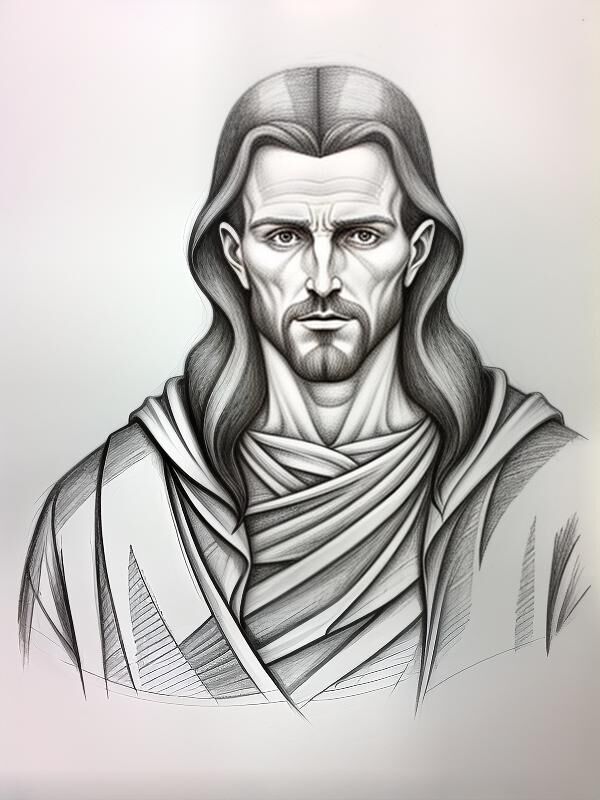
Disciples of Christ, let us reflect upon the extraordinary metamorphosis of Saul of Tarsus, a man once engulfed in the darkness of persecution, now immortalized in the brilliance of divine purpose. As he traveled to Damascus with the intent to imprison the faithful, the radiance of heaven illuminated his path, and he was confronted by the voice of the Lord asking why he persecuted Him. In this pivotal moment, dear brothers and sisters, we observe the astonishing might of divine intervention.
How frequently do we, ensnared by our limited perceptions, resist the very truths that call to us? Consider this: what are the blinders that obscure your vision today?
O disciples of Christ, let us consider the wondrous transformation of Saul of Tarsus, a man once saturated in the shadows of persecution, now forever etched in the light of divine purpose. As he journeyed to Damascus, intent on binding the faithful, the light from heaven broke upon him, and he heard the voice of the Lord, “Saul, Saul, why persecutest thou me?” In that moment, my brothers and sisters, we witness the profound power of divine intervention. How often do we, blinded by our own understanding, resist the very truth that beckons us? Reflect upon this: what are the scales that blind you today?
Recognize how swiftly Saul transformed, going from ruthless adversary to fervent proclaimer of the Gospel. Once he sought authority to imprison believers, yet in the blink of an eye, he stood in the synagogues declaring that Jesus is the Son of God. Imagine the astonishment of those who once feared him, now encountering a brother empowered by the Spirit. It reminds us of the limitless grace available to each of us. How might we, too, be called to rise and proclaim His name in our own spheres of influence?
Consider Ananias, a vessel chosen by God, who was apprehensive yet obedient. He heard the Lord’s call despite his fears and the knowledge of Saul’s past. “Go thy way,” said the Lord, for Saul was chosen to bear His name before kings and nations. Your path may often appear daunting, but in obedience lies the key to unlock God’s purpose for your life. In your own journey, what might God be asking you to step out in faith to accomplish?
Do not overlook the significance of Saul’s three days of blindness, a divine pause for introspection and prayer. In our own lives, do we take time to seek the Lord earnestly? After Saul regained his sight, he was baptized and strengthened, ready to embark on a mission that would change the world. Reflect on the early days of your own faith. When faced with trials or moments of solitude, how has God fortified your spirit for the journey ahead?
As we consider Saul’s escape from Damascus, it’s a vivid reminder that our purpose often entails not just the proclamation of the Gospel, but also the wisdom to navigate trials and threats that arise. His disciples aided him in secrecy, illustrating the beauty of community and support in Christ. So, I challenge you, how can you support your fellow believers in their journeys? Who among you might need a word of encouragement or assistance in moments of struggle?
In closing, let us embrace the call to be vessels of His truth. Like Saul, we are not defined by our past but invigorated by our calling. May we arise and boldly proclaim the truth of Christ, reflecting His love and grace to a world in desperation for hope. Be ready, for there are many souls awaiting your witness. Go forth, my friends, for the harvest is plentiful, and the Lord has prepared each of us for this divine mission.
In contemplating Saul’s entrance into Jerusalem, let us grasp the depth of his remarkable transformation from a notorious persecutor of the early church to a seeker of fellowship with those he once sought to harm. This narrative serves as a profound illustration of divine grace at work. However, upon his arrival, the initial reaction of the disciples was one of trepidation, as they wrestled with the challenge of reconciling Saul’s tumultuous past with his newfound intentions.
It is indeed intriguing how swiftly the heart can judge yet so hesitantly embrace the transformative power of faith.
Beloved disciples, as we reflect on Saul’s arrival in Jerusalem, we must remember the profound transformation that took place in him. Once a fierce persecutor of the church, Saul sought to unite with the very disciples he had once terrorized. What a powerful testament to the grace of God! His attempt to join the faithful was met with fear, as the disciples struggled to reconcile the past with the present. Isn’t it fascinating how the heart can be so quick to judge, yet so slow to embrace the work of the Lord?
But let us not look away, for Barnabas stepped forward, a name we should all cherish. He became the bridge of understanding, declaring the truth of Saul’s encounter with Christ. Friends, how often do we find ourselves in need of a Barnabas? Someone who advocates for those who have been misunderstood or marginalized. Barnabas bore witness to the work of Jesus in Saul’s life, reminding us that our past does not define our future in Christ. Each person carries the potential for transformation, just as Saul did.
As we further examine those events, consider how the body of Christ was strengthened through their collective faith. While the apostles were hesitant, when they heard Barnabas’s testimony, they accepted Saul, and he began preaching boldly in Jerusalem. This took immense courage, not just from Saul, but from those who dared to welcome him. In this, we see a lesson in faith—sometimes, our greatest blessings come from those we least expect.
Furthermore, Saul’s boldness stirred conflict, and soon adversaries arose. This leads us to a crucial point: when we walk in the name of Jesus, we will encounter opposition. Acts 9 reminds us that following Christ is not reserved for only the comfortable or the safe. Rather, we must recognize the reality of spiritual warfare and be prepared. When the Grecians sought to slay him, the brethren quickly came to his aid, demonstrating the unity of the body.
How does this apply to us today? In our struggles, we are called to support one another, just as the disciples did for Saul. The peace that followed the turmoil in Jerusalem—where churches were multiplied—was a direct result of walking in the fear of the Lord and comfort of the Holy Spirit. If we commit to fostering such an environment, we too will witness multiplication in our communities.
Let us draw strength from these events. As we uphold one another, may we be quick to listen, and slow to judge. When the Lord transforms a life, let us be the first to celebrate His work. In times of uncertainty, lean on the encouragement of the Holy Spirit, and remember that our God is in the business of redemption. Engage in meaningful discussions with one another, and challenge yourself to extend grace to those who are struggling. For in Christ, there is room for every story, every past, and every believer. Together, may we walk forward, edified and emboldened, ready to share the love of Christ with a weary world.

As we come together in the presence of the Lord, let us contemplate the extraordinary acts that emerged through our brother Peter. Have you ever pondered the significance of being a conduit for Christ’s healing? When Peter met Aeneas, he stood unwavering. In that pivotal moment, he proclaimed with conviction the transformative power of Jesus Christ to restore him fully. We uncover a profound reality: it is not Peter who effectuated healing, but rather Christ acting through him.
This revelation compels us to acknowledge our inherent limitations while affirming that through faith, we may serve as vessels of divine grace.
As we gather here in the presence of the Lord, let us reflect on the mighty works that unfolded through the hands of our brother Peter. Have you ever considered what it means to be a vessel for Christ’s healing? When Peter encountered Aeneas, he did not falter. In that moment, he spoke boldly, declaring the power of Jesus Christ to make him whole. What a profound truth we uncover: it is not Peter who healed but Christ through him. This challenges us to recognize that our own abilities are limited, yet through faith, we can be instruments of divine grace.
Aeneas had lain in his bed for eight long years, afflicted by palsy. Imagine the hopelessness that must have surrounded him, yet Peter entered his life as a beacon of hope. Jesus Christ maketh thee whole, he proclaimed. Can we not see ourselves in Aeneas, confined by our circumstances? How often do we lay down our dreams and desires, resigned to a life that seems unchangeable? The invitation is clear: arise, and make thy bed. It’s a call to action, a summons to step into the fullness of life that Christ offers.
And consider the stirring account of Dorcas, beloved by many for her good works and acts of charity. Her very name means gazelle, a symbol of grace and beauty. When she fell ill and succumbed to death, her community was enveloped in sorrow. They knew Peter was nearby, and in their desperation, they reached out, believing that he could intercede. What does this teach us about the power of community and the faith that binds us together?
Peter responded without hesitation, encouraged by the love and faith of those who gathered. Through prayer and a humble heart, he called Dorcas back to life. It is not merely a miracle we witness but a profound declaration of life over death. In our own lives, we encounter moments of despair, yet we are reminded that through Christ, hope is never lost. We are invited to intercede for one another, to lift each other in prayer, and to believe in the miraculous.
Let us challenge ourselves to embrace this calling. What good works can we perform in our daily lives that reflect Christ’s love? How can we stand in faith for those around us, believing in the power of resurrection? As we ponder these questions, let us also remember that many believed in the Lord through these acts. May we also be catalysts for faith in our communities, shining light and bringing hope where darkness resides.
As we leave today, take with you the story of Aeneas and Dorcas, carrying their legacy of faith, hope, and love. Permit the Word of God to flow through you, transforming not only your life but the lives of all those you encounter. In doing so, we continue the work of the cross, walking boldly in the footsteps of our Savior.

And Saul, still filled with threats and violence against the disciples of the Lord, went to the high priest and requested letters to the synagogues in Damascus, so that if he found any followers of this way, whether men or women, he could bring them bound to Jerusalem. As he was traveling and nearing Damascus, a bright light from heaven suddenly surrounded him, and he fell to the ground, hearing a voice asking him why he was persecuting Him. Saul responded by asking who was speaking, and the voice identified itself as Jesus, explaining that it was hard for him to fight against what was right. Trembling and astonished, Saul asked what he should do, and Jesus instructed him to go into the city where he would be told what to do. The men traveling with Saul stood speechless, hearing the voice but seeing no one, and when Saul got up, he could not see and was led into Damascus by the hand. He remained blind for three days without eating or drinking. In Damascus, a disciple named Ananias received a vision from the Lord, who told him to find Saul of Tarsus, who was praying and had seen a vision of Ananias coming to restore his sight. Ananias hesitated, recalling the harm Saul had done to believers in Jerusalem, but the Lord reassured him that Saul was a chosen instrument to proclaim His name to Gentiles and kings. Ananias obeyed and, laying his hands on Saul, declared that Jesus had sent him to restore his sight and fill him with the Holy Spirit. Immediately, something like scales fell from Saul’s eyes, and he regained his sight, was baptized, and after eating, he felt strengthened, staying with the disciples in Damascus for several days. Soon after, Saul began to preach in the synagogues that Jesus was the Son of God, and everyone who heard him was amazed, asking if he was not the same man who had tried to destroy the followers of Jesus in Jerusalem. Despite this, Saul grew stronger and confused the Jews in Damascus by proving that Jesus was indeed the Christ. After some days, the Jews conspired to kill him, but Saul learned of their plan and stayed alert while they waited for him at the city gates. That night, his disciples helped him escape by lowering him in a basket through an opening in the wall. When Saul arrived in Jerusalem, he tried to join the disciples but they were afraid of him, doubting that he was really a disciple. Barnabas took Saul to the apostles and shared how he had seen the Lord and preached boldly in Jesus’ name at Damascus. Consequently, Saul was accepted and moved freely among the disciples in Jerusalem, boldly speaking in the name of the Lord and arguing with the Hellenists, who soon plotted to kill him. The brothers learned of this and took him to Caesarea, then sent him to Tarsus. The churches throughout Judea, Galilee, and Samaria experienced peace and were strengthened, living in the fear of the Lord and comfort of the Holy Spirit as they grew in numbers. As Peter traveled through all regions, he visited the saints in Lydda, where he found a man named Aeneas who had been bedridden for eight years due to paralysis. Peter told him that Jesus Christ would heal him and instructed him to get up and make his bed, and Aeneas immediately stood up. All of Lydda and the nearby Saron saw him and turned to the Lord. In Joppa, there was a disciple named Tabitha, also known as Dorcas, who was known for her good deeds and acts of charity. Unfortunately, she became sick and died, and after washing her body, she was laid in an upper room. The disciples, having heard that Peter was in Lydda, sent two men to ask him to come without delay. Peter went with them, and upon arriving, they led him to the upper room where the widows were weeping and showing him the clothing that Dorcas had made while she was with them. Peter sent everyone out and knelt down to pray, then turned to the body and told Tabitha to get up. She opened her eyes, saw Peter, and sat up. He helped her to her feet and called the saints and widows to show them that she was alive. This news spread throughout Joppa, and many people believed in the Lord. Peter stayed in Joppa for several days with a tanner named Simon.
And Saul, yet breathing out threatenings and slaughter against the disciples of the Lord, went unto the high priest,
Saul’s Damascus Road Conversion
(Acts 22:1-21; Acts 26:1-23)
1 And Saul, yet breathing out threatenings and slaughter against the disciples of the Lord, went unto the high priest, 2 And desired of him letters to Damascus to the synagogues, that if he found any of this way, whether they were men or women, he might bring them bound unto Jerusalem. 3 And as he journeyed, he came near Damascus: and suddenly there shined round about him a light from heaven: 4 And he fell to the earth, and heard a voice saying unto him, Saul, Saul, why persecutest thou me? 5 And he said, Who art thou, Lord? And the Lord said, I am Jesus whom thou persecutest: it is hard for thee to kick against the pricks. 6 And he trembling and astonished said, Lord, what wilt thou have me to do? And the Lord said unto him, Arise, and go into the city, and it shall be told thee what thou must do. 7 And the men which journeyed with him stood speechless, hearing a voice, but seeing no man. 8 And Saul arose from the earth; and when his eyes were opened, he saw no man: but they led him by the hand, and brought him into Damascus. 9 And he was three days without sight, and neither did eat nor drink.
Ananias Baptizes Saul
10 And there was a certain disciple at Damascus, named Ananias; and to him said the Lord in a vision, Ananias. And he said, Behold, I am here, Lord. 11 And the Lord said unto him, Arise, and go into the street which is called Straight, and inquire in the house of Judas for one called Saul, of Tarsus: for, behold, he prayeth, 12 And hath seen in a vision a man named Ananias coming in, and putting his hand on him, that he might receive his sight. 13 Then Ananias answered, Lord, I have heard by many of this man, how much evil he hath done to thy saints at Jerusalem: 14 And here he hath authority from the chief priests to bind all that call on thy name. 15 But the Lord said unto him, Go thy way: for he is a chosen vessel unto me, to bear my name before the Gentiles, and kings, and the children of Israel: 16 For I will shew him how great things he must suffer for my name’s sake. 17 And Ananias went his way, and entered into the house; and putting his hands on him said, Brother Saul, the Lord, even Jesus, that appeared unto thee in the way as thou camest, hath sent me, that thou mightest receive thy sight, and be filled with the Holy Ghost. 18 And immediately there fell from his eyes as it had been scales: and he received sight forthwith, and arose, and was baptized. 19 And when he had received meat, he was strengthened. Then was Saul certain days with the disciples which were at Damascus.
Saul Preaches Christ at Damascus
20 And straightway he preached Christ in the synagogues, that he is the Son of God. 21 But all that heard him were amazed, and said; Is not this he that destroyed them which called on this name in Jerusalem, and came hither for that intent, that he might bring them bound unto the chief priests? 22 But Saul increased the more in strength, and confounded the Jews which dwelt at Damascus, proving that this is very Christ.
Saul Escapes from Damascus
(1 Samuel 19:11-24)
23 And after that many days were fulfilled, the Jews took counsel to kill him: 24 But their laying await was known of Saul. And they watched the gates day and night to kill him. 25 Then the disciples took him by night, and let him down by the wall in a basket.
Saul in Jerusalem
26 And when Saul was come to Jerusalem, he assayed to join himself to the disciples: but they were all afraid of him, and believed not that he was a disciple. 27 But Barnabas took him, and brought him to the apostles, and declared unto them how he had seen the Lord in the way, and that he had spoken to him, and how he had preached boldly at Damascus in the name of Jesus. 28 And he was with them coming in and going out at Jerusalem. 29 And he spake boldly in the name of the Lord Jesus, and disputed against the Grecians: but they went about to slay him. 30 Which when the brethren knew, they brought him down to Caesarea, and sent him forth to Tarsus.
31 Then had the churches rest throughout all Judaea and Galilee and Samaria, and were edified; and walking in the fear of the Lord, and in the comfort of the Holy Ghost, were multiplied.
Peter Heals Aeneas
32 And it came to pass, as Peter passed throughout all quarters, he came down also to the saints which dwelt at Lydda. 33 And there he found a certain man named AEneas, which had kept his bed eight years, and was sick of the palsy. 34 And Peter said unto him, AEneas, Jesus Christ maketh thee whole: arise, and make thy bed. And he arose immediately. 35 And all that dwelt at Lydda and Saron saw him, and turned to the Lord.
Peter Raises Dorcas from the Dead
36 Now there was at Joppa a certain disciple named Tabitha, which by interpretation is called Dorcas: this woman was full of good works and almsdeeds which she did. 37 And it came to pass in those days, that she was sick, and died: whom when they had washed, they laid her in an upper chamber. 38 And forasmuch as Lydda was nigh to Joppa, and the disciples had heard that Peter was there, they sent unto him two men, desiring him that he would not delay to come to them. 39 Then Peter arose and went with them. When he was come, they brought him into the upper chamber: and all the widows stood by him weeping, and shewing the coats and garments which Dorcas made, while she was with them. 40 But Peter put them all forth, and kneeled down, and prayed; and turning him to the body said, Tabitha, arise. And she opened her eyes: and when she saw Peter, she sat up. 41 And he gave her his hand, and lifted her up, and when he had called the saints and widows, presented her alive. 42 And it was known throughout all Joppa; and many believed in the Lord. 43 And it came to pass, that he tarried many days in Joppa with one Simon a tanner.
9 Then Saul, (who also is called Paul,) filled with the Holy Ghost, set his eyes on him,
10 And said, O full of all subtilty and all mischief, thou child of the devil, thou enemy of all righteousness, wilt thou not cease to pervert the right ways of the Lord?
11 And now, behold, the hand of the Lord is upon thee, and thou shalt be blind, not seeing the sun for a season. And immediately there fell on him a mist and a darkness; and he went about seeking some to lead him by the hand.

In simpler terms, when we choose to follow Jesus, we leave our old sinful selves behind and live a new life dedicated to God. Sin no longer controls us; we are free to serve God and live in righteousness. We are no longer slaves to sin but instead servants of God, bearing fruit that leads to eternal life through Jesus Christ our Lord. Remember, the consequences of sin are death, but God offers us the gift of eternal life.
In Romans 6, we are reminded of the transformative power of God’s love. Through Jesus Christ, we are able to break free from the chains of sin and embrace a new life dedicated to righteousness. As we choose to serve God, we are no longer slaves to our sinful nature but instead become servants of righteousness. By bearing fruit that leads to eternal life, we are able to experience the true freedom and joy that comes from living in alignment with God’s will. Romans 6 serves as a powerful reminder of the incredible gift of grace and redemption that God offers to each and every one of us.
By receiving undeserved grace, God works to free us from sin, with mercy forgiving sin and grace overcoming it. We are offered the opportunity to have our sin absorbed by Jesus, who never sinned, displaying God’s love for us.


The main message of Ephesians emphasizes that believers in Christ are reconciled not only to God, but also to each other. It encourages them to maintain unity within their families and church, while resisting the temptations of the world around them.
True worship requires the alignment of our spirit with God’s truth, as He is spirit Himself. To worship God in spirit, one can intentionally start their day with Him, pray with gratitude, write down blessings, turn complaints into praises, appreciate His creation, show love to others, and practice self-love. By acknowledging God’s presence through the gift of His Spirit, we can confidently approach Him with our hearts, words, and actions, offering genuine worship in spirit and truth.