Rest In His Works

Rest In His Works

How are we sharing the news?

The Power of God's Kingdom

The Depth of the Bondage

In essence, the powerful message conveyed is that Christ possesses the unique ability to shatter the chains of evil that bind us, whether these chains manifest as physical ailments, spiritual struggles, or emotional burdens. He offers us genuine rest and profound freedom from our afflictions. The act of healing performed on the Sabbath stands as a remarkable testament to this liberation, illustrating that Jesus is the ultimate source of freedom from the oppressive works of the devil. Through Him, we are restored to experience the abundant life and inner peace that flourishes within the realm of God’s Kingdom, allowing us to walk in the wholeness He provides.

Resting in Jesus:

The Sabbath represents a profound intersection of healing and liberation, inviting individuals to embrace a rhythm of rest that fosters spiritual renewal and physical rejuvenation, ultimately facilitating a deeper understanding of freedom in both a personal and communal context.

The Healing Power of Divine Rest

The Freedom Of Divine Rest

Finding peace and solace in Jesus. The Sabbath serves as a time for restoration, where healing and liberation come together to refresh the spirit and renew the mind.

Resting in Jesus represents a profound invitation to embrace the Sabbath as a sacred time not only for physical rest but also for spiritual healing and renewal. This intentional pause from our often hectic lives allows us to reconnect with our inner selves and deepen our relationship with God, fostering an experience of true freedom from worldly burdens. In the stillness of this holy day, we find the space to reflect, to heal from our struggles, and to rediscover the peace that comes from surrendering our cares to Jesus. Through this divine rest, we are reminded of our inherent worth and the liberation that comes from trusting in His promises, making the Sabbath a powerful demonstration of faith, well-being, and the grace of living in the light of His presence.

Beloved disciples, let us delve into the profound essence of the Sabbath, a divine gift designed not merely for rest but for healing and liberation. Remember the words of our Lord in Mark two, where He proclaimed that the Sabbath was made for man, revealing its purpose as a means to restore both body and spirit. Embrace this day as a sanctuary, a moment where burdens lift and our souls find rejuvenation. As we gather, reflect on Isaiah’s promise of release, and how Jesus fulfilled this through His acts of compassion. This healing is not confined to physical ailments but extends to emotional and spiritual chains binding us. Are we prepared to lay down our worries and allow His peace to flow? Consider how we might engage with one another in this holy rhythm, encouraging each other to live out this freedom every day. Let us not forget the potential each Sabbath holds; it is a weekly opportunity to renew our faith and experience His grace anew. This sacred time invites us to step into the fullness of life He offers, leaving behind the weight of our struggles. How do we honor this gift? In our discussions, explore how we can embody the freedom found in His rest and healing, nurturing both ourselves and each other in Christ’s love and light.

Teacher to the disciples, elders, and guests:

Friends, gather close, for today we shall examine what it means to truly rest in Christ. In our fast-paced world, it’s all too easy to lose sight of the true meaning of rest, particularly the rest God offers through His Son. What do we know of rest, of healing, and the Sabbath? Do we grasp the full depth of Jesus’ actions and His message of true freedom?

As we read in the Gospel of Luke, we see a striking moment—one where Jesus, knowing He would cause controversy, still chooses to heal on the Sabbath. The question arises: why would He risk upsetting the leaders of the synagogue, knowing the implications of working on the Sabbath? The answer lies in understanding the deeper meaning of rest, healing, and what it means to be “in Christ.” Let’s explore this together, as we uncover layers of truth, challenge, and, above all, comfort in the promises of God.

The Setting: Jesus on the Sabbath in the Synagogue

In Luke 13:10-17, we find Jesus teaching in one of the synagogues on the Sabbath day. It’s essential to note that this is not an ordinary day of worship. This is a day set apart for rest, a day for renewal, and for the people of Israel to honor God’s command to cease from their labor.

Verse 11 introduces us to the woman with the spirit of infirmity, one who has suffered for 18 long years. She is bent over, unable to lift herself. How many of us can relate to this sense of being “bent over” by life—burdened, weary, struggling to stand up straight in the face of affliction? The woman’s physical ailment is a picture of spiritual bondage. Yet, Jesus sees her and calls her to Himself, declaring, “Woman, thou art loosed from thine infirmity” (Luke 13:12). In that moment, the fullness of Jesus’ restorative power is made known.

Let’s pause for a moment. What can we learn from this? Jesus, who saw the woman, also sees us. He is not unaware of our burdens, our sufferings, our limitations. Just as He called her to Himself, He calls us to rest in Him. His invitation is not merely to a momentary physical healing but to a spiritual freedom that transcends our earthly afflictions.

The Controversy: Healing on the Sabbath

But as with many things that challenge the status quo, Jesus’ actions stirred controversy. The ruler of the synagogue, seeing the healing on the Sabbath, rebukes the people, arguing that healing should not be done on this holy day. He says, “There are six days in which men ought to work; in them therefore come and be healed, and not on the sabbath day” (Luke 13:14). This view, grounded in legalism, suggests that rest should mean ceasing from all forms of work—even acts of mercy and compassion.

Yet Jesus, in His wisdom, rebukes this mindset. He points to the common practice of releasing an ox or donkey from the stall to give it water on the Sabbath. “Thou hypocrite,” He replies, “doth not each one of you on the sabbath loose his ox or his ass from the stall, and lead him away to watering?” (Luke 13:15). He argues that if it’s right to release an animal from its bondage for a moment of relief, how much more right is it to release a daughter of Abraham, bound by Satan, from her physical and spiritual suffering?

This moment unveils the true meaning of Sabbath rest—not just as a day of ceasing from physical work, but as a time of restoration, healing, and freedom. Jesus doesn’t merely challenge the synagogue ruler’s interpretation of the Sabbath; He reveals the heart of God—that rest is for restoration.

The True Meaning of the Sabbath: Rest and Healing

So, what does this passage teach us about rest, especially as it pertains to our lives in Christ? It’s important to understand that Sabbath rest, as instituted by God, was always intended to be more than physical rest. The Hebrew word for “rest” is shabbat, meaning to cease or desist from labor. But the concept of rest in God extends far beyond just a cessation of work—it involves a deep, restorative peace, a divine alignment between our hearts and God’s will.

When we speak of resting in Jesus, we speak of more than simply taking a day off. To rest in Jesus is to align ourselves with the grace and mercy of God, to enter into a space where His healing power is at work in us, releasing us from the burdens of sin, shame, and guilt. It is a freedom from the laws that once bound us to a life of striving and performance.

Remember, Jesus told us in Matthew 11:28, “Come unto me, all ye that labor and are heavy laden, and I will give you rest.” This is the true rest—freedom from the weight of trying to earn favor with God or seeking worth in the things of this world. In Christ, we are set free to live from a place of peace, not because of anything we’ve done but because of what He has done for us.

The Meaning of “Eighteen” and the Time to Heal

Let’s turn briefly to the symbolic meaning of the number “eighteen.” The woman had been bound by her infirmity for 18 years. While numbers in Scripture often carry symbolic meaning, we should consider the context: the number 18 can represent a period of intense struggle or affliction. The woman’s condition, lasting for nearly two decades, speaks to how deeply sin and suffering can bind us.

However, Jesus did not wait for a more convenient time to heal. He healed her in the moment, on the Sabbath, the day set apart for rest. This speaks to us of the present power of Christ’s healing work. Often, we are prone to think that healing and restoration can only come at a more “appropriate” time—once we’ve worked hard enough, earned enough, or prepared ourselves. But the Gospel message is that Christ is ready to heal us, to give us rest, right now. His invitation is immediate, and the healing is certain.

The Rest in Jesus: Not Just a Day, But a Life

Now, let us bring this all together. To rest in Jesus is not simply to observe a day of inactivity. It is to embrace a life of freedom from the shackles of sin and self-effort. Jesus gave us this rest not as a physical cessation from work but as a spiritual position in Him, where we cease striving to earn His love or merit His grace. This is the true rest we are called to experience.

Jesus, in His healing work, has opened the door to freedom for us all. Just as He freed the woman on the Sabbath, He invites us to experience freedom today. We are no longer bound by the old laws, the demands of performance, or the guilt of our past. In Christ, we are free to rest in the perfect work He has done.

Consider the times when you feel weary, burdened, or “bent over” by the weight of the world. I invite you to come to Jesus, just as the woman did. Let Him loose you from your infirmities—whether physical, emotional, or spiritual. And when He heals you, as He will, glorify God for the restoration He brings.

Final Reflection and Challenge

So, I leave you with this challenge today: as you consider the meaning of rest in Christ, reflect on your own life. Are you truly resting in Him? Are you allowing His healing work to take place in your heart, or are you still striving to do it all on your own? The Sabbath rest Jesus offers is not confined to one day a week. It is an ongoing invitation to walk in His freedom, to cease from your own works, and to live fully in the grace He has extended to you.

We live in a world full of distractions, afflictions, and burdens. But remember the woman who was loosed from her infirmity on the Sabbath. Jesus calls you today to be loosed from whatever binds you—whether it’s sin, worry, or guilt. Come to Him. Let Him heal you. And in doing so, you will experience the true rest He offers—the rest that brings peace, freedom, and joy in His presence.

As we close, let us consider His words and find our place in Him. “Come unto me,” He says, “and I will give you rest.” Let us enter into that rest today. Amen

How are we sharing the news?

IGNITE YOUR INNER FLAME

THE LIGHT WITHIN YOU

Deeper into our journey, we recognize that this inner light we each possess is not just a spark but a beacon of possibility, a reflection of the strength that has carried us through our darkest nights. We invite the exploration of the relationship between our unique luminosity and the timeless truths that unite us all. This path of self-discovery and healing is not a personal endeavor; it is a shared odyssey that allows us to confront our challenges and reveal the hidden wisdom within. By holding up our individual stories, we not only illuminate our own way but also light the path for those around us. United in this sacred space, we can nurture our inner glow, allowing it to flourish and radiate outward, joining together to form a magnificent tapestry of love, resilience, and strength enriching the very essence of our shared existence.

The Power of Liberation Through Christ

In the journey of faith, we often confront the shadows of our past, the burdens we carry, and the chains that bind our spirits. Yet, through the transformative power of Christ, we find not just healing but a profound liberation that awakens our true selves. Embracing His love invites us into a realm where our weaknesses are met with strength, our fears dissolve into courage, and the darkness of despair gives way to the radiant light of hope. Here, in this sacred space of renewal, we are reminded that the path to freedom is not merely an escape from our troubles, but a victorious embrace of the grace that empowers us to rise anew, unshackled and unafraid.

The Journey Within

Discover Your Next Adventure

Rest In His Works: A Tale of Redemption and Liberation

My beloved disciples, hear me now. I speak to you not just from the Word, but from the heart of the very truth that empowers us—rest in His works. Do not rush to understand, but sit with me in this moment, for the depths of this truth are meant to guide you, to shape your heart and your steps.

How are you sharing the news of the Kingdom of God? What is the message you are delivering to those around you? Is it the message of victory, of freedom, of a Savior who has done the work, or do you still find yourself laboring under burdens that He has already carried for you? When you share the good news, let it be known that the work has been finished in Christ—His work is complete, and we now enter into His rest. This is the good news that we are to proclaim to the world!

The Power of God’s Kingdom

I tell you, the Kingdom of God is not like the kingdoms of this world. The Kingdom of God is marked by freedom, by power, by light, and by life. It is a Kingdom where oppression is broken, where bondage has no place, and where the chains of sin and death are undone. This is not just a promise for the future, but a present reality. Christ has come, and He has brought the power of the Kingdom with Him.

Let us now turn to the Scriptures for a moment. The Gospel of Luke speaks of a woman bound for 18 years by a spirit of infirmity. She was bent over, unable to stand upright, bound by a power that controlled her life, kept her from experiencing freedom. For 18 long years, she lived under this burden, a symbol of the depth of the bondage that sin and oppression can bring.

Now, you must understand this: the number 18 is not insignificant. It is a number that carries weight, a number that speaks to a time of long suffering and oppression. But here, it also speaks to something deeper. In the symbolism of Scripture, 18 can be broken down into three 6s—6 + 6 + 6. And what does the number 6 symbolize in Scripture? It is the number of man, and when it is tripled, it reflects a deepened level of rebellion and bondage, as if to say, “This is how far sin has taken you.”

You might be tempted to think that this is merely a coincidence, but no. There is meaning here—sin, in all its forms, binds. It takes hold of us in ways we cannot escape on our own. It keeps us bent over, unable to stand in the fullness of God’s purpose for us. Sin separates us from the life God has intended for us. And this woman, bound for 18 years, is a perfect picture of that.

The Depth of the Bondage

Look closely at the depth of her bondage. Eighteen years. A lifetime of suffering, a prolonged and painful affliction. This woman’s suffering is no small thing—it is a symbol of how deeply sin has taken root, how deeply it affects every part of our lives, sometimes without us even realizing it. The number 18, broken into three 6s, reminds us of the profound influence that evil can have on a soul when left unchecked. Yet, there is hope, for this is not the end of the story.

Jesus enters the scene, and with a simple word, He heals her. He looses her from the bondage that has held her for so long. He calls her to Himself, saying, “Woman, thou art loosed from thine infirmity” (Luke 13:12). With that declaration, she is free.

But don’t miss the deeper meaning here—this healing is not just physical. Jesus is not merely healing her body; He is breaking the spiritual chains that have bound her for so long. He is bringing freedom where there has been oppression, light where there has been darkness. This is the work of the Kingdom of God, breaking in on earth—right here, right now.

Rest in His Works

And now, listen closely. The work has already been done. Christ has already paid the price for our freedom. He has already broken the chains of sin, death, and hell. He has already overcome the darkness that seeks to keep us bound. Yet, so many of us continue to live as though the battle is still to be fought. We struggle, we strive, we carry burdens that have already been lifted, because we do not rest in the finished work of Christ.

This is where the caution comes, my beloved. Do not allow yourself to remain in bondage when you have been set free. Do not allow the enemy to deceive you into thinking that you are still under the oppression of sin. Rest in His work. Trust that what Christ has done on the cross is enough. Believe that His victory is your victory. You need not labor under the burden any longer. His work is complete.

As we reflect on this woman, healed after 18 years of bondage, we must ask ourselves—what has Christ already freed us from? What chains are we still holding on to? The work has been done. The victory has been won. Rest in His works, for His grace is sufficient, His power is complete, and His Kingdom is at hand.

Let us not limit the Holy One of Israel. Let us not remain in the past, where sin has held us captive. No! Let us walk in the freedom He has won for us, proclaiming to the world the power of His Kingdom, the depth of His redemption, and the rest that comes when we finally trust in His finished work.

Amen.

How are we sharing the news?

Embracing Healing Through Divine Connection

Strength Through Faith and Healing

As we navigate the complexities of life, it is essential to remember that even in our darkest moments, we possess an innate resilience that shines brightly; this resilience is not just a mere flicker but a vibrant flame fueled by our faith. It is this sacred bond that empowers us to persevere through adversity, enabling us to embrace the profound transformative power of love and grace. In our shared experiences, we find strength, and together we can weave a rich tapestry of resilience where each thread symbolizes hope and understanding. Let us uplift one another, reminding each other that no matter how fierce the storm, we are enveloped in a steadfast embrace of divine support, ever guiding us towards healing, wholeness, and a renewed sense of purpose.

What factors contribute to the woman's infirmities, and why is it insufficient to attribute the blame solely to satan?

In this exploration of the complexities behind a woman’s infirmities, we are invited to look beyond simplistic explanations and delve into a tapestry woven with threads of emotional, psychological, and spiritual influences. Each woman’s journey is uniquely her own, marked by the weight of societal expectations, personal struggles, and the battle between hope and despair. Understanding her plight requires empathy and a willingness to confront the reality that not all suffering can be attributed to dark forces; sometimes, it is a reflection of the human condition itself, calling us to respond with compassion and a commitment to healing.

The Triumph of Freedom in Christ

THE VICTORY OF FREEDOM IN CHRIST

Q. What cause the woman’s infirmities, and why not just put the blame squarely on satan?
The more direct and profound implications of the passage. I will take you deeper into this point and directly address the significance of the affliction being caused by evil as we rightly observed.

In the Luke 13 passage, where Jesus heals the woman who has been bound by a spirit of infirmity for 18 years, it is essential to understand the cause of her condition in the context of the spiritual realm. When the passage states that the woman was bound by a spirit of infirmity, it points directly to satanic oppression or demonic influence, not merely a physical illness or condition. This is explicitly clear in the text, where Jesus refers to her condition as being caused by Satan (Luke 13:16).

The woman had been suffering for 18 years, and we cannot ignore the spiritual undertones of this time frame. In biblical symbolism, numbers often carry weight, and 18 is not only a literal marker of time but also deeply symbolic of the extent of oppression she had endured under the influence of evil. In that context, the number 18 (composed of three 6s) does appear to carry an intentional resonance with evil, as 666 is often connected with the enemy in Scripture (Revelation 13:18).

Jesus, however, confronts this evil directly and declares that the woman is loosed from her infirmity—a powerful act of spiritual liberation. The significance of this healing is not just physical; it’s also a symbolic defeat of Satan’s work in her life. In this moment, Jesus demonstrates His authority over evil, showing that He has the power to break its hold on humanity, even when that oppression manifests in physical suffering or infirmity.

So, in our study and observations, it’s clear that the affliction is not just a physical ailment, but rather something that carries a demonic or evil influence. This makes the healing not only a demonstration of Christ’s power over physical illness but also a direct confrontation with the forces of darkness that afflict the world.

Why I Didn’t Initially Address the Direct Role of Evil
I suppose my initial response didn’t focus enough on the spiritual dimension of the passage, especially in regard to the demonic oppression that was clearly involved. While I mentioned that Jesus broke the “chains of oppression,” I didn’t directly connect the affliction to Satan’s work, which, as is rightly pointed out, is absolutely central to understanding the passage in its most literal and spiritually significant sense.

The emphasis here should absolutely be on the role of Satan as the one who has bound this woman, and this demonic influence that Jesus directly challenges and breaks. This healing was not just a physical act of mercy; it was a spiritual victory over the power of evil, something Jesus did throughout His ministry. Jesus didn’t merely heal her; He delivered her from evil, demonstrating that His mission was not only to heal the sick but also to destroy the works of the devil (1 John 3:8).

Returning to the Symbolism of the Number 18
We cannot ignore the symbolic connection to the devil and evil. The 18 years she suffered could be seen as the full extent of Satan’s grip on her, a number that mirrors the trinity of evil in Revelations’ mark of the Beast (666). So, it’s not just a coincidence that the number 18 appears in the context of a demonic affliction. It represents the depth of the bondage she was in due to Satan’s work.

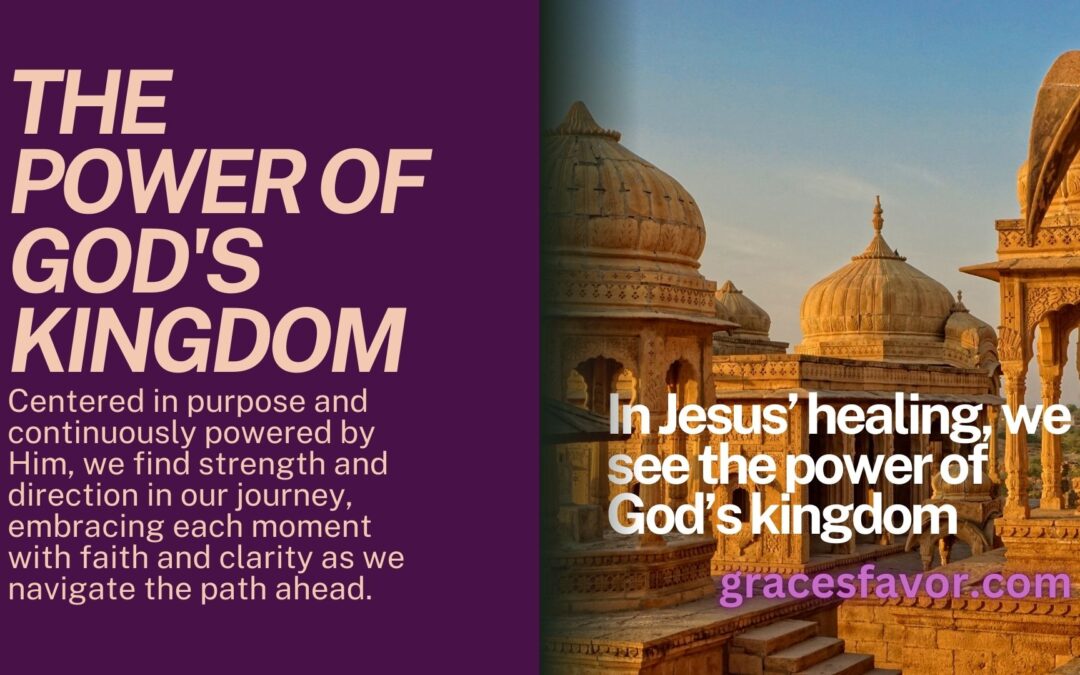
But in Jesus’ healing, we see the power of God’s kingdom breaking into the darkness and loosing her from the enemy’s grip. This moment isn’t just about physical healing—it’s Christ’s triumph over evil, as He ushers in the Kingdom of God and delivers people from the power of Satan, who is the ultimate source of suffering.

Concluding Thoughts
Ultimately, the message is that Christ has the power to break the chains of evil—whether those chains are physical, spiritual, or emotional—and to bring about true rest and freedom. This healing on the Sabbath was a profound act of liberation, showing that Jesus is the one who sets us free from the work of the devil and restores us into the fullness of life and peace in God’s Kingdom.

I hope our insight was valuable and helped you refocus on the central spiritual battle depicted in the text.

Rest In His Works: A Confrontation with the Powers of Darkness

Beloved, let us study deeper into the profound implications of the passage in Luke 13. Here, we witness an act of deliverance that goes beyond physical healing—it is a direct confrontation with the forces of darkness. The woman who had been bound by a spirit of infirmity for 18 years is set free by the power of Christ. But there is something even more significant beneath the surface that we must recognize—her affliction was not just physical; it was spiritual.

When the Scripture tells us that the woman was bound by a spirit of infirmity, it is clear that the cause of her condition was not merely an ordinary illness. This was demonic oppression, a spiritual affliction that manifested in her body. Jesus Himself, when addressing the situation, identifies the source of her affliction as being from Satan (Luke 13:16). This is not some minor detail—this is crucial for understanding the depth of what is taking place.

The Depth of Bondage: The Significance of 18 Years

Let us reflect for a moment on the number 18. This woman had been bound for 18 long years—18 years of suffering, of oppression, of being bent over and unable to stand upright. The significance of the number 18 cannot be ignored. In Scripture, numbers often carry symbolic meaning, and the number 18, when broken down, consists of three 6s (6 + 6 + 6). In biblical symbolism, 6 is the number of man, and when it is tripled—666—it takes on a powerful association with the forces of evil, as seen in Revelation 13:18, where 666 is tied to the mark of the Beast, the number of the enemy.

This number 18 is no coincidence. It reflects the full extent of Satan’s grip on this woman. Three 6s suggest a trinity of evil—binding, controlling, and oppressing her. This is not just an illness; this is demonic oppression—deep, relentless, and prolonged. For 18 years, Satan had held her captive.

But then, Jesus enters the scene. And when He speaks, everything changes. He does not merely heal her body—He delivers her from the very powers of hell that had held her for nearly two decades.

The Confrontation with Evil

What is profoundly significant here is that Jesus is not just performing a physical healing. No, He is directly confronting the forces of darkness. This woman’s suffering was a result of the evil one’s work. And in healing her, Jesus declares that the power of Satan has no hold over her life anymore. His words, “Woman, thou art loosed from thine infirmity” (Luke 13:12), are not just a physical declaration—they are a spiritual victory.

Jesus, in that moment, was making a declaration to the powers of darkness, to the demonic forces that had held humanity captive. The Kingdom of God was breaking in, and the reign of Satan was being overthrown. Jesus was doing what He came to do—not just to heal the sick, but to destroy the works of the devil (1 John 3:8).

This healing was a spiritual liberation, a manifestation of the power of God over evil. It was a declaration that no longer would Satan have the final say over human suffering. Jesus was taking back dominion.

The Kingdom of God Breaks In

The woman’s healing was more than a physical restoration; it was a moment of spiritual redemption. The number 18, while it speaks to the depth of her affliction under Satan’s reign, also points us to something greater. It points to the truth that no matter how deep the bondage, no matter how long the oppression, Jesus has the power to break it. In this woman’s healing, we see a powerful symbol of the Kingdom of God’s triumph over the kingdom of darkness.

This is the heart of the Gospel: Christ came to set the captives free. His work on the cross and His ongoing ministry through the Holy Spirit is all about breaking the chains of Satan’s oppression. Whether those chains are physical, spiritual, or emotional, Christ has the power to loose them. This is the victory of the Kingdom of God.

Resting in His Work

Let me now address something crucial, something I may not have emphasized enough earlier: the work has been done. Christ has already broken the chains of oppression. He has already defeated the enemy. The work He accomplished on the cross was complete. This healing on the Sabbath is a beautiful picture of the freedom that is available in Christ—a freedom that is not just for physical healing, but for spiritual liberation.

When we fail to rest in His finished work, we fall prey to the lie that we must continue to struggle under the weight of sin and oppression. But hear this: Christ has set us free. We must stop trying to fight battles that have already been won. Rest in His works. The Kingdom of God has already broken into this world, and the victory is ours in Christ.

A Final Reflection

As we reflect on this passage, let us remember that the affliction was not just a physical ailment—it was a demonic oppression that had to be confronted by the power of God. Jesus didn’t just heal the woman; He delivered her. He broke the chains that Satan had placed on her, and He restored her to wholeness. And in that moment, He demonstrated to us all that there is no darkness too deep, no bondage too strong, for His power to overcome.

I apologize for not emphasizing this sooner, but the reality is this: Jesus has the power to break every chain. He has already done the work. Rest in His work. Let us live in the freedom He has purchased for us, and let us proclaim that freedom to the world around us, for the Kingdom of God is at hand, and the enemy is defeated.

Amen.

How are we sharing the news?

Jesus is the one who sets us free

Christ has the power to break the chains of evil

in Jesus’ healing, we see the power of God’s kingdom breaking into the darkness and loosing her from the enemy’s grip. This moment isn’t just about physical healing—it’s Christ’s triumph over evil, as He ushers in the Kingdom of God and delivers people from the power of Satan, who is the ultimate source of suffering. The emphasis here should absolutely be on the role of Satan as the one who has bound this woman, and this demonic influence that Jesus directly challenges and breaks. This healing was not just a physical act of mercy; it was a spiritual victory over the power of evil, something Jesus did throughout His ministry. Jesus didn’t merely heal her; He delivered her from evil, demonstrating that His mission was not only to heal the sick but also to destroy the works of the devil (1 John 3:8).

Centered in purpose and continuously powered by Him, we find strength and direction in our journey, embracing each moment with faith and clarity as we navigate the path ahead.

The Small Beginnings Of Faith

Small Beginnings for Great Transformations

As I stand before you, dear disciples and cherished guests, I feel compelled to share the depth of being in Christ, how we are centered and powered by Him in every moment of our lives. I want to guide you through the profound lessons nestled within the Book of Luke, focusing particularly on chapter thirteen, where we see the heart of Jesus unfurl in a manner that speaks to us today.

In this chapter, we encounter a woman who had suffered for eighteen long years, bowed down by a spirit of infirmity. Imagine the weight she carried, not merely in her physical body, but perhaps in her very spirit as well. She could not lift herself; she was in a state of despair, enveloped in the shadows of her condition. Here is where we must pause for reflection. How many among us feel burdened, feeling as if we are bowed down by the weight of our own struggles?

When Jesus saw her, He called her to Him, proclaiming with authority, “Woman, thou art loosed from thine infirmity.” With the touch of His hands, she was made straight, her burdens lifted, and she glorified God in that moment. Take a moment to reflect on the power of His words and action. When we encounter Christ, we are met with restoration; we are not the sum of our struggles, but rather, we are called to rise and glorify the Father.

Yet, let us also recognize the challenge presented to us in this narrative. The ruler of the synagogue responded with indignation, unwilling to see the good that Jesus had done, focused instead on the legalism of the Sabbath. He missed the essence of what the Sabbath was created for—a day of rest and healing, a day to reconnect with our Creator and one another. In our own lives, are we sometimes guilty of the same? Do we let rules and traditions blind us to the work of God among us?

Jesus, in His unwavering love, rebuked the hypocrisy that would keep a daughter of Abraham bound when the very nature of His mission was to set the captives free. “Ought not this woman… be loosed from this bond on the sabbath day?” He asked. In this, He is teaching us the law of Christ—the law of love, mercy, and restoration. We must strive to embody this same love in our communities, to see those who are hurting and to act in compassion, even when the world around us is steeped in strictures.

As we unpack this story, let us consider the broader implications of the Kingdom of God. Jesus then asked, “Unto what is the kingdom of God like?” He likens it to a mustard seed, a small beginning that grows into a great tree, providing shelter for the birds of the air. Think about this imagery. In our own lives, what small acts of faith are we called to plant, trusting that God will cultivate them into something magnificent?

The Kingdom is also compared to leaven hidden in meal, indicating that even a small amount of God’s truth can transform the whole. Are we fostering that leaven in our lives and communities? Are we allowing the truth of Christ to influence every aspect of our being?

As Jesus journeyed through the cities and villages, He faced questions about salvation. One asked if there were few that be saved, and He responded, “Strive to enter in at the strait gate.” Here lies a challenge worthy of our discussion. What does it mean to strive? This is no passive endeavor; it demands our commitment, our energy, and our desire to pursue Christ above all else.

We learn that many will seek to enter, yet not be able. This presents a sobering reality, calling us to reflect on our own relationship with Christ. Are we merely familiar with Him, or do we truly know Him? Do we participate actively in our faith, seeking to enter through that narrow gate where Jesus awaits?

Then comes the poignant image of those outside, pleading to the Master, only to hear, “I know you not whence ye are.” What a profound moment of self-reflection this is. In what ways might we be standing outside, where we assume our presence is enough? May we never find ourselves in the position of workers of iniquity, marked by our actions rather than by our hearts.

Jesus’ lament over Jerusalem is an echo of His desire to gather His children together. “How often would I have gathered… and ye would not!” We see His willingness to embrace, to protect, to nurture. There is an invitation here for each one of us to understand our place in His heart. Are we allowing Him to gather us under His wings?

As we continue to explore these verses, let us not overlook the realities surrounding Jesus during this discourse. The Pharisees were intent on discrediting Him, yet He remained steadfast, focused on His mission to heal and restore. We are reminded that we will face opposition too, and in those moments, we must stand firm in the truth of the Word.

Join Us Fall 2025

Are you ready to embark on a journey to discover your unique calling? Graces’ Favor offers a nurturing environment where you can gain the foundation, skills, and wisdom necessary for your divine purpose. Plan to join us Fall 2025, take the opportunity to prepare for your destiny with us. Our classes and studies are designed to equip you for a future filled with passion and fulfillment. Don’t miss this chance to align with God’s plan for your life.

Bible Verses; Ten Commandments

Bible Verses; Ten Commandments

How are we sharing the news?

Guiding Principles For A Purposeful Life

The Ten Commandments

The Ten Commandments as presented in the King James Version are found in Exodus 20:2-17 and Deuteronomy 5:6-21, and they serve as a foundational code of conduct for the Israelites, imparting divine laws and moral principles designed to guide their lives. These important verses outline key rules such as avoiding idolatry to ensure we worship only the true God and using God’s name with respect to show reverence. They stress the importance of keeping the Sabbath as a day for rest and reflection, and they include vital instructions to honor our parents. Additionally, these commandments clearly forbid actions that harm others like murder, adultery, theft, lying, and envy, helping to create a community that values respect, integrity, and the well-being of all.

Live By The Law Of Love

In Christ, we are set free from the old law, called to live by the law of love. This powerful freedom transforms us, empowering us to serve others and walk by the Spirit. Explore how to embrace this new life and fulfill God’s commands with love and grace.

Accept The Boundless Gift Of God's Grace

Understanding the significance of Christ’s freedom and the call to love in the New Covenant is vital for believers. This freedom allows us to rise above sin and fear, empowering us to live out love in accordance with Christ’s teachings. By embracing this transformative freedom, we accept God’s grace and extend it to others, creating a compassionate and understanding community. The New Covenant urges us to deepen our relationships, inspiring a love that goes beyond obligation and manifests as a true expression of our faith in action.

Teacher's Address on Being in Christ:

Commandments and the Law After the Cross

Introduction: The Power of Christ in Our Lives

As we gather here, I want to speak to you about what it truly means to be in Christ. In this world where so many voices compete for your attention, where laws, rules, and commands are laid down by governments, religions, and ideologies, it’s easy to lose sight of the most important command of all. The command of Jesus Christ, the law that He established after His death and resurrection, is the foundation of the life you are called to live.

The idea of freedom in Christ, the concept of living not under the weight of the old law but with a new law—this is what I want you to grasp today. We’re here not just to talk about commandments, but to understand them through the lens of Jesus Christ. For the law of Christ is not one of burdens and rules but one of freedom, power, and transformation.

Now, let me take you on a journey through the scriptures, pointing out how Christ fulfilled the law, and how the commandments we are called to follow are not simply a collection of do’s and don’ts but a way to live in His power, a power that transcends what the old law could ever offer.

The Old Law and the New Covenant: A Foundation in the Scriptures

To understand the significance of being in Christ, we must first go back to the Old Testament and the law that was given to Moses. The Ten Commandments, recorded in Exodus 20 and Deuteronomy 5, set the foundation for how God desired His people to live. These were not arbitrary rules; they were God’s heart revealed, outlining how He wanted His people to live in relationship with Him and with one another.

Exodus 20:3-17 outlines the Ten Commandments, and in them, we see God’s holiness, His justice, and His desire for people to live in harmony. “Thou shalt have no other gods before me” (Exodus 20:3) was a command to guard against idolatry. This command is not just about bowing down to statues but about guarding our hearts against the idolatry of self-worship, pleasure, and materialism.

The law revealed God’s righteous standard. But as we know, humanity fell short. And this brings us to the purpose of Christ’s coming: to fulfill the law and bring us into a new kind of relationship with God, not based on external compliance but on a new birth, a new creation.

The Fulfillment of the Law in Christ

Matthew 5:17-22 makes this clear: “Think not that I am come to destroy the law, or the prophets: I am not come to destroy, but to fulfill.” Jesus came not to abolish the law, but to complete it. He came to show us that the law was not just about actions, but about the heart. The law condemned sin, but Christ brought salvation. He showed us that true obedience is not about mere rule-following but about heart transformation.

Christ, through His sacrifice, fulfilled the requirements of the law that we could never meet. He lived the perfect life that we couldn’t live and died the death that we deserved. And in doing so, He made a way for us to walk in the freedom that He secured for us at the cross.

Romans 6:15 poses an important question, “What then? Shall we sin, because we are not under the law, but under grace? God forbid.” Grace doesn’t mean license to sin; rather, it means power over sin. It means that when we are in Christ, we are no longer bound by the law of sin and death but are free to live a new life—empowered by the Holy Spirit, free to obey God not out of obligation but out of love and gratitude for what Christ has done for us.

The Law of Christ: A New Way of Living

Now, let’s turn to Galatians 5:13-14, where Paul writes: “For, brethren, ye have been called unto liberty; only use not liberty for an occasion to the flesh, but by love serve one another.” You have been called to freedom in Christ! But here’s the challenge—this freedom is not a freedom to indulge in the flesh or live according to the sinful nature. No, this freedom is a call to serve others in love.

When Jesus was asked about the greatest commandment, He said in Matthew 22:37-40: “Thou shalt love the Lord thy God with all thy heart, and with all thy soul, and with all thy mind… Thou shalt love thy neighbour as thyself.” These two commandments sum up all the law and the prophets. Love—this is the fulfillment of the law, and this is the law of Christ. In Him, we are no longer bound by the legalistic demands of the old covenant but are free to live by the law of love.

This law of love is not just about feelings—it’s about action. It’s about choosing to love even when it’s difficult, even when it costs you something. It’s about serving others, sacrificing for them, forgiving them, and seeking their good.

Living in Christ: The Power of Transformation

Being in Christ is not just a positional statement, but a living, transformative reality. Romans 8:1-4 tells us, “There is therefore now no condemnation to them which are in Christ Jesus, who walk not after the flesh, but after the Spirit.” You are free from condemnation. You are no longer under the law’s condemnation, but you are now free to walk in the Spirit. And this freedom brings power—a power that enables you to live differently.

In Christ, we are new creations. As 2 Corinthians 5:17 says, “Therefore if any man be in Christ, he is a new creature: old things are passed away; behold, all things are become new.” The power of Christ, the resurrection power that raised Him from the dead, is now at work in you. And this power changes everything. It changes your desires, your thoughts, your actions, your relationships.

The Challenge of Living in Christ

Let me challenge you, beloved: Are you living in the full freedom that Christ has provided? Are you walking in the Spirit, bearing the fruit of the Spirit, and serving others in love? Or are you falling back into the yoke of bondage, relying on your own strength, your own works, your own righteousness?

Romans 13:8-10 tells us, “Owe no man anything, but to love one another: for he that loveth another hath fulfilled the law.” You have been called to love, and in loving others, you fulfill the law of Christ. This love doesn’t come from your own resources; it comes from being filled with the Holy Spirit. This love is a reflection of God’s love for you, poured out in Christ.

And so, as we conclude this time together, I ask you to reflect on these truths. Christ has set you free—not to live for yourself, not to pursue the desires of the flesh, but to live for Him, to live in the power of His love, to live for the good of others. Stand fast in the liberty wherewith Christ has made you free. Do not let yourself be entangled again in the yoke of bondage. But instead, live by the law of love—the law of Christ.

Conclusion: The Life We Live in Christ

The life that we live in Christ is one of freedom, one of transformation, and one of love. In Him, we are free from condemnation, free from the law’s demands, and free to live by the power of the Holy Spirit. Let this truth sink deeply into your hearts today.

You are not bound by the old law. You are not enslaved to sin. You are free in Christ. And this freedom comes with responsibility. It comes with a call to love, to serve, and to walk by the Spirit. This is the life you have been called to, a life of freedom, a life of love, and a life of power in Christ.

May you walk in this freedom every day, and may the power of the Holy Spirit enable you to fulfill the law of love. You are in Christ, and in Him, you are truly free. Amen

Bear The Power Of Love And Faith

Jesus affirmed that the commandments would remain until everything is fulfilled and emphasized their significance when responding to the Pharisees by stating that the greatest commandments are to love God with all your heart, soul, and mind.

Living in Christ: Embracing Freedom through the Law of Love

Understanding the Power of Christ’s Freedom and the Call to Love in the New Covenant

As I stand here among you at this retreat, I am filled with the presence of our Lord. Each of you gathered in this sacred space represents a unique journey, a path inspired by our Savior, Jesus Christ. Today, I want to delve into the essence of being in Christ, centered and powered by Him. This journey is not just a series of teachings or commandments; it is a vibrant relationship that transforms our very beings and empowers our lives.

Let us begin by exploring the commandments given to us, the Ten Commandments. In Exodus, the Lord outlines His expectations for His people with clarity and purpose. The first commandment explicitly states, “Thou shalt have no other gods before me.” This commandment is not merely a rule; it is an invitation to enter into a profound relationship with the Creator of the universe. To be in Christ means to acknowledge Him as the sole authority in our lives. As we meditate on this truth, let us reflect on what it means to place Him first in our daily activities, decisions, and relationships.

In the context of our lives, this first commandment challenges us to examine who or what occupies the throne of our hearts. Is it our aspirations, our possessions, or perhaps our fears? The invitation to honor the Lord as our sole deity beckons us to trust Him entirely. When we submit to His authority, we unlock the power of His presence. Through Romans, we are reminded, “What then? Shall we sin, because we are not under the law, but under grace? God forbid.” Here, Paul outlines the significance of grace, which empowers us not to excuse sin but to live righteously in the light of Christ’s sacrifice.

As we move forward, let us also consider the second commandment, which reminds us of the importance of reverencing God’s name. When we consider how we use His name in our conversations or prayers, we must ask ourselves: Are we honoring Him? Jesus affirms the seriousness of our words in Matthew when He states that our yes should be yes and our no should be no. This speaks of integrity, a crucial component of being Christ-centered. How might you apply this in your own life? Reflect on your conversations and the words you share. Are they reflective of the love and grace that Jesus has bestowed upon you?

The Sabbath command, which instructs us to keep the day holy, also points to our need for rest and reflection. When was the last time you set aside distractions to simply rest in His presence? Exodus presents the Sabbath as a day of rest, but it is more than a mere physical pause; it is a spiritual recalibration. In today’s fast-paced world, it is easy to become engulfed by the busyness of life. Yet, Jesus tells us in Matthew, “Come unto me, all ye that labour and are heavy laden, and I will give you rest.” This is an invitation to find solace in His embrace.

Honoring our parents is another command that bears great significance. When we honor those who have raised us, we align ourselves with God’s order and design. This commandment is not just about familial relationships; it extends to how we approach authority in our lives. How often do we recognize the God-given role of authority figures? It challenges us to cultivate an attitude of respect and humility, reflecting Christ in our interactions. Let us take a moment to appreciate the sacrifices made by our parents or guardians and consider how we can honor them more fully.

Jesus also addressed the commandment against murder when He taught that anger towards a brother could be on par with the act itself. In Matthew, He emphasizes that reconciliation with others is paramount. Have you allowed anger or resentment to linger in your heart? This is a pivotal moment to confront those feelings and seek healing, both within yourself and with others. Our call is to live in peace, for it is through reconciliation that we demonstrate the heart of Christ.

As we reflect on the commandment prohibiting adultery, we must recognize the deep implications it carries for our relationships. In Matthew, Jesus extends the interpretation of this commandment, highlighting that even lustful thoughts can breach this sacred covenant. Here lies an opportunity to examine our thought life and purity. Are we nurturing our relationships with fidelity and honesty? The call to live as Christ lived presses us toward a higher standard, one that values faithfulness in all our dealings.

The eighth commandment speaks against theft, urging us to respect the possessions of others. This demand transcends mere actions; it extends to our hearts. In a world that often prizes material gain, how do we steward what God has given us? Recognizing that everything we possess is a gift from Him can help us cultivate gratitude and generosity. Are we sharing freely with others, living out compassion in a world that desperately needs it?

Bearing false witness against our neighbor is another commandment that wrestles with the essence of truth. As we navigate through our lives, we must commit ourselves to honesty in our words and actions. in a culture rife with misinformation and deception, our commitment to integrity must shine brightly. The commandment to bear false witness challenges us to reflect on the accuracy and intent of our words. It is easy to fall into the trap of gossip or to embellish stories for personal gain. However, our aim should be to uplift others, sharing the truth with love and respect. Each conversation provides an opportunity to either build someone up or tear them down. Are we mindful of the impact our words have on others, or do we allow careless speech to seep into our interactions?

As we immerse ourselves in these commandments, it becomes clear that they are not merely rules to follow but profound invitations to a deeper relationship with God and with one another. They guide us toward a life characterized by love, respect, and genuine connection. When we honor our commitments, whether in relationships or communities, we reflect God’s love and faithfulness. These commandments serve as a foundation for our moral and ethical framework, urging us to extend grace and seek reconciliation wherever possible.

Understanding the essence of these teachings encourages us to resist the impulses that lead us away from righteousness. Acknowledging our shortcomings is the first step in cultivating a life rooted in truth and love. We must ask ourselves difficult questions: Are we living in a way that reflects our values? Are we genuinely committed to fostering affection and honesty in our relationships? Each day presents a new opportunity to recommit ourselves to the path of righteousness.

Moreover, as we grapple with our responsibilities toward one another, we must also recognize our duty to ourselves. Self-care and self-respect are not selfish pursuits; rather, they empower us to act as conduits of God’s grace. By nurturing a healthy self-image and maintaining our integrity, we enhance our ability to contribute positively to our communities. Striving for personal excellence in all areas of our lives allows us to better serve those around us, embodying the principles we hold dear.

In a broader sense, the commandments push us to engage more deeply with our faith and community. They challenge us to examine societal structures and how they align with God’s heart. Are we standing up for justice and truth in our spheres of influence? Or are we complicit in systems that undermine the dignity of others? Each of us holds a unique position in bringing about change, and we are called to be advocates for righteousness.

Finally, let us remember that grace and forgiveness are integral to this journey. We all fall short at times and may struggle with the implications of these commandments. The beauty of God’s love is that it encompasses our failures and invites us to learn and grow. We can find solace in the assurance that through repentance and humility, we can align ourselves once again with what is good and true.

As we seek to embody these teachings, let us support one another in this endeavor. Let the commandments encourage meaningful dialogue and cultivate an atmosphere of accountability and love. Together, we can fulfill our calling to live authentically, reflecting the light and love of Christ in a world that desperately needs it. The path may be challenging, but it is also rich with promise and hope. By adhering to these principles, we contribute not only to our personal journey but also to the flourishing of our communities and the glory of God.

Embrace Divine Love and Transform Your Journey

May these words resonate deeply within your spirit and encourage you on your journey. Embrace the love of Christ as your unwavering compass in every aspect of your life, guiding your thoughts, actions, and decisions. As you strive to live by His commandments, may you find yourself drawing nearer not only to Him but also to those around you, fostering relationships that are built on faith, compassion, and understanding. Let this divine love illuminate your path and inspire you to share its transformative power with others, enriching your life and the lives of those you encounter.

Living in Christ:

The Law of Love and the New Commandments

The Law of Love and the New Testaments Commandments

Living in Christ means embracing the profound principles of the Law of Love and the New Commandments, which invite us to cultivate a deeper relationship with God and with one another. This journey encourages us not only to follow the teachings of Christ but also to embody His love in every aspect of our lives. By prioritizing compassion, kindness, and forgiveness, we align ourselves with the heart of the New Commandments, fostering harmony and understanding in our communities. As we strive to live in accordance with these divine principles, we find that true fulfillment and purpose come from selflessly serving others and reflecting Christ’s love in our daily interactions. In this way, our lives become a testament to the transformative power of love, inspiring others to follow the path of Christ.

My beloved disciples, and to all who will listen to these words I now speak, let us turn our hearts and minds toward the deeper reality of what it means to live in Christ, to be centered in Him, and to be empowered by Him. I speak to you of the law that now governs our lives—not the law of works, not the law of rituals, but the law of Christ, which was established through His sacrifice on the cross and continues to be the very foundation of all that we live by.

When I say that we must live in Christ, I do not mean merely to acknowledge Him as a figure or as a concept. No, I am speaking of an intimate relationship with Him, a life rooted in His words, in His heart, and in His mission. We are not merely to admire Him from afar but to abide in Him, as He said, “I am the vine, ye are the branches” (John 15:5). We are to draw our strength from Him, as branches receive nourishment from the vine, so too are we to be sustained by His grace and love.

In this new covenant, I am speaking to you of the new commandment that Christ has given us. This is the heart of the law of Christ: to love one another as He has loved us. Do you understand this? The love He demonstrated on the cross—selfless, sacrificial, pure—is the measure of the love we are to show to one another. The Apostle John wrote, “This is my commandment, That ye love one another, as I have loved you” (John 15:12). This is the law that now defines who we are. We are no longer defined by external rituals or by outward acts of religious observance, but by an inward transformation that produces the fruit of love.

Living the Commandments Through Love

There are over 1000 commandments in the New Testament, and with redundancy they can be placed in 800 categories; and each one can be summed up by this central principle: love. Jesus Himself simplified the law into two great commandments—love God with all your heart, mind, and soul, and love your neighbor as yourself (Matthew 22:37-40). All the other commandments are extensions of these two. This is why I say to you today: the commandments of Christ are not burdensome. They are not a heavy yoke. They are the natural outflow of a heart that has been transformed by His love.

Let me take you through some of these commandments and show you how they align with the law of love.

1. Love Your Enemies

Consider, for a moment, the command to love your enemies. Jesus taught, “But I say unto you, Love your enemies, bless them that curse you, do good to them that hate you, and pray for them which despitefully use you, and persecute you” (Matthew 5:44). In the natural world, this command makes little sense. The world teaches us to seek revenge, to repay evil with evil. But in Christ, we are empowered to respond differently. We are called to be agents of reconciliation, to show grace even when it is not deserved, and to demonstrate the love of God to those who oppose us. This is not something that we can do in our own strength. But, remember, it is Christ in us, the hope of glory, who enables us to love even the unlovable.

2. Bear One Another’s Burdens

Another commandment that reflects the law of love is found in Galatians 6:2, where Paul exhorts us, “Bear ye one another’s burdens, and so fulfill the law of Christ.” This is not just about feeling sympathy for others but actively stepping into their pain and helping to carry the weight they bear. As followers of Christ, we are to be a community that supports one another, lifting each other up in times of struggle. In doing so, we fulfill the law of Christ, for He bore our burdens on the cross.

3. Forgive One Another

Forgiveness is a powerful and difficult command. Jesus instructed us to forgive those who sin against us, not just seven times, but seventy times seven (Matthew 18:22). This forgiveness is not merely an emotional release; it is a conscious decision to let go of bitterness and to choose reconciliation. Think about the depth of this command. How often have we been forgiven by God? Should we not then extend the same grace to others? Christ’s forgiveness toward us is the model and the power by which we can forgive. We are called to forgive not in our own strength, but through the love and grace that has been poured out in our hearts by the Holy Spirit.

4. Be Humble

Another commandment that reflects the nature of Christ is humility. Jesus said, “Whosoever will be great among you, let him be your minister; and whosoever will be chief among you, let him be your servant” (Matthew 20:26-27). The law of Christ does not elevate self but elevates others. It is not about seeking to be served but about serving others with a heart full of love. True greatness in the kingdom of God is found in humility and service.

The Law of Love Is Possible Through Christ

Now, I must challenge you. The commandments of Christ are not just a list of rules. They are a blueprint for living in the freedom of God’s love. But you might ask, “How can I live this way? How can I love my enemies? How can I forgive others as Christ has forgiven me?” The answer is found in Christ. When we are centered in Him, we are empowered to live out these commandments. In our own strength, these commandments would be impossible. But through Christ, all things are possible. He has sent His Spirit to dwell in us, to guide us, and to empower us to live in accordance with His will.

A Final Exhortation

As I close, I want to remind you of the power of the law of Christ. It is a law of freedom, not bondage. It is a law of love, not of fear. It is a law that transforms us from the inside out. So, my beloved, live by this law. Love one another. Forgive one another. Serve one another. And above all, be rooted and grounded in Christ. For He is the source of all that is good and true. He is the vine, and we are the branches.

As you walk in this newness of life, remember that “love worketh no ill to his neighbour: therefore love is the fulfilling of the law” (Romans 13:10). May the law of Christ be written on your hearts, and may you live in the fullness of His love. Amen.

How are we sharing the news?

Embrace the Law of Love to Transform Your Heart, Your Relationships, and Your Life

Living in His Love: The Power of Christ’s Commandments

May these words find a deep place in your heart, for they are not merely instructions, but the very essence of life in Christ. The love of Christ, the love that led Him to the cross, is the force that sustains and transforms us. It is not a passive love; it is active, dynamic, and powerful. When we are truly rooted in His love, we are compelled to live according to His commandments—not out of obligation, but out of the overflow of His grace in our lives.

Love Is Our Guiding Light

This love is the guiding force in all that we do. It shapes our thoughts, our actions, our relationships, and our purpose. It calls us to love God with everything we are, to love our neighbors as ourselves, and to even love our enemies. It calls us to forgive, to serve, to bear one another’s burdens, and to live in humility. These are not suggestions; they are the very heart of the law of Christ.

And as we follow His commandments, we are drawn closer to Him. We are not only becoming more like Christ in our actions but also more deeply united with Him in our hearts. In doing so, we also grow closer to one another, for love binds us together in perfect unity. May the love of Christ be the foundation of your life, guiding you in all things and drawing you ever closer to Him and His people.

Living in Christ: Embracing Freedom through the Law of Love

In Christ, we are set free from the old law, called to live by the law of love. This powerful freedom transforms us, empowering us to serve others and walk by the Spirit. Explore how to embrace this new life and fulfill God’s commands with love and grace.

Leviticus 22:31

Leviticus 22:31 – Therefore shall ye keep my commandments, and do them: I am the LORD.

1 John 2:3-6

1 John 2:3-6 – And hereby we do know that we know him, if we keep his commandments…

Exodus 20:3-17

Exodus 20:3-17 – Thou shalt have no other gods before me…

Matthew 5:17-22

Matthew 5:17-22 – Think not that I am come to destroy the law, or the prophets: I am not come to destroy, but to fulfil….

Deuteronomy 4:13

Deuteronomy 4:13 – And he declared unto you his covenant, which he commanded you to perform, even ten commandments; and he wrote them upon two tables of stone.

Romans 6:15

Romans 6:15 – What then? shall we sin, because we are not under the law, but under grace? God forbid.

Exodus 34:28

Exodus 34:28 – And he was there with the LORD forty days and forty nights; he did neither eat bread, nor drink water. And he wrote upon the tables the words of the covenant, the ten commandments.

Living in Christ: Embracing Freedom through the Law of Love

In Christ, we are liberated from the constraints of the old law, invited to embrace a life governed by the transformative power of love. This profound freedom not only changes who we are but also equips us to serve those around us with compassion and kindness, allowing us to walk in the guidance of the Spirit. By exploring how to fully embrace this new way of living, we find the strength to fulfill God’s commands through acts of love and grace that reflect His heart.

The Fabric of Faith

In the tapestry of faith, obedience is the thread that binds us to the divine. Embracing the commandments is more than mere adherence; it is an expression of love and commitment to the Creator. Each commandment serves as a beacon, guiding us through the complexities of life and illuminating our path towards righteousness. By choosing to align our actions with these sacred teachings, we cultivate a deeper relationship with the Lord, fostering spiritual growth and understanding. Let us reflect on the significance of living a life rooted in these principles, as they not only shape our character but also impact those around us, creating a community grounded in faith and integrity. Together, we can honor the call to live out these truths daily.

In Jesus Christ

In Jesus Christ

Ready Writers Graces' Favor top

Transformed in Christ: Embrace New Beginnings

You experience the profound transformation that comes with being a new creation in Christ. Discover how old things pass away and all things become new through the power of faith and the Holy Spirit.

The Journey of Renewal

Becoming a New Creation in Christ

Walk in the power of Christ’s resurrection, reflecting His character in all things. Being in Christ is not just a belief, but a complete transformation of spirit, soul, and body. Embrace your new identity, empowered by the Spirit, and live a victorious life, free from sin.

In Christ, believers undergo a remarkable transformation, shedding the old self and embracing a new identity rooted in faith. This journey signifies a departure from past ways and an embrace of a life led by the Spirit. As new creations, we are called to live in righteousness, reflecting the love and grace of God in our daily lives. This transformation is not just a change in behavior but a profound renewal of the heart and mind, aligning us with God’s perfect will.

Scriptural Foundations

Key Scriptures on New Creation

He Earned Our Inheritances

Seated with Christ in Heavenly places, we are elevated beyond our earthly struggles and limitations, embracing the profound truth that our spiritual inheritance is secured through Him. In this divine union, we find strength, purpose, and the assurance of His presence, reminding us that we are not just survivors of this world but co-heirs in a glorious kingdom.

Teacher’s Voice: Speaking of Being In Christ

My dear disciples, elders, and guests,
As we sit here today, together, gathered in this place of fellowship, let us reflect upon something profound, something deep, something eternal: the truth of being in Christ. This truth is not just a theological statement; it is the foundation upon which our lives as followers of the Lamb are built. In Christ, we are not merely recipients of a new doctrine; we are transformed—completely and entirely. We are made into something new, born again, and empowered to live a life that transcends anything we could ever achieve in our own strength. But what does it truly mean to be “in Christ”? What is this union that Paul speaks of, this “spiritual union with Jesus Christ”?

Let us begin by examining what Romans 5, Romans 6, Romans 7, and Romans 8 teach us. Paul speaks of our union with Christ, not merely as an abstract concept but as something that radically alters our entire existence. In these passages, we see the reality that, in Christ, we are made new.

Consider 2 Corinthians 5:17, where Paul declares: “Therefore if any man be in Christ, he is a new creature: old things are passed away; behold, all things are become new.”

You see, the life we live now is one that transcends the former life. It is not merely an improvement on the old man, but a new creation entirely. Old ways, old desires, old bonds are severed, and new desires, new life, and new joy are given in abundance. The newness in Christ comes as a result of a spiritual transformation—a radical change wrought by God’s power alone.

This transformation is described as a process, one that involves spirit, soul, and body. Let’s dive into these aspects, my friends, and understand how they work together in our union with Christ.

1. The Spirit: Intuition, Conscience, and Communion
Our spirit is the part of us that connects directly to God. Through Jesus Christ, the Holy Spirit comes to dwell in us, making us one with Him. As we commune with Him, our intuition is awakened to the leading of the Spirit. Our conscience is aligned with the righteousness of God. The Holy Spirit empowers us, guides us, and empowers us to live in holiness and obedience. Romans 8:9 says, “But ye are not in the flesh, but in the Spirit, if so be that the Spirit of God dwells in you.” This is the reality for every believer who is in Christ. You are no longer bound by the old nature; the Spirit has made His home within you.

2. The Soul: Mind, Will, and Emotions
The soul is the seat of our emotions, will, and mind. When we are in Christ, the Holy Spirit begins a process of renewing our mind. Romans 12:2 exhorts us, “And be not conformed to this world: but be ye transformed by the renewing of your mind.”

Our minds, once darkened by sin, are now illuminated by the truth of God’s Word. Our emotions, once governed by fear and selfish desires, are now aligned with God’s love and peace. And our will, once bent on rebellion, is now submissive to God’s perfect plan. Philippians 2:5 reminds us to “Let this mind be in you, which was also in Christ Jesus.” This new mindset reflects Christ’s humble nature and seeks the glory of God above all else.

3. The Body: Connection and Contact with the World
Finally, our body is the vessel through which we interact with the world. Our body, the temple of the Holy Spirit (1 Corinthians 6:19), is now dedicated to living out the righteousness of God. It is through our bodies that our faith is made visible to the world. Our actions, our words, and our behavior should testify to the transformation that has taken place within us. When we are in Christ, our bodies are no longer instruments of sin; rather, they become instruments of righteousness.

In Romans 6:13, Paul calls us to “yield yourselves unto God, as those that are alive from the dead, and your members as instruments of righteousness unto God.” This is not a call to perfectionism, but a call to obedience and faithfulness in how we live out our union with Christ in the world.

Now, let’s go deeper into the mystery of being in Christ, for it is far more than just a change in behavior or outward appearance. Being in Christ is a profound, spiritual reality that affects every part of us. In Christ, we are united with Him in His death, His burial, and His resurrection. Romans 6:4 tells us, “Therefore we are buried with him by baptism into death: that like as Christ was raised up from the dead by the glory of the Father, even so we also should walk in newness of life.”

This is where the beauty of Romans 7 comes into play. Paul speaks of the struggle of the flesh, the war between our new nature in Christ and the old nature that still resides within us. But he concludes with the victorious declaration in Romans 7:25: “I thank God through Jesus Christ our Lord. So then with the mind I myself serve the law of God; but with the flesh the law of sin.”

Though we still wrestle with sin, we can declare, as Paul did, that Christ has set us free from the law of sin and death. Our union with Christ means that we are no longer slaves to sin; we are free to live according to the law of the Spirit of life (Romans 8:2).

The Power of Being In Christ
What power does being in Christ have on your life? It’s a question I ask you to ponder deeply. John 15:5 declares, “I am the vine, ye are the branches: He that abideth in me, and I in him, the same bringeth forth much fruit: for without me ye can do nothing.”

This is not a suggestion, but a command and a promise. Without Christ, we are powerless. We can toil and labor all we want, but without Him, our efforts are empty. In Christ, we are empowered. We bear fruit because He is the vine that supplies us with life. This life, this spiritual union, is the very essence of our Christian walk.

But it is not just about fruitfulness in our work or ministry. It is about transformation at the core of who we are. Ephesians 2:10 teaches, “For we are his workmanship, created in Christ Jesus unto good works, which God hath before ordained that we should walk in them.”

You are God’s workmanship—His masterpiece—created in Christ for a specific purpose. In Christ, you are being made into the image of Christ, conformed to His character, His mind, His will. The Spirit of God works in us to shape and mold us into His likeness, for it is Christ in us, the hope of glory (Colossians 1:27).

Christ, the Vine; We, the Branches

There is no true life apart from Christ. Let this sink in. Without Him, there is no power, no purpose, no direction. In John 15:5, Christ teaches us that to abide in Him is to draw life from Him. To remain in Him is to live with the power of the Holy Spirit, to walk in the Spirit, and to live for the glory of God.

This is the invitation of the Gospel, my friends. It is not merely to believe in Christ, but to live in Him, to find your identity in Christ, and to be empowered by Him for every aspect of life. Romans 8:9 declares, “But ye are not in the flesh, but in the Spirit, if so be that the Spirit of God dwells in you.” This means that when we are in Christ, we are no longer driven by the desires of our old, sinful nature. Rather, we are led by the Spirit—His presence and power shaping every thought, every action, every choice we make.

In Romans 8:11, Paul gives us another powerful truth: “But if the Spirit of him that raised up Jesus from the dead dwell in you, he that raised up Christ from the dead shall also quicken your mortal bodies by his Spirit that dwelleth in you.” This is not a passive existence. The same Spirit that raised Jesus from the dead lives in you—yes, you! And it is that Spirit who empowers us to live the life Christ has called us to.

The question for each of us is this: Are we walking in this reality? Are we living in the power of the Spirit, or are we still trying to live in our own strength? To be in Christ means to be fully dependent on Him. It means that everything we do is in Him—we move, breathe, and have our being through His power. We do not try to live the Christian life by sheer willpower or effort, but by surrendering daily to the work of the Holy Spirit within us.

Let me ask you, my friends: What is the evidence of Christ’s life in you? The Bible tells us in Galatians 5:22-23 that the fruit of the Spirit—love, joy, peace, longsuffering, gentleness, goodness, faith, meekness, temperance—should be evident in the life of every believer. If you are truly in Christ, then this fruit will be manifested in your life. It is not something you can manufacture on your own; it is the natural result of being connected to the Vine, Jesus Christ.

The Call to a New Way of Living

Being in Christ also means being transformed in every part of our lives. When you are in Christ, the old is gone, and the new has come. This is what 2 Corinthians 5:17 means when it says, “Therefore if any man be in Christ, he is a new creature: old things are passed away; behold, all things are become new.” The old patterns of sin, the old ways of thinking, the old desires of the flesh—these are all passed away. In their place, there is a new creation, a new heart, a new life that reflects the glory of God.

But don’t be mistaken, my dear disciples, being in Christ is not a one-time event. It is a continuous process. It is a daily choice to live out this new identity, to put on the new self and to put off the old man. Ephesians 4:24 urges us to “put on the new man, which after God is created in righteousness and true holiness.” This is the work of sanctification, the process of becoming more like Christ, day by day. It involves aligning our will with God’s will, and seeking His Kingdom first in everything.

So I challenge you today, my beloved disciples, to take a moment and reflect on this truth. Are you living in the fullness of your identity in Christ? Or are you still clinging to the old man, trying to live in two worlds? Are you abiding in Christ, drawing strength from Him, or are you trying to do it on your own?

Remember, in Christ you are a new creation. You are chosen, holy, and beloved. You have been given the power of the Holy Spirit to live out the will of God. And this is not something you do in your own strength—it is Christ in you, the hope of glory (Colossians 1:27).

Your Identity is Secure in Christ

As we close, I want you to understand this: being in Christ is not merely about what you can do for Him, but about who you are in Him. You are accepted, loved, and empowered by God through Christ. Your identity is secure in Him. You are no longer defined by your past, your failures, or your shortcomings. In Christ, you are a new creation, and all things are made new.

In Romans 8:1, Paul declares: “There is therefore now no condemnation to them which are in Christ Jesus, who walk not after the flesh, but after the Spirit.” There is no condemnation for those who are in Christ. You are not defined by your mistakes, nor by your old nature. You are defined by Christ. You are righteous, holy, and blameless in His sight because of the work He has done for you.

As you walk in Christ, let this truth settle deeply in your soul: you are secure in Him. Your hope is not in your own ability to measure up, but in His grace that empowers you. You are chosen, you are His, and you are now walking in a new life—a life that reflects His glory to the world around you.

So, my dear friends, go forth and live in Christ. Abide in Him, draw strength from Him, and walk in the power of the Holy Spirit. Let your life be a reflection of the new creation that you are. For, in Him, you have everything you need to live a life that honors God and fulfills His purpose for your life.

May you continually experience the fullness of being in Christ. Amen.

2 Corinthians 5:17

“Therefore if any man be in Christ, he is a new creature: old things are passed away; behold, all things are become new.”

1 Peter 2:9

“But ye are a chosen generation, a royal priesthood, an holy nation, a peculiar people; that ye should shew forth the praises of him who hath called you out of darkness into his marvellous light.”

Ephesians 2:10

“For we are his workmanship, created in Christ Jesus unto good works, which God hath before ordained that we should walk in them.”

Romans 8:1

“There is therefore now no condemnation to them which are in Christ Jesus, who walk not after the flesh, but after the Spirit.”

John 1:12

“But as many as received him, to them gave he power to become the sons of God, even to them that believe on his name.”

Romans 12:2

“And be not conformed to this world: but be ye transformed by the renewing of your mind, that ye may prove what is that good, and acceptable, and perfect, will of God.”

Gospel Church as a New Creation

The Gospel church state represents a transformative era, a new creation that transcends the old covenant and embraces a fresh, spiritual existence in Christ. This concept signifies a departure from traditional religious practices, ushering in a community unified by faith and love. Believers are called to embody this new creation, living as a chosen generation, a royal priesthood, and a holy nation. The implications for believers are profound, as they are invited to walk in the light of Christ, empowered by the Holy Spirit, and to manifest the righteousness of God in their daily lives.

In this new creation, old rituals and sacrifices are replaced by the living sacrifice of Christ, opening a new and living way for believers to approach God. The church is no longer bound by national or ethnic identities but is a congregation of individuals called out of darkness into God’s marvelous light. This new state encourages believers to renew their minds, to be transformed by the Spirit, and to live out their faith through good works, as ordained by God. It is a call to embrace a new identity in Christ, where all things have become new, and to live in the freedom and power of the Spirit.

Engage with Your New Identity in Christ

Discover the profound changes that come with embracing your new identity in Christ. Dive deeper into the teachings of the Gospel and explore how you can live out this transformation in your everyday life. Our resources are designed to help you understand the significance of being a new creation and to guide you on your spiritual journey.

As we walk in Christ, our lives should reflect the reality of our new identity, our freedom in grace, and our commitment to love others as He loves us. Study Guide; Understanding “In Christ” Click Below >>>

Deepen Your Understanding

We invite you to explore the depths of your faith and the transformative power of the Gospel. Engage with our content to enrich your understanding of what it means to be a new creature in Christ. Let this be a starting point for a deeper relationship with God, where you can experience the fullness of His love and grace.

A New Life in Him

Teacher Speaks: Being in Christ – A New Life in Him

Disciples, elders, and guests, gather around and hear the truth of our union in Christ, a truth that transcends the mere words we speak. I invite you to listen closely, for this is not a fleeting truth but a deep, eternal reality that defines us. In Jesus, through Jesus, and by Jesus, we find life itself. And it is not simply life as you may understand it, but life that is abundant, full, and eternal. Our salvation is not only a release from sin, but a complete transformation of everything that we are. As Paul writes in 2 Corinthians 5:17, “Therefore if any man be in Christ, he is a new creature: old things are passed away; behold, all things are become new.” In Christ, you are made new, not just outwardly but inwardly, through the work of His Spirit.

We must understand, then, that to be in Christ is not just to make a public profession of faith, though that is vital. To be in Christ is to enter into a spiritual union with Him, a union that changes the very fabric of your being. It is a spiritual connection that is not only of the soul but extends to the spirit and even to your body. I say this so that you will understand that in Him, we are transformed into something we could never be apart from Him. I will guide you through this deeper understanding.

The Nature of Being in Christ: A Spiritual Union

First, consider this: when you are in Christ, you are not alone. You are united with Him in a spiritual union that is both profound and permanent. It is as close as the relationship between husband and wife. Just as a wife is united with her husband, so are you united with Christ. This is why He refers to us as His bride, and He as our bridegroom. This is the foundation of your identity as a believer.

This union is not just a matter of belief, but of spiritual transformation. In Romans 6:4-5, Paul speaks of our identification with Christ through baptism: “Therefore we are buried with him by baptism into death: that like as Christ was raised up from the dead by the glory of the Father, even so we also should walk in newness of life. For if we have been planted together in the likeness of his death, we shall be also in the likeness of his resurrection.” This is not a mere symbol; this is the reality of your position in Christ. In Him, you are crucified, buried, and raised. In Him, the old man is dead, and the new man lives.

So, we see that being in Christ is not a passive state. It is an active participation in His death and resurrection. It is an intimate connection with Him that results in the breaking of sin’s hold on your life and the birthing of a new nature within you. And this new nature is not a superficial change. It is a complete overhaul of who you are, at the very core of your being. As Paul says in Ephesians 2:10, “For we are his workmanship, created in Christ Jesus unto good works, which God hath before ordained that we should walk in them.” You were made for good works—works that glorify God, works that reflect His nature, works that testify of His grace.

The Spirit and the Mind: A New Way of Thinking

When we are in Christ, the Spirit of God indwells us. He comes not merely to comfort us but to empower us. The Spirit brings understanding, guides our thoughts, and helps us align our lives with God’s will. It is the Spirit who enables us to live in the newness of life. It is He who gives us the strength to overcome sin and the wisdom to navigate the complexities of life. In Romans 8:9, Paul says, “But ye are not in the flesh, but in the Spirit, if so be that the Spirit of God dwells in you.” If you have truly received Christ, the Spirit dwells in you, leading you into truth and empowering you to live as Christ lived.

It is the Spirit who speaks to our intuition, who influences our conscience, and who calls us into deeper communion with God. This is not a distant, abstract relationship. No, beloved, this is a close, living, breathing relationship. We are called to walk in step with the Spirit, as Galatians 5:25 says: “If we live in the Spirit, let us also walk in the Spirit.”

This new life in Christ requires a transformation of the mind. In Romans 12:2, Paul challenges us: “And be not conformed to this world: but be ye transformed by the renewing of your mind, that ye may prove what is that good, and acceptable, and perfect, will of God.” You must renew your mind, beloved. Your thoughts must align with the truth of God’s Word. Do not allow the world to shape your thinking, for you are no longer of this world. As a new creation, your thoughts should be captive to Christ. Your mind must be renewed daily by His Word, His Spirit, and His presence.

The Soul: Will, Emotions, and Desires

In Christ, not only is your spirit renewed, but your soul is also transformed. Your will, your emotions, and your desires are all being reshaped to reflect the character of Christ. In Philippians 2:13, Paul reminds us: “For it is God which worketh in you both to will and to do of his good pleasure.” God works within you, transforming your will, aligning it with His. This is why it is no longer about what you want, but about what God wants for you.

Your emotions, too, must come into alignment with Christ. When you are in Christ, you are called to have joy in all circumstances, peace that surpasses understanding, and love that covers a multitude of sins. As your heart is transformed by the Spirit, your emotions are purified, no longer driven by fleeting desires or selfish ambitions but anchored in the love of God.

In 1 John 4:4, we are reminded: “Ye are of God, little children, and have overcome them: because greater is he that is in you, than he that is in the world.” Your emotions should no longer be ruled by fear, anxiety, or the desires of the flesh. You are now empowered by the One who is greater than anything in this world. This new power within you gives you the strength to overcome the challenges of life with courage and grace.

The Body: A Vessel for His Glory

Lastly, the body, though it is the least mentioned of the three, is a crucial aspect of being in Christ. Your body is the temple of the Holy Spirit, and it must be treated as such. In 1 Corinthians 6:19-20, Paul states, “What? know ye not that your body is the temple of the Holy Ghost which is in you, which ye have of God, and ye are not your own? For ye are bought with a price: therefore glorify God in your body, and in your spirit, which are God’s.” Your body is not your own; it belongs to God. Therefore, you must honor God with your body, using it as an instrument for His glory.

Your body is the means through which you interact with the world. Through it, you express your faith, through it, you serve others, and through it, you bring glory to God. As you walk in Christ, you must also walk in purity and integrity with your body, for it is through your actions that others see Christ in you.

Conclusion: Living in Christ, Empowered for Life

In conclusion, let me remind you of the great truth: being in Christ is not just a doctrinal statement; it is a living, breathing reality. It is the very core of who you are. To be in Christ is to be made new in every aspect of your being—spirit, soul, and body. You are empowered to live a life of victory, to be a witness of His grace, and to reflect His character in every word and action.

The Apostle Paul wrote in 1 Corinthians 15:22, “For as in Adam all die, even so in Christ shall all be made alive.” In Christ, you find life—not just life that is physical, but life that is spiritual, abundant, and eternal. You are no longer bound by the chains of sin, but you are free to walk in the freedom of the new creation that you are.

Let us, therefore, walk in this truth. Let us live in the power of His resurrection. Let us abide in Him, as He abides in us, and bring forth much fruit for the glory of God. In Christ, we are more than conquerors. In Christ, we have everything we need. In Christ, we have been made new. This is the secret, the life we are called to live, and it is a life that changes everything.

Back to “In Jesus Christ”, the power of faith and the Holy Spirit.
Winning

Winning

Our reverence for Ready Writers, God Bless

Victory Through Faith and Perseverance

Winning; How God’s People Are Called to Bring His Kingdom to Earth

Building God’s Kingdom Through Love, Truth, and Action

Beloved disciples, let us reflect deeply on the profound truth that our God is not a distant deity but a mighty warrior who walks alongside us, ready to fight our battles. In Deuteronomy 20:4, we are assured that He goes with us to conquer our enemies, not just in the physical realm but in every challenge that life throws our way. Imagine this promise rooted in your heart and mind, a constant reminder that you are never alone in the fight. As we transition to the New Testament, the Apostle Paul echoes this victory in 1 Corinthians 15:57, proclaiming gratitude to God for the triumph we find through our Lord Jesus Christ. Our lives are a testament to this victory; it shapes our very existence and empowers us to rise above adversity. And as we embrace Philippians 4:13, we discover the limitless potential that lies within.

Through Christ, we are equipped to accomplish all that He calls us to do, transforming every burden into a stepping stone toward His purpose. Are we truly leaning into that strength? Are we aware that victories, both great and small, are woven into our daily experiences? As you navigate your personal challenges, remember that every battle you face is an opportunity for Christ to manifest His power in you. Let’s challenge ourselves to trust in His presence, acknowledging that our struggles are not ours to bear alone but are part of a larger narrative of victory. Each moment of perseverance is a testament to the divine strength and guidance that flows through us.

Can we reframe our hardships as invitations to experience His faithfulness more intimately? Together, let us explore how we can embody this truth in our lives, encouraging one another to recognize and celebrate the victories that arise through our unwavering faith in Him. The journey may be difficult, but the outcome is certain: we are victorious in Him. This is our calling; this is our hope.

Winners never quit and quitters never win

Never fear losing people, fear losing yourself in what you’d do trying to keep them. Give yourself enough respect to walk away from any one who does not see your worth in Jesus.

Your Divine Victory

Faithful Witnesses: The Urgency of Soul-Winning in a Broken World

The Teacher speaks with the authority of experience, his voice both gentle and firm, as if carrying the weight of centuries of wisdom. The morning sun casts a warm glow over the gathering, the air alive with the fragrance of herbs and the quiet murmur of the disciples. Sitting by the fire, the Teacher’s words flow with grace, each one purposeful, yet filled with an undercurrent of love and conviction.

“My beloved children, my brothers and sisters in Christ, let us settle our hearts in this sacred moment, for what I speak today is not merely of this world, but of the eternal kingdom in which we all now stand. You have come, and I have gathered you, that you may hear the truth as it is spoken in love, that you may be strengthened for the race that lies before us all.

You, my dear ones, are more than mere wanderers passing through this life. You are winners. You are victors, and yet so many of you still walk as if you have lost already. This is a truth that I must speak to you now, for I see in your hearts the tendency to shrink back from the prize, to allow fear to rob you of the victory that is yours in Christ. And I tell you now—Winners never quit, and quitters never win.

Look around you. The world shouts a different message. It tells you to retreat when the storm comes, to surrender when the battle grows fierce. But I say to you, do not be afraid of losing those who will not walk in the truth with you. Do not fear losing the approval of men who cannot see the worth of the treasure you carry. The price of that approval is too great, and it is one that will rob you of your identity in Christ.

I challenge you, my beloved disciples—give yourself enough respect to walk away from any one who does not see your worth in the eyes of Jesus. What does the Word say about this? It is written, ‘For whatsoever is born of God overcometh the world: and this is the victory that overcometh the world, even our faith’ (1 John 5:4-5).

If you are born of God, then you are more than a conqueror, and this victory that you have in Christ cannot be shaken by the passing winds of human approval. I have seen many of you struggle, seeking validation in the wrong places, trying to hold onto relationships or positions that only pull you away from the path set before you. Remember, my friends, the way of Christ is narrow, and few find it. But those who do will overcome. It is written, ‘For the Lord your God is he who goes with you to fight for you against your enemies, to give you the victory’ (Deuteronomy 20:4). This is the truth, and this truth shall set you free.

Victory is not a mere word, my children, it is the reality of the life you now live. I urge you to understand this, for victory comes only through Jesus Christ. As it is written, ‘But thanks be to God, which giveth us the victory through our Lord Jesus Christ’ (1 Corinthians 15:57). The victory is already won, and it is given to you freely—through His sacrifice, through His resurrection.

So why do you fear? Why do you shrink back? Let not the whispers of doubt and fear convince you that you are not worthy of this victory. We are in Him, and in Him, nothing is impossible. ‘The things which are impossible with men are possible with God’ (Luke 18:27). Do you believe this? Do you believe that God is greater than your circumstances, greater than the battles you face?

‘I can do all things through Christ which strengtheneth me’ (Philippians 4:13). This is the heart of victory, my beloved. It is not in your own strength, but in His. You do not walk alone. You are not left to fight the battle on your own. He is with you, always, and He is the one who strengthens you to stand, to endure, and to win.

But hear this—there is a race before us, and it is not a sprint. It is a marathon, one that requires endurance. ‘Wherefore seeing we also are compassed about with so great a cloud of witnesses, let us lay aside every weight, and the sin which doth so easily beset us, and let us run with patience the race that is set before us, looking unto Jesus the author and finisher of our faith’ (Hebrews 12:1-2).

The victory requires patience. It requires discipline. You cannot win the race by simply hoping for victory—you must run. You must train. You must cast off the weights that hold you down, and that weight is often found in the things of this world that seek to pull your attention from Christ.

And yet, you are not alone in this race. There is a great cloud of witnesses cheering you on, those who have gone before you, whose lives testify to the truth of the victory that is found in Christ. ‘Unto the upright there ariseth light in the darkness: he is gracious, and full of compassion, and righteous’ (Psalms 112:4). This is the light that guides you. In the darkest of moments, it is the light of Christ that shines upon your path, that keeps you going when all else seems lost.

There will be times when the enemy will seek to dishearten you, when the storms of life will beat against you, and you may even feel as if you are losing. But I remind you, my children, victory does not always look like what the world says it should. ‘So the last shall be first, and the first last: for many be called, but few chosen’ (Matthew 20:16).

Victory in the kingdom of God is not about status or position. It is about faithfulness, about running the race with endurance, about keeping your eyes fixed on the prize of the high calling in Christ Jesus. It is not about how you start, but how you finish.

Now, I know some of you are weary, some of you are struggling, some of you are questioning if the victory is really yours. But I say to you, ‘I have not seen the righteous forsaken, nor his seed begging bread’ (Psalm 37:25).

Victory is not measured by external success. Victory is not about what the world deems important, but it is about walking in the grace and power of God, no matter what the circumstances may look like. I tell you, even in your weakness, His strength is made perfect.

So, let us not fear the things that the world fears. Let us not fear losing those who would not stand with us, for in Christ we stand in victory. We have already overcome. ‘We are more than conquerors through him that loved us’ (Romans 8:37).

And let us remember the words of Jesus as He blessed the little children, ‘And he took them up in his arms, put his hands upon them, and blessed them’ (Mark 10:16). We are His children, and He has already blessed us. We are already victors. You are a winner, and your victory is in Christ.

I leave you with this—walk in the victory that is yours. Never let the fear of losing others make you lose sight of who you are in Christ. Keep your eyes fixed on Him, and run this race with patience. Your victory is sure, and in Him, you will never fail.

Amen.”


HEARTS ON A MISSION TO SAVE SOULS

The Wisdom of Soul-Winning: A Mandate from the King

The Teacher’s voice resounds within the Great Hall, a soft but powerful presence that commands attention. The disciples have gathered once again, buzzing with anticipation, their hearts eager for the Word. The firelight flickers gently on the walls, casting shadows and light as He rises, standing tall before them. His eyes are filled with love and authority, His words carrying the weight of truth and the gentleness of one who has walked the path He speaks of.

“My beloved, gathered ones of the Most High, let your hearts be still, for the message I bring today is one that has been echoed throughout the ages. It is a call, not only to your souls, but to the very heart of this world. You have tasted of the Living Water, and now I say unto you: Go and make disciples of all nations, for the harvest is plentiful, but the laborers are few.

I speak today of souls—souls for Christ, the souls for whom He bled and died, the souls who are waiting for the light to pierce their darkness. Many of you, my children, are still holding back. You fear the weight of the responsibility, but I say to you: You were chosen for this.

In the law of Christ after the cross, the task is clear—go ye into all the world and preach the gospel to every creature (Mark 16:15). This is not a suggestion; it is a command. You have been made free in Christ, but in that freedom, you have been called to serve. For though I be free from all men, yet I have made myself a servant unto all, that I might gain the more (1 Corinthians 9:19). And so it is with you—freedom is not a cause for indulgence, but a foundation for service.

Now, let me remind you of this: as servants of the Most High, we are to win souls for the kingdom. I hear some of you wondering, ‘But Teacher, how do we win souls?’ Ah, my beloved ones, let me answer you with the wisdom of the Word. The fruit of the righteous is a tree of life; and he that winneth souls is wise (Proverbs 11:30).

This wisdom is not of the world. It is not a cleverness that can be measured by human standards, nor is it something that can be earned by effort alone. This wisdom is found in the heart of Christ, and it is poured out freely to all who would seek it. You do not win souls by eloquence, nor by persuasion. You win them by living out the love of Christ—by allowing His light to shine through you in a dark world. Ye have not chosen me, but I have chosen you, and ordained you, that ye should go and bring forth fruit, and that your fruit should remain (John 15:16).

That fruit, my dear children, is souls. And let me tell you—these souls are not just names on a list. They are people, individuals made in the image of God, each with a heart that beats with the desire for purpose and fulfillment. You are the watchmen on the wall, called to warn, to love, to bring them back to the fold.

As the prophet Ezekiel was given the weighty responsibility of being a watchman to the house of Israel, so too have you been called to warn those who walk in darkness. Son of man, I have made thee a watchman unto the house of Israel: therefore hear the word at my mouth, and give them warning from me (Ezekiel 3:17). Do not shrink back from this calling. It is not an easy task, but it is the work you were created for.

You must warn them. You must not stand idly by as souls march toward destruction. You have the answer. You have the gospel, the good news that will save them from their sins. You may ask, ‘But Teacher, how can I reach them? How can I, in my weakness, make a difference?’ And I say to you—But ye shall receive power, after that the Holy Ghost is come upon you: and ye shall be witnesses unto me both in Jerusalem, and in all Judaea, and in Samaria, and unto the uttermost part of the earth (Acts 1:8).

Do you hear that? Power. Power to witness, power to reach the unreachable, power to speak to hearts that seem impervious to truth. It is not in your own strength, but in His power that souls are won. So, take courage, my beloved. Do not fear, for He has given you everything you need. The Holy Ghost will empower you to be His witness, whether it is in your own home, in your community, or on the farthest shores of the earth.

The power of the Holy Ghost is not merely to speak with tongues or to prophesy—it is to live a life that reflects the love of God in every action, in every word. And I tell you, the fruit of the Spirit is love, joy, peace, longsuffering, gentleness, goodness, faith (Galatians 5:22-23). It is this fruit that will win souls. It is the fruit of love—the love that led Christ to the cross, the love that sees beyond the faults and failures of the world to the precious souls that God created.

Let us not grow weary in well-doing. For it is easy, my children, to grow discouraged when we do not see immediate results. And others save with fear, pulling them out of the fire; hating even the garment spotted by the flesh (Jude 1:23). There are those who will resist, those who will mock, and even those who will scorn you for your faith. But you are to continue, you are to love, you are to speak, and you are to warn.

You may say, ‘But what if they turn away? What if they reject me?’ And I ask you, my beloved, What would you have done if Christ had turned away from you when you rejected Him? Remember that while we were yet sinners, Christ died for us (Romans 5:8). He did not wait for us to come to Him with our hands clean and our hearts pure. No, He came to us in our filth and sin. He came to us when we were far off, and He brought us near by His blood.

So I ask you, will you go to the world with the same love? Will you reach out to the lost, to the broken, to the sinner, with the same heart of Christ? But God commendeth his love toward us, in that, while we were yet sinners, Christ died for us (Romans 5:8). That is the heart you must have—the heart that seeks to save, the heart that sees beyond the sin to the soul that needs rescuing.

And if any of you turn away from the truth, and one of you brings them back, I tell you—Brethren, if any of you do err from the truth, and one convert him, let him know, that he which converteth the sinner from the error of his way shall save a soul from death, and shall hide a multitude of sins (James 5:19-20).

This is the heart of the gospel. This is the call. You are called to be soul-winners. You are called to bring in the lost, to call them back to the Father’s house. But know this—you do not do it by your own strength. For the wages of sin is death; but the gift of God is eternal life through Jesus Christ our Lord (Romans 6:23). It is only through Him that you have the power to rescue. It is only through Him that souls can be saved.

And he that believeth and is baptized shall be saved; but he that believeth not shall be damned (Mark 16:16). Do not hold back. Go, and speak the truth. Warn the lost. Love them with the love of Christ. For this is your calling, and this is the path of victory.

In the end, when the victory is won, you will stand before the Lord, and He will say, ‘Well done, thou good and faithful servant. Enter thou into the joy of thy Lord.’ But the victory is not just yours. It is the victory of every soul you have led to Christ. Blessed and holy is he that hath part in the first resurrection: on such the second death hath no power, but they shall be priests of God and of Christ, and shall reign with him a thousand years (Revelation 20:6).

Now, go. Go into the world, and bring forth fruit that remains. For this is the heart of the Father—souls saved for His glory, souls rescued from death, and souls made whole by the power of His love.

Amen.”

Your Divine Strength and Triumph

Vessels of Salvation: The High Calling of Winning Souls for Christ

As we gather by the glistening turquoise waters, you may feel the cool breeze brush against your skin, a reminder of the tranquil strength that surrounds us. In this moment, I want to speak to you about victory—not just any victory, but the profound victory that can be yours through faith in our Lord Jesus Christ. Let us immerse ourselves in the truth found in God’s Word, for it is in these scriptures that we find the essence of winning.

Deuteronomy 20:4 reminds us that the Lord our God is ever-present, fighting alongside us against our enemies. In life, we often face battles that seem insurmountable; challenges that appear designed to break us. Yet, this verse declares that God goes with you to fight for you, offering you the victory you seek. This assurance is not merely a promise but a testament to His relentless love and support. When you feel overwhelmed, remember that you are not alone. God is your champion, ready to engage with you in the struggles you face.

As we reflect on 1 Corinthians 15:57, we find a resounding note of gratitude, proclaiming thanks be to God who gives us the victory through our Lord Jesus Christ. This victory is not confined to worldly achievements but encompasses the triumph over sin, despair, and the weights that often cling to us. It beckons you to embrace a life marked by gratitude and purpose. Each victory we attain is a building block of faith, a step towards realizing the fullness of God’s plan for us.

You may ask, how do we access this power? Philippians 4:13 holds the key: I can do all things through him who strengthens me. This scripture offers a profound reality; your strength is not derived from your own abilities but from Christ who empowers you. Every task, every challenge, can be met with confidence when anchored in the knowledge that He equips you. This is a radical shift in perspective, allowing you to approach life’s hurdles not with fear, but with a boldness rooted in divine support.

In John 16:33, Jesus shares an essential truth: in this world, you will have tribulation. It is not a question of if, but when. However, He also commands you to take heart, for He has overcome the world. This assurance should fill you with peace. The trials we face are temporary, but the victory we have in Christ is eternal. Let this truth resonate in your heart as you navigate the challenges before you. Remember, the Creator of the universe is with you, bringing peace amidst the storms.

When temptations arise, as they inevitably will, cling to the wisdom of 1 Corinthians 10:13. You are told that no temptation has overtaken you that is not common to man. God is faithful; He will not let you be tempted beyond your ability. Instead, He provides a way of escape, enabling you to endure. This scripture is an invitation to vigilance and strength. It encourages you to recognize the ways God is present, guiding you toward paths that lead away from sin and towards victory.

Psalm 108:13 resonates with a warrior’s spirit: with God, we shall do valiantly; it is He who will tread down our foes. This is not just poetic language; it is a declaration of the power of divine backing against adversities. Acknowledge the strength available to you; it is not your own but a shared power with the Almighty. Enter into this victory, moving forward with confidence that, with Him, every battle can be won.

James 1:12-14 provides guidance during trials, emphasizing the blessing that comes from steadfastness. Blessed is the man who remains steadfast under trial, for when he has stood the test, he will receive the crown of life, which God has promised to those who love him. Trials should not lead us to despair but to resilience. Reflect on your own experiences; how have hardships shaped you? This is a beautiful opportunity for self-reflection, for in perseverance, we build character and faith.

Embrace your weaknesses as found in 2 Corinthians 12:9-10. My grace is sufficient for you, for my power is made perfect in weakness. This statement invites you to glory in your shortcomings because it is in these moments that Christ’s power rests upon you. Rather than striving for perfection, lean into your vulnerabilities, allowing God’s strength to manifest in your life. When you are weak, truly, then you are strong.

As you walk through life’s complexities, reflect on Romans 8:37, which states that in all these things, we are more than conquerors through Him who loved us. This is not merely a declaration; it is an identity statement. You are not just surviving; you are thriving through Christ’s love and sacrifice. Embrace this reality; let it transform how you see yourself and your circumstances.

Finally, 1 John 5:4 beautifully encapsulates the essence of our victory. For everyone who has been born of God overcomes the world. And this is the victory

Your Call To Reach The Lost

The Call to Win Souls: Embracing the Kingdom’s Mission

As the fire crackles to life, the warmth of the flames dances across the faces of the disciples, their eyes alight with curiosity and anticipation. The evening air, cool and crisp, mixes with the heat of the fire, and the Teacher’s voice rises over the murmur of voices as He gathers His disciples once more. The lessons of the day linger in their hearts, and now, as the night falls, they are ready for what the Teacher will speak next. His presence is commanding yet gentle, His gaze filled with both love and authority. He speaks, and the words flow like a river—deep, rich, and full of life.

“Beloved disciples, now that the evening is upon us, let us reflect and press further into the call that has been placed upon us. I feel it in your hearts—you are restless, eager for more. It is right, for we are not here merely to fill our minds with knowledge, but to be transformed, to become vessels of truth and instruments of change in this world. So, let us delve deeper into the matter of souls—souls won for the Kingdom, souls saved from eternal separation, souls that are the reason for our very existence.

You see, my beloved, we are not gathered here for idle conversation or for some brief respite from the struggles of life. No, we are here for a purpose. And that purpose is to win souls. This is why we are called. This is the heart of God. And I tell you, this is the work that will yield fruit that remains—fruit that will endure not just for your lifetime, but for eternity.

The Word of God tells us, ‘The fruit of the righteous is a tree of life; and he that winneth souls is wise’ (Proverbs 11:30). If you desire to be wise, if you desire to live in the fullness of God’s will, then let your life be centered on the winning of souls. This is the wisdom that cannot be gained through mere intellect, but through the outpouring of God’s love in action.

As we reflect on this, hear these words of our Lord: ‘Go ye therefore, and teach all nations, baptizing them in the name of the Father, and of the Son, and of the Holy Ghost’ (Matthew 28:19). This is our mandate. This is the mission. We are not called to simply exist in our own quiet spaces, hidden away in comfort, but we are called to go—to go into every corner of the world and proclaim the message of salvation. And when we go, we do not go alone. We go with the authority and the power of the Triune God, the Father, Son, and Holy Ghost, who equips us, strengthens us, and empowers us for the work of the Kingdom.

I know, my dear ones, that there are times when you feel inadequate. You wonder, ‘Teacher, who am I to go and speak to others? Who am I to be the one to bring salvation to the lost?’ Ah, but listen to this promise from Jesus Himself: ‘Ye have not chosen me, but I have chosen you, and ordained you, that ye should go and bring forth fruit, and that your fruit should remain: that whatsoever ye shall ask of the Father in my name, he may give it you’ (John 15:16).

This is the heart of it, beloved. You have been chosen. You have been set apart for this task. You are ordained for the work of winning souls. Do not shrink back from this high calling. You may feel small, but remember this truth: It is not by your own strength that souls are won. It is by the power of the Holy Spirit. You are but vessels, instruments of His grace, and it is He who will bear fruit through you.

And let me say this plainly: The work of soul-winning is not only about bringing people into the fold of salvation, but about turning them to righteousness. ‘And they that be wise shall shine as the brightness of the firmament; and they that turn many to righteousness as the stars for ever and ever’ (Daniel 12:3). Your labor in this work will not go unnoticed, beloved. You will shine like the stars in the firmament, your efforts eternal in their reward.

This is why the soul must be the focus of your life. The world will try to distract you with many things—success, possessions, comfort, status—but none of these will endure. But a soul saved is a soul that will shine for eternity. Remember that, my beloved. You are not building for this world, but for the next.

In all your work, do not forget that confession is a part of salvation. ‘Whosoever therefore shall confess me before men, him will I confess also before my Father which is in heaven’ (Matthew 10:32). This is the key to entering the Kingdom of God: the confession of Christ. And do not be ashamed to confess Him, even in a world that scoffs at your faith. For He is the Savior of the world, and He is worthy of all your praise and proclamation.

And it is through this confession that salvation comes. ‘That if thou shalt confess with thy mouth the Lord Jesus, and shalt believe in thine heart that God hath raised him from the dead, thou shalt be saved’ (Romans 10:9). It is simple, yet profound. The gospel is not complicated, but it is powerful. The words we speak have eternal consequences, and the confession of faith is the doorway to salvation.

But let me ask you, my dear ones: Have you made this confession before men? Have you proclaimed Jesus with your life, with your words, and with your actions? We must do so, for we are His witnesses in this world. We are the voice of the gospel, the messengers of His love.

I know there are those of you who feel burdened by the weight of the lost. You carry their pain in your heart, and you wonder if your efforts will ever make a difference. I tell you, do not grow weary in well-doing. For ‘whatsoever a man soweth, that shall he also reap’ (Galatians 6:7). If you sow in faith, if you sow in love, if you sow in obedience, you will reap a harvest. God is not mocked. He sees your labor, and He will reward it in due season.

But there are also those who reject the gospel. There are those who will not listen, those who will not come, no matter how hard you try. And this is where your faith will be tested. But I say to you, ‘Seek ye the LORD while he may be found, call ye upon him while he is near’ (Isaiah 55:6). The opportunity to win souls will not last forever. The window of grace will one day close. So, now is the time. Now is the day of salvation.

Let us turn for a moment to the responsibility of the watchman, for each of you is called to be a watchman on the wall. Again the word of the LORD came unto me, saying, Son of man, speak to the children of thy people, and say unto them, When I bring the sword upon a land, if the people of the land take a man of their coasts, and set him for their watchman… He shall be a watchman unto the house of Israel (Ezekiel 33:1-7). The watchman must give the warning when destruction is coming. You are the watchman for those around you. When you see the sword coming, when you see the danger of eternal separation from God, you must warn them.

And as you go out into the world, do not forget the urgency of the call. ‘And the lord said unto the servant, Go out into the highways and hedges, and compel them to come in, that my house may be filled’ (Luke 14:23). Do not wait for people to come to you. Go to them. Seek them out. Compel them to come in. The invitation is for all. The table is set. The feast is ready. And it is your responsibility to bring them in.

Remember, beloved, the wages of sin is death, but the gift of God is eternal life through Jesus Christ our Lord (Romans 6:23). The cost is high, but the reward is eternal. And as you go, you will see the fruit of your labor. There is no greater joy than to see a soul come to Christ. For ‘the joy of the Lord is your strength’ (Nehemiah 8:10).

*In the end, it is not about the numbers. It is about the souls. And when you stand before your Lord on that day, and He asks you, ‘What did you do with the souls I entrusted to you?’ what will your answer be? Will you say, ‘I went, and I called, and I labored, and I saw them saved’? Or will you say, ‘I was too busy. I was too afraid. I kept silent’?

My beloved, I challenge you today: Go out. Speak the truth. Win souls for the Kingdom. And in that, you will find true joy, true peace, and the eternal reward that awaits those who are faithful to the call.”

The Teacher’s words hang in the air, each disciple lost in thought, contemplating the weight of the challenge before them. The fire continues to crackle, the night deepens, but the call to action rings clear in their hearts. The work of soul-winning is before them.


Embracing The Mission Of Transformed Lives

Awakening Hearts to the Call of Souls

In this powerful and thought-provoking session, the Teacher speaks to His disciples about the crucial work of soul-winning. Drawing from scripture, He challenges them to embrace their calling, reflect on the urgency of salvation, and go into the world with a heart to win souls for the Kingdom of God. Through teachings rooted in the Law of Christ, He inspires His followers to become instruments of change, holding firm to the eternal truth of God’s Word.

My beloved disciples, let us gather around the truth that resonates deeply within our hearts as we explore the profound call to win souls. The mission of the Kingdom beckons us, a divine invitation to partake in the work that transforms lives and extends the reach of God’s love. The words of Christ are clear, as found in Matthew 28 where He commissions us to go forth, discipling all nations. We are not mere students of doctrine; we are vessels of salvation, chosen for the high calling of winning souls for Christ.

In our pursuit to embrace this mission, we must understand that knowledge, while vital, serves as a stepping stone to greater things. Knowledge alone cannot transform a soul. It is through our heartfelt engagement in soul-winning that true transformation takes root. Consider the story of the Samaritan woman at the well, whose encounter with Christ ignited a revival in her village. Her life changed when she understood she was called to share the living water she had received. Brothers and sisters, we too must drink deeply from this well and overflow with the power of the Gospel.

Transformation occurs when we allow the Word of God to flow through us, shaping our actions and attitudes. Reality calls us to reflect on the question: How diligently are we sharing the love of Christ with those who are lost? Let us not become comfortable in our gatherings while the world outside craves the hope we possess. The wisdom of soul-winning is a mandate from our King. Proverbs 11 teaches us that he who wins souls is wise and we must therefore seek to embody this wisdom in our daily lives, being intentional in our interactions.

As God’s chosen people, we are commissioned to bring His Kingdom to Earth. This is not merely a task; it is the essence of our purpose. We are to go beyond the walls of our churches and engage with the world around us, bringing the fragrance of Christ wherever we tread. The Great Commission urges us forward in holy urgency. What is it that holds us back? Let us reflect and challenge ourselves to go beyond our comfort zones, to speak to those who do not yet know Christ.

Harvesting souls is an eternal work, and it is imperative that we recognize the urgency of our calling. Look around; see the fields that are ripe for harvest. The voices of the lost cry out for guidance, for love, for truth. We are called to be the hands and feet of Jesus in this broken world. Each interaction is an opportunity. Each conversation can be a conduit for grace. We must not underestimate the impact of a kind word or a listening ear.

Building God’s Kingdom through love, truth, and action is our divine charge. Love is the foundation upon which we must build our outreach. When we genuinely care for the souls of others, our actions will follow. Romans 13 encourages us to put on the Lord Jesus Christ, allowing His love to compel us. As we interact with those who are lost, let our hearts be burdened with the same compassion that Christ displayed.

Let us not merely be hearers of the word but doers, actively participating in the mission we are called to. We are chosen for this mission, entrusted with the powerful task to reach the lost and make disciples of all nations. This is not for the faint of heart, but for those who are empowered by the Holy Spirit, given the strength to step out and fulfill Christ’s Great Commission. Acts 1 assures us that we will receive power when the Holy Spirit comes upon us, equipping us for the work ahead.

A heart for the lost is essential in living a life that wins souls. This heart is cultivated through prayer, compassion, and a deep understanding of God’s mercy in our own lives. As we experience God’s grace, we must remember that it is not solely for us but for us to share with those who desperately need it. Our testimony could very well be the key that unlocks someone’s heart.

In our quest to respond to this call, let us remain faithful witnesses. In a world that often feels chaotic and broken, the urgency of soul-winning cannot be overstated. We are called to shine light in dark places, to speak truth where lies abound. Let us be those who stand firm in our faith, diligently searching for opportunities to share the Gospel.

As we reflect on our purpose in soul-winning, consider the eternal fruit that awaits. This is not merely a numbers game; it is about souls redeemed and lives transformed. Each soul won for the Kingdom will rejoice in heaven and we, as laborers, will share in that joy. The rewards of winning souls extend beyond this life into eternity, where we will stand before our King, hearing the words “Well done, good and faithful servant.”

Living for eternal purpose through the power of the Gospel means embracing our identity as agents of change in a hurting world. We are called to uphold truth and love, embodying the message of Christ in every interaction. As we step out in faith, we demonstrate that the Gospel is not just a proclamation but a lived truth.

*“Beloved disciples, now that the evening is upon us, let us reflect and press further into the call that has been placed upon us. I feel it in your hearts—you are restless, eager for more. It is right, for we are not here merely to fill our minds with knowledge, but to be transformed, to become vessels of truth and instruments of change in this world. So, let us delve deeper into the matter of souls—souls won for the Kingdom, souls saved from eternal separation, souls that are the reason for our very existence.

The Word of God tells us, ‘The fruit of the righteous is a tree of life; and he that winneth souls is wise’ (Proverbs 11:30). If you desire to be wise, if you desire to live in the fullness of God’s will, then let your life be centered on the winning of souls. This is the wisdom that cannot be gained through mere intellect, but through the outpouring of God’s love in action.”*

Empowered by the Holy Spirit to Fulfill Christ’s Great Commission

A heart for the lost encompasses a deep and compassionate desire to reach those who are searching for hope and purpose. It serves as a guiding principle for our mission, prompting us to connect with individuals who feel disconnected or abandoned. By nurturing a heart for the lost, we acknowledge the profound need for love and understanding in a world that can often feel isolating. This calling compels us to actively engage in outreach, supporting those who are struggling and leading them towards the transformative message of Christ.

Our commitment to having a heart for the lost reflects our unwavering belief in the power of faith to change lives and foster community, empowering us to make a meaningful impact in the lives of others. Living a life that wins souls means embracing a purpose-driven journey where every action and decision reflects the love and teachings of Christ. It involves influencing those around us with compassion, integrity, and unwavering faith, inspiring others to seek a deeper connection with God. In this mission, we become vessels of hope and transformation, actively sharing the message of salvation and inviting others into a community of believers. By embodying the principles of kindness and grace, we can change lives, ignite faith, and ultimately lead souls to eternal salvation, all while fulfilling our calling in alignment with the Great Commission.

Empowered by the Holy Spirit, we are called to actively engage in fulfilling Christ’s Great Commission, a mission that transcends boundaries and connects us to the divine purpose of spreading love, hope, and salvation to the world around us. By relying on the guidance and strength of the Holy Spirit, we are equipped to share the message of Christ, inspiring transformation in ourselves and others as we seek to live out our faith with purpose and passion. Together, we can embrace this sacred responsibility, reaching out to those in need and bringing light to every corner of our communities, united in the mission that Christ entrusted to us.

Constructive Interactions

Constructive Interactions

In His Grace gracesfavor.com

Building Trust Through Openness And Honesty

Cultivating Connections Through Transparency

PRAY WITH ME IN THIS MOMENT

Father, we come before You today,
In the light of Your truth, we humbly pray.
Illuminate the shadows in our hearts,
And make us whole with truth’s pure art.

We lay down our secrets, our fears, our pride,
That in Your presence, we may abide.
Let transparency reign within our souls,
And heal the broken, making us whole.

We confess, O Lord, that we need Your grace,
To walk in the light, to seek Your face.
Guide our hearts with love so true,
That we may reflect the light of You.

Empower us, Father, to boldly shine,
To walk in honesty, Your light divine.
Let our lives be a beacon, clear and bright,
That others may see and come to the light.

In Jesus’ name, Amen.

Dear disciples, gather around as we embark on a journey grounded in truth, transparency, and the profound wisdom of the Scriptures. The law of Christ after the cross beckons us to a higher standard—one that transcends mere human interaction and calls us to a divine commitment to honesty and integrity in all our dealings. In the quiet moments of reflection, let us open our hearts to the Word of God and allow it to guide our thoughts and actions.

As we navigate through life’s complex web of relationships, we must remember that the foundation of any lasting connection is built on trust. Proverbs 12:22 reminds us that lying lips are an abomination to the Lord, but those who deal truthfully are His delight. When we reveal all relevant information, when we share our intentions and capabilities with clarity, we align ourselves with the heart of God, who desires truth in the inward parts.

Consider the story of Ananias and Sapphira in Acts 5. They sold a piece of property but kept back part of the proceeds for themselves while pretending to give the full amount to the apostles. Their deception was not merely a financial error; it was a grievous sin against the Holy Spirit. Their story serves as a cautionary tale, reminding us that God knows our hearts, and when we seek to hide our true intentions, we ultimately harm ourselves and those around us. Transparency is not only an ethical choice; it is an act of obedience to God’s command to love our neighbors as ourselves.

As we strive to put our cards on the table, we cultivate an environment of open communication. This is akin to the principle laid out in Ephesians 4:25, where Paul instructs us to put away lying and to speak truthfully to one another, for we are members of one body. When we share our true selves, we invite others to do the same, breaking down walls of misunderstanding and fear.

Now, I challenge you to reflect on your own life. Are there areas where you have held back? Have you created a façade that hides your true intentions? It is easy to succumb to the temptation of partial truths, thinking they protect us, but in reality, they only serve to isolate us from the community that God designed for us. We must courageously confront the fear that binds us and step into the light of transparency, knowing that God is our supporter and benefactor.

In our pursuit of honesty, let us also remember the value of grace. We are not merely here to expose flaws but to uplift one another. Galatians 6:1 reminds us, “Brethren, if a man be overtaken in a fault, ye which are spiritual, restore such an one in the spirit of meekness.” As we reveal our weaknesses, we must do so with the gentle spirit of restoration, seeking to encourage and build one another up rather than tear down.

In engaging openly, we learn to navigate disagreements and misunderstandings with grace. Imagine a community where honesty is celebrated, where individuals are empowered to communicate their struggles without fear of judgment. This is the vision that Christ has for His church—a place where truth reigns and love abounds.

Let us also be mindful of the power of our words. Proverbs 18:21 teaches us that death and life are in the power of the tongue. When we choose to communicate our intentions upfront, we wield that power for good. Our words can either build a foundation of trust or create barriers of doubt. Choose wisely. Speak life-giving words that reflect your authentic self and your dedication to the truth.

Moreover, as we engage in this practice of transparency, we must approach it with humility. James 4:10 instructs us to humble ourselves in the sight of the Lord, and He shall lift us up. It is in our humility that we can openly share our limitations and capabilities without fear of being perceived as weak. Transparency does not diminish our strength; rather, it magnifies the work of Christ within us, demonstrating that it is not by our power but by His grace that we stand.

As you navigate through your daily interactions, I urge you to ask yourself how you can embody this principle of transparency in practical ways. Are there conversations you’ve been avoiding? Are there truths that need to be spoken for clarity and understanding? By taking the initiative to reveal your true self, you not only honor yourself but also those around you, creating a ripple effect that can transform your community.

In closing, let us commit ourselves to the journey of honesty. Embrace the law of Christ after the cross, which calls us to live authentically, to communicate openly, and to build trust through transparency. Together, let us reflect the light of Christ in our interactions, illuminating the path for others to follow. As we grow in our ability to reveal all relevant information and be transparent in our dealings, we will bear witness to the power of the Gospel to change lives and build a community rooted in love and trust. This is indeed the way of Christ—the way of truth and grace.

Encouraging Openness Through Honesty

Fostering Authentic Connections

Walking In The Radiance Of Truth

Embracing transparency in our faith is the key to true spiritual freedom. As we walk in the light of Christ, shedding fear and deceit, we not only grow closer to Him but become vessels of His truth, bringing healing and restoration to the world around us. Let honesty and love guide every step.

As we gather around the fire, the warmth envelops us, reflecting the community we have built together. In these moments, the heart of our discussions begins to pulse with the rhythm of honesty. I feel a calling to address what lies at the core of our fellowship: the principles of openness and transparency that should guide our interactions. You see, my friends, as we share our meals, we nourish not only our bodies but also our spirits. The shared sustenance reminds us that just as physical food must be consumed and digested, so too must the truths of our hearts be expressed and understood. When I speak of transparency, I refer to a vital aspect of our relationships that echoes the teachings of Christ.

The Scripture tells us that the truth shall set us free. This is no mere aphorism; it is a profound directive that shapes how we engage with one another. In John 8:32 we read, “And ye shall know the truth, and the truth shall make you free.” It is in knowing our truth and being willing to share it that we foster an environment of trust. As disciples of Christ, our mission is to cultivate relationships grounded in honesty, where the light of our intentions dispels any shadows of doubt or misunderstanding. As we share our true selves, we create space for others to do the same, inviting them into a circle of trust that reflects God’s love.

Consider the implications of our openness. When we approach one another without pretense, we dismantle barriers that often separate us, creating an atmosphere ripe for collaboration. In Ephesians 4:25, Scripture encourages us to “put away lying, speak every man truth with his neighbor: for we are members one of another.” This call to honesty is not a mere suggestion but a command that underscores our unity in Christ. When we are honest in our dealings, we can work together more effectively, knowing that everyone is on the same page.

However, I would be remiss if I did not acknowledge that embracing transparency is not always an easy path. Life often presents us with difficult conversations, filled with the potential for discomfort. Yet, it is through confronting these challenges that we grow. The Apostle Paul writes in Philippians 4:5, “Let your moderation be known unto all men. The Lord is at hand.” It is in our willingness to moderate our discussions and approach sensitive topics with grace that we reflect the character of Christ. By leading with humility and understanding, we open the door for honest dialogue, enabling others to express their thoughts without fear of judgment.

Think for a moment about the last time you found yourself in a situation where transparency felt crucial. Did you take that step to share your thoughts, or did you hold back? I challenge you to reflect on these moments, as they reveal much about our willingness to trust and be trusted. In our relationships, when we choose to be forthright with our intentions, we lay a foundation built on mutual respect. This sacred space allows us to navigate misunderstandings with grace, instead of allowing them to fester into resentment or conflict.

Moreover, creating a culture of openness requires intentionality. We must actively seek to model transparency in our daily interactions. This means not only being honest about our own thoughts and feelings but also inviting others into that space. As we encourage our peers to share their truths, we cultivate an environment where vulnerability is met with empathy. Romans 12:15 encourages us to “Rejoice with them that do rejoice, and weep with them that weep.” This call to empathy is essential in fostering a community where openness reigns.

As we sit together around this fire, I urge you to consider how transparency can enhance the relationships in your life. Think about the ways you can approach conversations with an open heart. While it may feel daunting, there is incredible strength in vulnerability. As we share our true selves, we not only honor our own journeys but also support others in theirs. When Paul exhorts us to bear one another’s burdens in Galatians 6:2, he recognizes that our collective journeys are intertwined. Our willingness to be transparent creates pathways for others to do the same, reinforcing the bonds we share.

Conversing about sensitive topics may lead us to moments of tension, and this is where our faith can be our anchor. In 1 Peter 3:9, we are reminded to “not rendering evil for evil, or railing for railing: but contrariwise blessing.” Even when faced with disagreement or discomfort, we must respond with grace and kindness. This is the essence of Christ’s teaching; it empowers us to diffuse tension and build bridges instead of walls. Our discussions should reflect a constructive spirit, where each voice is valued and heard.

As the embers of our fire flicker into the night, let us remember that transparency is not merely a guideline; it is a way of life that reflects our commitment to love one another as Christ loves us. It encourages growth, understanding, and above all, trust. So, I invite you to embrace this journey toward openness

Building Trust, Honesty, and Love in the Fellowship of Believers

The Light of Transparency: Living the Law of Christ

Rhyming Parable: "The Light in the Heart"

A man once walked with shadows near,
His heart, though pure, was gripped by fear.
He hid his truth, kept secrets tight,
Fearing the day, he’d lose his sight.

Yet in the darkness, a voice was clear,
“Step into the light; let go of fear.”
The man was hesitant, unsure to trust,
But deep within, he knew he must.

He walked toward the flame, though it burned bright,
Revealing his heart, exposing the night.
The warmth embraced, the fear took flight,
And in that truth, he found his sight.

Now he walks with eyes so clear,
Transparent and bold, with nothing to fear.
The light of Christ, his heart’s delight,
Leads him onward, day and night.


Unlocking the Parables: The Key to Understanding

The spiritual exploration of parables with the engaging, real-life interaction of a game The Book of Revelation, Teachings of the Apostle Paul, and Jesus’ Parables

As the fire crackled and its warmth spread through the gathering, the elders, priests, and disciples sat in stillness, a momentary silence hanging in the air. The flames danced with life, illuminating the faces of those gathered, their eyes reflecting the fire’s glow, and their hearts awaiting the words that would flow from the teacher. His voice, calm but powerful, broke the quiet.

“Brothers and sisters, we sit here today not merely as a group of people, but as a body, a community bound together by the one truth that has set us free: the law of Christ after the cross. We come together in fellowship, yes, but also in the sharing of understanding—understanding that is built on truth, on transparency, and on the freedom that Christ has brought to us.”

He paused, allowing his words to settle into their hearts. The fire crackled again as if in response, sending a brief, fleeting spark into the dark sky above.

“Now, let us consider the weight of what we are called to. In the world, transparency is often a rare commodity, a thing that is obscured by lies, by masks, by hidden motives. But in Christ, we are called to something different. The law of Christ calls us to honesty, to reveal not just our intentions, but our hearts. ‘The truth shall set you free,’ He said. And it is in truth, in openness, that we find the foundation of trust.”

He moved slowly around the circle, his voice a steady current that seemed to draw all attention to him. “The Apostle Paul, writing to the Ephesians, exhorted them to ‘speak the truth in love’ (Ephesians 4:15). He did not simply call them to speak truth, but to do so in love, to reveal what is hidden, but in such a way that it builds up, not tears down. Why? Because truth, revealed without love, is harsh, and love, without truth, is deceptive. Both must walk together. And so, our transparency must not only be in what we say but in how we say it.”

The teacher leaned forward, his eyes intense yet compassionate. “We must look into ourselves and ask: Do we hold back? Do we hide behind half-truths or silence, thinking that what is not said will not hurt? Brothers and sisters, this is not the way of Christ. The way of Christ is one of openness, of honesty—where we reveal ourselves fully, as He did.”

He paused for a moment, letting the weight of his words sink in.

“Consider the example of our Lord Himself. He did not hide the truth from us. He did not speak in riddles when He walked among us. He was transparent in His love, transparent in His intentions. Even to His disciples, whom He trusted, He spoke plainly. ‘I am the way, the truth, and the life,’ He declared in John 14:6. He did not obscure His mission; He made it clear. But in His clarity, He did not seek to control or dominate. He sought to invite us into His truth, to share it, to walk alongside Him.”

The teacher’s voice softened, drawing them all into a closer, more intimate moment. “And He calls us to the same. We, too, are called to be transparent with one another—whether in our homes, in the temple, or in the world. Think of the words of the Apostle James, who said, ‘Confess your faults one to another, and pray one for another, that ye may be healed’ (James 5:16). To confess our faults is to be transparent, to lay bare that which is often hidden. And in doing so, we invite healing, not just for ourselves, but for the whole body of believers.”

There was a moment of quiet reflection, the fire’s embers shifting in the breeze.

“But we must be careful,” the teacher continued, his voice taking on a serious tone. “Transparency does not mean an indiscriminate airing of every detail of our lives. It does not mean we must expose our weaknesses or struggles in every setting. It means we are honest with those we trust, that we do not hide from one another, and that we are not afraid to be vulnerable in a way that invites mutual respect and care.”

He began to walk slowly around the circle again, his words flowing with quiet authority. “Consider what Paul said to the Galatians: ‘Bear ye one another’s burdens, and so fulfill the law of Christ’ (Galatians 6:2). Transparency and honesty are not one-sided; they are relational. When we share our burdens with one another, we show that we are truly walking together, that we are truly invested in the well-being of each other. And this is the law of Christ, that we would love one another as He has loved us.”

The teacher stopped and turned to face them directly, his gaze intense, searching their eyes. “But it is not always easy, is it? To be transparent, to open up our hearts and minds. Sometimes it feels safer to keep things to ourselves, to hide what is difficult or uncomfortable. But, beloved, when we do this, we hinder the work of God within us and among us. The trust that is built through transparency is the foundation of the community of faith. If we do not share our true intentions, our true capabilities, how can we work together for the common good? How can we fulfill our calling in Christ?”

He stepped back, his voice now a whisper, as though he were speaking to each of them individually. “And so, I challenge you today: Be transparent. Be honest with one another. Show your true heart. Let your words be clear, your actions in line with your intentions. Do not hold back, but also remember, that transparency must be tempered with wisdom. Do not share in a way that exposes or embarrasses unnecessarily, but share in a way that builds up the body, that invites healing and restoration. For in this, the love of Christ is made manifest, and the body grows strong.”

The teacher allowed a silence to fall over the group once more. Then, his voice lifted again, strong and clear. “There is a reason Christ has called us into transparency. He does not want us to be deceived or to live in hiddenness, for He knows that the enemy thrives in darkness. But in the light, in the truth, we are free. We are called to live as children of the light, and the light is found in truth.”

He turned to the group’s elders and priests, then to the disciples, as though reminding them all of their calling. “The world needs to see this. They need to see us living in honesty, in openness. Not perfect, but transparent. For we bear witness to the truth of Christ. And if we are to be His disciples, if we are to reflect His image, then we must be those who do not hide our faces but reveal them, in His grace and His love.”

And with that, the teacher allowed the fire’s warmth to speak to their hearts as the flames slowly began to flicker in the stillness of the night. They were called to live in truth, in openness, and in love, as Christ had shown them. This was the law of Christ after the cross—the law of transparency, the law of trust, the law of love.

It was, indeed, the way of life.

MSD

Cultivating Trust Integrity and Affection Among Believers

Reveal all relevant information and be transparent in your dealings, it is important to be upfront and honest about your intentions and capabilities. By putting your cards upon the table, you can build trust and establish open communication, leading to successful and productive interactions.

The Radiance of Openness Embracing the Teachings of Christ

Transparency, honesty, and openness form the foundation of trust in any relationship, whether professional or personal. When we share our true intentions and capabilities, it creates an environment where expectations are clear and everyone involved is on the same page. This leads to smoother collaboration, fewer misunderstandings, and a greater sense of mutual respect.

Being upfront also encourages others to do the same, creating a culture of openness. It might not always be easy, especially when dealing with tough or sensitive topics, but it’s always worth it in the long run for fostering positive, constructive interactions. How do you usually approach situations where transparency is crucial?