

Freedom in Christ: Standing Firm in Liberty
Redemption Through Christ: Living Free from Sin’s Bondage
Romans 14:1 emphasizes the importance of receiving and supporting one another in faith, as we stand firm in our liberty. Our redemption through Christ allows for unity, peace, and freedom, where believers live with grace, serving each other in love, not judgment.
The Power of the Cross: Experiencing Freedom in Christ
Galatians 2:20 speaks to the believer’s union with Christ, where freedom is found in crucifying the flesh and living by faith in Him. Christ’s love compels us to live in the power of His sacrifice, free from the law, as new creations walking in grace.
The New Covenant: Freedom from the Law’s Yoke
Galatians 5:13 highlights the difference between the Old Covenant law and the freedom found in Christ. The law binds, but love and grace free us to serve others. This contrast challenges believers to embrace their liberty, not for selfish gain, but for loving service.
Victory Over Sin:
Beloved disciples, as we gather in this sacred space, let us turn our hearts and minds towards the profound truth of our liberation in Christ. We have been given a glorious gift—a freedom that exceeds our understanding, a liberty that transcends the chains of sin and the burdens of the law. In Galatians 5:1, the Apostle Paul proclaims, Stand fast therefore in the liberty wherewith Christ hath made us free, and be not entangled again with the yoke of bondage. This invitation is both a reminder and a challenge, calling us to embrace the fullness of this freedom, to live not as slaves to legalism but as beloved children of God.
Do not be deceived, dear ones; the Spirit of Christ breathes life into our weary souls. In Romans 8:1, we are assured that there is therefore now no condemnation to them which are in Christ Jesus. This is the essence of our new identity—a new creation, where shame and guilt no longer bind us. We are called to walk in the Spirit, to immerse ourselves in this divine truth, and to reject the temptations that seek to pull us back into the shadows of the flesh.
Yet, we must ask ourselves, what does it mean to truly stand firm in this liberty? It requires a commitment to live counter to the world’s expectations, to navigate life not by the measure of our works but by the grace bestowed upon us. The power of the cross transforms our understanding of freedom; it is not merely the absence of restraint but an active and dynamic relationship with our Savior. As we crucify the flesh and its desires, we discover that our true fulfillment lies in serving others in love, as Galatians 5:13 reminds us— For, brethren, ye have been called unto liberty; only use not liberty for an occasion to the flesh, but by love serve one another.
In acknowledging this reality, we also recognize the importance of community in our journey. In Romans 14:1, we find a charge to receive one another and support each other in faith. Our liberty is not just for personal enjoyment; it is a call to unity and love. When we embody the grace of Christ, we create a culture of acceptance and encouragement, extending mercy rather than judgment. We are not alone in this path; we walk alongside fellow believers who share in this journey of transformation.
Consider how we can practically live out this freedom. Walking in the Spirit means setting our minds on the things that glorify God, cultivating an attitude of gratitude, and resisting the temptations of legalistic thinking. We must challenge ourselves to uphold the truth that Christ’s work on the cross is sufficient for our salvation. It is not our striving but His grace that sustains us. As we gather together, let us discuss the ways in which we can better encourage one another to walk in this Spirit-filled freedom.
The essence of our calling is to reflect the love of Christ in our actions and words. We are reminded that true freedom is not merely personal; it is about bearing one another’s burdens and fulfilling the law of Christ. This is our mission—to extend the love we have received to a world that so desperately needs it. Embrace your identity as a new creation in Christ, and let that truth guide your steps.
Beloved, let us not forget that our struggle against temptation and bondage is ongoing, but we can take solace in knowing that we are equipped for the fight. With the Holy Spirit as our guide, we are empowered to resist the lure of sin and the bondage of legalism. Stand firm in your liberty, knowing that you are fighting for a purpose greater than yourselves.
As you meditate on these truths, remember that being free in Christ means living boldly, loving generously, and serving faithfully. Let this freedom be a testament to those around you, a beacon of hope in a world often shrouded in confusion and despair. Together, we will navigate this journey, holding fast to the promise that where the Spirit of the Lord is, there is liberty. Let it resonate in your hearts and inspire your actions as you live out your faith authentically and joyfully.


Our Divine Inheritance Through Faith
Bible Verses About Freedom In Christ remind us of the liberty granted to us through Christ. In Galatians 5 verse 1 we are encouraged to stand firm in this freedom and not return to bondage. 2 Corinthians 3 verse 17 teaches us that where the Spirit of the Lord is, there is true freedom. John 8 verse 32 reveals that knowing the truth will set us free, while John 8 verse 36 assures us that if the Son sets us free, we are truly free. Galatians 5 verse 13 calls us to use our freedom not for selfish purposes but to serve one another in love. Romans 8 verses 1 through 4 tells us that there is no condemnation for those in Christ Jesus when we walk in the Spirit. Galatians 2 verse 20 expresses our union with Christ, living by faith in Him who loves us. Ephesians 2 verse 8 reminds us that our salvation is a gift from God, not something we earn. Romans 14 advises us to accept those weak in faith without judgment. Galatians 5 verses 13 and 14 reiterate our call to love and serve each other with our freedom. Romans 8 verse 21 speaks of being liberated from corruption into the glorious freedom of God’s children. Galatians 4 verses 3 to 7 reflect on our past bondage under worldly elements, while Romans 13 verses 8 to 10 emphasizes the importance of loving one another as the fulfillment of the law.
Thriving in True Freedom and Grace
Prosper the Path of Faith
 In the journey of faith, we must grasp the reality that true freedom in Christ is not at all an abstract idea but a dynamic experience of life in the Spirit. As we delve deeper into our relationship with our Savior, we encounter the profound truth that liberation from sin and legalism is intricately linked to our understanding of grace. The call to stand firm in our liberty invites us to live authentically, not bound by the chains of past failures or the weight of performance-based acceptance. In Galatians 5:1, we are reminded that the freedom Christ offers is a protective barrier against the burdens of legalistic thinking. This liberation empowers us to embrace a new identity as His creations, where our motives shift from self-serving ambitions to acts of love and service toward one another. Walking in this Spirit-filled life means actively resisting the flesh, yet we find strength in His grace that compels us to turn away from old patterns. The challenge lies in consistently choosing the path of freedom, recognizing that it requires vigilance and intention. As we cultivate this mindset, we experience the joy of living in the fullness of Christ’s resurrection power, where chains are broken and hearts are renewed. The new covenant, rooted in love rather than law, calls us to a radical transformation that inspires unity in our community of faith, fostering an atmosphere of grace where judgment gives way to understanding. In this space, we can support one another, recognizing our shared struggles and victories, while celebrating the redemptive work Christ has accomplished in us. Therefore, let us challenge ourselves to live out this freedom daily, engaging in conversations that reinforce our commitment to His truth while encouraging each other to stay grounded in the grace that sustains us. As we navigate life’s complexities, may our hearts remain steadfast in the knowledge that in Him, we are indeed new creations, free to serve, free to love, and free to walk boldly in the light of His truth, reflecting His glory in all we do.

Reviving Our Spirit Through Surrendered Living
Freedom in Christ: Understanding Romans 1:21 and the Choice Between Freedom and Loss
The Danger of Ignoring the Truth and the Path to True Freedom
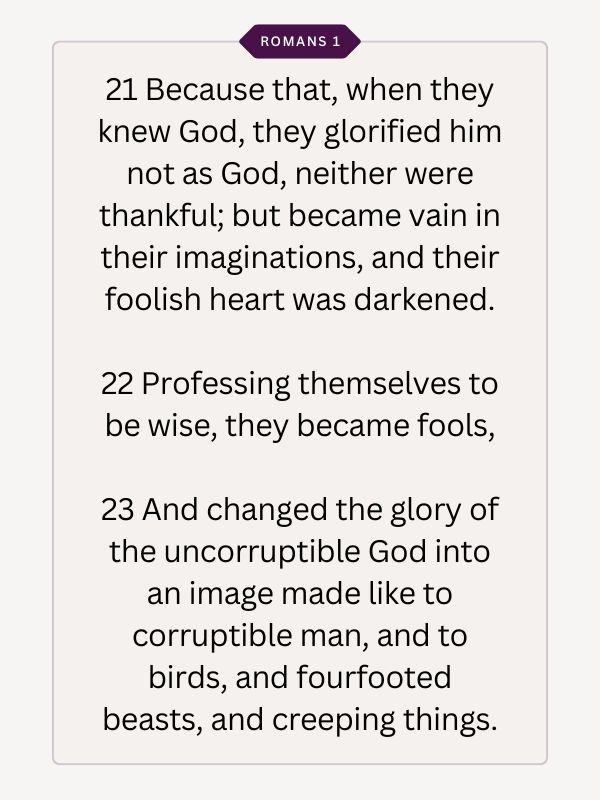
Romans 1:21 reads, “Because that, when they knew God, they glorified him not as God, neither were thankful; but became vain in their imaginations, and their foolish heart was darkened.” This verse stands as a stark reminder of the perilous path that can lead someone to drift away from the freedom offered in Christ. It serves as both a warning and a reflection on what happens when we fail to honor God properly, live in ungratefulness, or abandon the pursuit of truth. But, in the context of salvation and freedom, I want us to consider something deeper: what happens when we reverse this progression—when we choose to honor God, remain thankful, and keep our hearts enlightened?
The Beginning of Freedom in Christ
The journey into true freedom begins when we choose to know God. This is not a superficial understanding, but a deep, personal relationship with the Creator, made possible through Jesus Christ. Salvation is not merely a matter of intellectual acknowledgment of God’s existence; it is an invitation into union with Him, where His Spirit dwells in us. When we choose to know Him, we also choose to submit to His will. We acknowledge His lordship, and we align ourselves with His purpose for our lives. This is where true freedom begins—because in Christ, we are set free from the chains of sin, guilt, and condemnation.
Romans 1:21 starts with a warning: “When they knew God, they glorified Him not as God.” When we fail to honor God for who He truly is, when we refuse to give Him the praise and honor He deserves, we begin the first step of drifting away from the freedom we are meant to experience. Think about this: freedom in Christ is not just the absence of sin—it is the presence of something far greater: a life that is fully surrendered to God’s will. If we stop glorifying Him, if we stop truly recognizing His greatness and sovereignty, we begin to lose that sense of freedom.
The Erosion of Freedom: A Lack of Thankfulness
The next part of this verse states that these individuals “neither were thankful.” Thankfulness is an essential part of the Christian life. The Apostle Paul continually exhorts the church to be thankful in all circumstances (1 Thessalonians 5:18). Why? Because thankfulness reorients our hearts back toward the truth of who God is. It reminds us of His goodness, His faithfulness, and His provision. When we are ungrateful, we begin to forget these truths, and our perspective on life shifts. Instead of living in the freedom that comes from gratitude and trust in God, we begin to become consumed by our own desires, doubts, and frustrations.
When we are not thankful, we lose sight of the cross—the price that was paid for our freedom. We forget that in Christ, we have everything we need. This lack of thankfulness can make us susceptible to spiritual blindness, where we forget what God has done and lose the joy and freedom that come with being in Christ.
The Descent into Spiritual Darkness
Romans 1:21 further reveals that “they became vain in their imaginations, and their foolish heart was darkened.” This describes the spiral that begins when we choose not to honor God and fail to cultivate a heart of gratitude. As we ignore truth, our imaginations and thoughts become clouded with lies, pride, and selfishness. We start to make foolish decisions and become increasingly disconnected from the truth of the Gospel. Our hearts grow dark.
It is the same for those of us who are in Christ. If we begin to drift away from glorifying God, if we forget to give thanks for the freedom we have, and if we allow our hearts to be filled with vanity and selfish ambition, we begin to experience a loss of the closeness and peace we once had with Him. The darkness doesn’t happen overnight—it starts with small compromises. But eventually, if we continue to walk this path, we can feel as though we have lost that sense of freedom in Christ.
Reversing the Decline: Returning to True Freedom
But here is the hope: the reverse of Romans 1:21 is where freedom is truly found.
Honor God as God: We must begin by acknowledging and glorifying God for who He is. This is not just a mental exercise—it is a lifestyle. We are called to live in awe of God’s greatness, and in everything we do, we must reflect His glory. When we do this, we position ourselves to receive His truth, His freedom, and His presence.
Be Thankful: Gratitude is the antidote to spiritual drifting. It is a choice to see God’s hand at work in our lives, even in difficult circumstances. We must cultivate a heart of thanksgiving, remembering His faithfulness and His goodness. Thankfulness restores our perspective and brings us back to a place of freedom.
Guard Your Thoughts: The imagination is a powerful thing. If we allow ourselves to entertain thoughts of pride, selfish ambition, or anything contrary to the truth of God, we open the door to spiritual darkness. Instead, we must renew our minds daily with the Word of God (Romans 12:2), allowing His truth to guide our thoughts and actions. When we fill our minds with His Word, we protect ourselves from the vain imaginations that lead to spiritual bondage.
Let Your Heart Be Transformed: As we honor God, remain thankful, and focus our minds on His truth, our hearts are transformed. The darkness that clouds our hearts is replaced with light. This is the path to true freedom in Christ—the ongoing, daily journey of surrender, trust, and renewal.
The Challenge to the Disciple
So, let me challenge you, beloved disciple of Christ. Where are you in this process? Are you honoring God and living a life of thankfulness? Or have you allowed your heart to drift into vanity and darkness? The good news is that freedom is available, but it is up to us to pursue it. It is up to us to reverse the downward spiral described in Romans 1:21 and to walk in the fullness of the freedom that Christ offers.
Remember: in Christ, you are free. Live in that truth, walk in gratitude, and let your heart be continually renewed in His presence. The path to freedom is open before you—stay on it, and you will find peace, joy, and the abundant life that Christ promised.

The Freedom to Live in His Love
Freedom in Christ: Standing Firm in Liberty
Stand firm in the freedom that Christ has given us and do not let yourselves fall back into the old ways of being trapped or burdened.
Embracing the Unshakeable Freedom That Christ Has Given Us
Galatians 5:1 states, “Stand fast therefore in the liberty wherewith Christ hath made us free, and be not entangled again with the yoke of bondage.” This passage is a powerful reminder that, in Christ, we have been set free, but this freedom requires action. Paul’s exhortation to the Galatians—and to all believers—is to stand firm in the liberty we have received, refusing to return to the slavery of sin and the law. But what does this freedom really mean, and how do we hold on to it in our daily lives? What is the challenge that we, as modern-day disciples of Christ, face when it comes to living in true freedom?
The Foundation of Our Freedom
Before we dive deeper into this passage, let’s first understand what this freedom is based on. True freedom is not just the ability to choose anything we want—it is freedom from sin, freedom from condemnation, and freedom from the constraints of the law. This is the kind of liberty Christ has purchased for us through His death and resurrection. He has taken the penalty of sin upon Himself, and in doing so, He has removed the power of sin from our lives. The old law, with its rituals and requirements, has been fulfilled in Christ, and we are no longer bound by it (Romans 10:4).
In Galatians 5:1, Paul is reminding the believers of the incredible gift of salvation they have received. This freedom is not just a theoretical idea; it is something that should be actively lived out. “Stand fast,” he says. “Stand firm.” The imagery here is of someone who is resolutely planted, someone who is not swayed by circumstances or the pull of the world. It is a call to be steadfast in the truth of the Gospel—no matter what external forces may try to pull us back into the yoke of bondage.
The Danger of Returning to Bondage
The apostle Paul warns believers not to “be entangled again with the yoke of bondage.” The Galatians were in danger of turning back to the old ways of the law, specifically the rituals and customs that were part of the Mosaic covenant. In their desire to please God, some were beginning to add these old practices to their faith in Christ, as if the work of Christ wasn’t enough. But to return to these things, Paul says, would be to fall from grace (Galatians 5:4).
For us today, the same danger exists. It might not be a matter of returning to the rituals of the Old Testament law, but it could be the temptation to rely on our own works, our own ability to “earn” God’s favor, or our attempt to find security in anything other than Christ. When we place our trust in anything other than His finished work on the cross, we are returning to a form of bondage. This could be the bondage of self-reliance, performance, legalism, or even our own expectations. It’s the weight of trying to live in our own strength, instead of resting in the freedom that Christ offers.
The Power of the Spirit in Freedom
Paul continues in Galatians 5 by reminding us that true freedom is not just freedom from sin, but also freedom to live by the power of the Holy Spirit. The law, with its external rules, could never transform the heart. It could point out sin but never empower a person to live rightly. But in Christ, we are not left to our own devices. “For we through the Spirit wait for the hope of righteousness by faith” (Galatians 5:5). This is the good news: we have the Holy Spirit within us, enabling us to live in the freedom Christ has won for us. We no longer have to strive in our own strength to be righteous, but instead, we are empowered by the Spirit to live in the righteousness of Christ. This is the true fruit of freedom.
Paul then contrasts two ways of living: according to the flesh and according to the Spirit. The flesh seeks its own desires—sinful, selfish, and enslaving. It leads to works of the flesh, which Paul lists in Galatians 5:19-21: adultery, fornication, idolatry, hatred, strife, and envy, among others. These are the signs of a life that is not lived in freedom, but rather in bondage to sin.
However, when we live according to the Spirit, we produce the fruit of the Spirit (Galatians 5:22-23): love, joy, peace, long-suffering, gentleness, goodness, faith, meekness, temperance. This is the true freedom we are meant to walk in—freedom not just from sin, but freedom to live as God originally intended us to live, in union with Him, empowered by His Spirit.
The Challenge of Staying Free
So, the question is: how do we stand fast in the liberty wherewith Christ has made us free? How do we ensure that we don’t fall into the trap of returning to bondage?
Daily Remind Yourself of the Gospel: We must constantly remind ourselves of the truth of the Gospel—that Christ has set us free. We are no longer bound by sin or the law, but we are free to live in Him. This reminder is not a one-time thing; it’s a daily practice.
Walk in the Spirit: True freedom comes from the power of the Holy Spirit, not from our own strength. We must submit to the Spirit’s leading in our lives. We do this by spending time in prayer, reading Scripture, and cultivating a relationship with God that is constantly in tune with His will.
Guard Against Legalism: Legalism is a form of bondage. It’s the mindset that we must earn God’s favor through our actions, rather than resting in His grace. While good works are important, they are not the means by which we are saved or kept saved. Our salvation is by grace alone.
Live in Love: Paul concludes by reminding us that all the law is fulfilled in the command to love our neighbor as ourselves (Galatians 5:14). True freedom is not about self-centered living; it’s about living in love, serving others, and glorifying God.
The Invitation to True Freedom
Beloved disciple, you have been called to a life of freedom in Christ. Stand firm in that freedom. Don’t be entangled again by the yoke of bondage. The world, the flesh, and the enemy will try to draw you back, but you have been set free to live for God and to live in the power of the Holy Spirit. Embrace that freedom today. Walk in the Spirit, love others, and live the life that Christ died to give you.
True freedom is not a license to sin, but a call to live in righteousness, joy, peace, and love. Stand fast, therefore, in the liberty wherewith Christ has made you free.

Empowered to Walk in His Righteousness
Freedom in Christ: No Condemnation in Him
There is no longer any judgment for those who belong to Christ Jesus, as long as they live according to the Spirit and not simply follow their own desires.
Embracing the Power of the Spirit and Walking in Freedom
Romans 8:1-4 offers one of the most powerful declarations in all of Scripture. It reads, “There is therefore now no condemnation to them which are in Christ Jesus, who walk not after the flesh, but after the Spirit.” This verse encapsulates the heart of the Gospel message, reminding believers of the ultimate freedom they have in Christ—freedom from condemnation. But what does this freedom mean in practice, and how can we live out this truth in our daily lives?
No Condemnation: A Declaration of Freedom
The first key phrase in this passage is “there is therefore now no condemnation.” To understand this declaration fully, we must first grasp the weight of condemnation. Condemnation means judgment and punishment for wrongdoing. It’s the sentence of guilt and the inevitable consequence of sin. The Bible is clear that the wages of sin is death (Romans 6:23). But in Christ, we are told that there is no condemnation.
This is the good news of the Gospel: Jesus Christ, through His death and resurrection, has taken the full penalty of sin upon Himself. The condemnation we deserved was placed on Him, and now, in Him, there is no condemnation for those who believe. This is the essence of grace—undeserved favor. We are justified before God, not because of our works, but because of Christ’s finished work on the cross.
This truth is life-changing. Many believers still carry around guilt and shame from past mistakes, whether they be past sins, failures, or regrets. But Romans 8:1 calls us to release those burdens. If you are in Christ, there is no condemnation. You are free. This freedom is not based on your performance but on the grace of God, and this truth sets us free from the weight of guilt that so often holds us back from fully experiencing God’s love and peace.
The Condition of Freedom: Walking in the Spirit
The next part of Romans 8:1 tells us that there is no condemnation “to them which are in Christ Jesus, who walk not after the flesh, but after the Spirit.” While this verse proclaims freedom from condemnation, it also gives us a key to experiencing and maintaining that freedom: walking according to the Spirit.
What does it mean to walk according to the Spirit? Walking in the Spirit means living in constant alignment with the Holy Spirit’s guidance and power. It means choosing God’s ways over the ways of the flesh, the old sinful nature that is still present in us. The flesh seeks self, sin, and selfish desires. It is at odds with God and His purposes. Walking according to the flesh leads to destruction and bondage.
However, walking according to the Spirit leads to life and peace (Romans 8:6). The Holy Spirit, whom God has given to every believer, empowers us to live in freedom. He helps us resist temptation, guides us into truth, and produces in us the fruit of righteousness (Galatians 5:22-23). The Spirit is our helper and counselor, and when we walk in step with Him, we experience the fullness of freedom in Christ.
Paul’s emphasis here is that while we are free from condemnation, our freedom is not a license to live however we want. The key to maintaining our freedom is walking in the Spirit, continually choosing to surrender our will to God’s. This does not mean that we will live perfectly, but it means that we will live in active pursuit of God’s will, relying on His power to transform us.
The Power of the Law of the Spirit of Life
Romans 8:2-4 reveals the powerful reason behind this freedom: “For the law of the Spirit of life in Christ Jesus hath made me free from the law of sin and death.” The law of sin and death refers to the principle that sin leads to death, both physical and spiritual. This is the reality for everyone apart from Christ. But in Christ, we are under a new law—the law of the Spirit of life.
This new law is the work of the Holy Spirit in our lives. The law of the Spirit of life sets us free from the bondage of sin and its consequences. It’s not that sin no longer has any power over us, but that through the Holy Spirit, we are empowered to overcome it. Christ has fulfilled the righteous requirement of the law (Romans 8:4) on our behalf, and through Him, we have victory over sin and death.
This is the very essence of the Christian life: victory through Christ. We no longer need to be enslaved to the sinful patterns that once controlled us. Instead, we can walk in the freedom that the Spirit gives, living according to God’s purposes and desires. The law of the Spirit of life is a law of freedom, a law that grants us the power to live above sin and death. This freedom is not just theoretical—it is practical and transformative.
The Fulfillment of the Law in Us
In Romans 8:4, Paul adds, “That the righteousness of the law might be fulfilled in us, who walk not after the flesh, but after the Spirit.” Christ fulfilled the law’s righteous requirements through His perfect life and sacrificial death. And now, through the power of the Holy Spirit, we, too, can walk in righteousness. This righteousness is not our own but is a fruit of the Spirit working in us. It is God’s righteousness imputed to us and worked out through us by His grace.
Paul is clear that the fulfillment of the law does not come by our own striving or efforts. It is only through walking in the Spirit that we can live out the righteousness God desires. The Spirit transforms our hearts and minds, enabling us to live in ways that please God and reflect His holiness.
Living in the Freedom of No Condemnation
How then should we live in light of this incredible truth?
Rest in Christ’s Finished Work: Understand and believe that there is no condemnation for you in Christ Jesus. Your past sins are forgiven. Your future failures are covered by His grace. This frees you from guilt and shame.
Walk in the Spirit: Choose daily to live in alignment with the Holy Spirit. Surrender your desires to God’s will and rely on the Spirit’s power to live a righteous life. Seek God in prayer, Scripture, and obedience.
Live in Victory Over Sin: Remember that through Christ, you have been set free from the law of sin and death. Sin no longer has the final word in your life. You have the power, through the Spirit, to overcome it.
Pursue Righteousness: Allow the Spirit to work righteousness in you. Be intentional about living a life that reflects the character of Christ, not in your own strength, but in the power of the Spirit.
The Invitation to Live Free
Beloved disciple, “there is therefore now no condemnation to those who are in Christ Jesus.” Walk in that truth today. Stand firm in your freedom, not by your own strength, but by the Spirit who empowers you to live above sin and live for Christ. Embrace the fullness of life in the Spirit, knowing that through Him, you have been set free to live for God’s glory.

In the Freedom of Christ's Love
Freedom in Christ: True Freedom in the Son
The Unshakable Freedom Found Only in Jesus
John 8:36 boldly declares, “If the Son therefore shall make you free, ye shall be free indeed.” This statement encapsulates one of the most profound truths of the Christian faith: true freedom is not found in external circumstances, wealth, or achievements but in the person of Jesus Christ. To understand this verse fully, we must dive into its context and the implications it has for our daily lives.
The Context of True Freedom
In John 8, Jesus is having a deep conversation with the Jews about freedom and truth. He begins by explaining that the truth will set them free (John 8:32), and He elaborates on what that freedom truly looks like. The Jews, however, respond with confusion, claiming that they have never been enslaved to anyone (John 8:33), despite their history of bondage in Egypt and exile. They fail to understand that Jesus is not speaking about political or physical freedom but spiritual freedom.
Jesus responds in verse 34, “Verily, verily, I say unto you, Whosoever committeth sin is the servant of sin.” Here, He unveils a powerful reality: true slavery is not physical but spiritual. Those who are in bondage to sin are enslaved to its power. Sin holds dominion over the hearts of mankind, and without intervention, it leads to death and separation from God. Jesus, however, presents Himself as the solution to this problem. “If the Son therefore shall make you free, ye shall be free indeed.”
The Power of Christ to Set Us Free
The “Son” in this verse refers to Jesus Christ, who, through His death and resurrection, has made the way for humanity to experience true freedom. The freedom Jesus offers is not temporary or conditional—it is permanent and complete. When Christ sets someone free, they are free indeed—there is no returning to the chains of sin, no slipping back into spiritual bondage, and no fear of condemnation.
This freedom goes far beyond the mere forgiveness of sins. It is a total transformation of the believer’s life. In Christ, we are not just pardoned; we are set free from the power of sin. The chains that once bound us—our sinful nature, our passions, our desires—are broken. In Christ, we are made new. We are no longer slaves to sin, but servants of righteousness (Romans 6:18). This is the freedom that Jesus offers, and it is a freedom that can never be taken away.
The Nature of True Freedom
Jesus makes it clear in John 8:36 that the freedom He offers is not like any other freedom the world offers. The freedom the world offers is fleeting. It’s based on circumstances—financial independence, career success, or physical comfort. But these freedoms are often temporary and can be easily lost. The freedom Jesus offers, however, is eternal and unshakable. It is rooted in His finished work on the cross, which cannot be undone.
When Christ sets us free, it is a permanent freedom that cannot be revoked. There is no situation, no sin, no circumstance that can steal the freedom that comes from being in Christ. This is why Jesus’ declaration is so powerful. “Ye shall be free indeed.” Indeed, truly, completely—this freedom is full and final. It is freedom from the power of sin, from the penalty of sin, and from the fear of death. The Son has made us free, and that freedom is secure forever.
The Freedom to Live for God
True freedom, according to the Bible, is not just about escaping from something (sin and death) but also about being free to live for something greater—namely, God’s purposes and glory. This is the paradox of Christian freedom: while we are free from sin, we are now free to live according to God’s will. We are freed to love, to serve, and to live lives that reflect God’s goodness and holiness.
In Romans 6:22, Paul writes, “But now being made free from sin, and become servants to God, ye have your fruit unto holiness, and the end everlasting life.” True freedom is found not in living for oneself but in living for God. It is freedom from the tyranny of self-centeredness and freedom to embrace a life of selflessness and love for others. In Christ, we are freed to fulfill the purpose for which we were created—to glorify God and enjoy Him forever.
Living Out Our Freedom
As we reflect on the freedom that Christ has won for us, we must also consider how we are living out this freedom. Are we living in the reality of our freedom, or are we still trapped by old habits, thoughts, and behaviors? True freedom is not about passivity; it’s about active engagement with the new life Christ has given us. It’s about walking in the Spirit, choosing to live according to the Word of God, and serving others in love.
Paul writes in Galatians 5:1, “Stand fast therefore in the liberty wherewith Christ hath made us free, and be not entangled again with the yoke of bondage.” Just as we did not earn our freedom, neither can we keep it by our own strength. We must actively stand firm in the freedom Christ has given us, guarding against the temptations that seek to bring us back into bondage.
The Call to Proclaim Freedom
Not only are we free, but we are also called to share this freedom with others. The gospel of Jesus Christ is the message of freedom—the freedom that He offers to all who believe. As disciples of Christ, we are called to proclaim this freedom to a world that is still in bondage to sin. We are ambassadors of freedom, commissioned to share the truth that in Christ, there is true freedom, and it is available to all who come to Him.
How to Live in the Freedom Christ Provides
Recognize the Source of Freedom: Understand that true freedom is not found in your circumstances, achievements, or relationships, but in Christ alone. Only He can set you free from the bondage of sin.
Embrace Your New Identity: You are no longer a slave to sin; you are free in Christ. Live in the truth of your new identity as a child of God, redeemed and forgiven.
Walk in the Spirit: The freedom Christ offers is not a license to live for yourself, but the power to live for God. Walk in the Spirit, allowing Him to guide you and empower you to live out the freedom Christ has given you.
Stand Firm in Your Freedom: Resist the temptations and pressures that would seek to drag you back into the bondage of sin. Stand firm in the freedom Christ has secured for you, and do not be entangled again with the yoke of bondage.
Proclaim the Freedom of the Gospel: Share the message of freedom in Christ with others. Let them know that true freedom is available to all who will come to Jesus.
Conclusion: Free Indeed
Beloved, “If the Son therefore shall make you free, ye shall be free indeed.” This is not a fleeting freedom but a lasting, eternal freedom. In Christ, you are free from the power of sin, the penalty of sin, and the fear of death. You are free to live for God and fulfill your purpose in Him. Stand firm in this freedom, walk in the Spirit, and share the message of this freedom with a world in desperate need of it. True freedom is found only in Christ, and in Him, you are free indeed.

Living in the Power of His Freedom
Freedom in Christ: The Glorious Liberty of the Children of God
The Ultimate Redemption from Bondage to Glorious Freedom
Romans 8:21 declares, “Because the creature itself also shall be delivered from the bondage of corruption into the glorious liberty of the children of God.” This passage offers a powerful glimpse into the hope of ultimate freedom—freedom not only for humanity but for all of creation. The verse unveils the profound reality that the entire created order, which has been subjected to decay and corruption due to sin, will be liberated and restored in Christ. To fully understand the depth of this verse, we must explore its context and the breathtaking future that awaits believers.
The Context of Creation’s Bondage
Romans 8 is one of the most hopeful chapters in the New Testament, showing the glory of life in the Spirit and the future restoration of all things. In verses leading up to Romans 8:21, Paul paints a picture of the present suffering and groaning of creation. Romans 8:18–20 reveals that the whole of creation is groaning, waiting for the day of its redemption. The curse of sin has not only affected humanity but also the entire created world. The earth, the animals, the skies—everything has been subjected to corruption and decay. This is the result of humanity’s sin in the Garden of Eden, where Adam and Eve’s disobedience led to a broken relationship with God and a cursed world.
As a result, creation is in bondage to corruption. It is not what it was originally created to be. Instead of flourishing, it decays, withers, and is marked by death and destruction. The environment groans under the weight of pollution, natural disasters, and decay. Humanity experiences this bondage in its own bodies—facing disease, aging, and ultimately death. Yet, despite the present condition of the world, there is hope. Paul’s words remind us that this is not the final state of creation.
The Deliverance Promised: A Glorious Liberty
Romans 8:21 brings a thrilling promise: “The creature itself also shall be delivered from the bondage of corruption into the glorious liberty of the children of God.” The phrase “delivered from the bondage of corruption” points to the fact that this present state of decay is temporary. Just as the believer experiences the freedom that comes with redemption in Christ, creation itself will also experience a future redemption—a glorious liberation from its current bondage to sin and corruption.
This is a reference to the ultimate restoration of all things that will take place at the return of Christ. Just as believers in Christ will be given glorified bodies, free from sickness, aging, and death, so too will the created world be transformed. In Revelation 21:1, we read of the new heavens and the new earth, where God will dwell with His people, and there will be no more death, mourning, or pain. The curse that has marred creation will be completely undone.
The Glorious Liberty of the Children of God
What makes this promise so significant is the reference to “the glorious liberty of the children of God.” The ultimate freedom that awaits all believers in Christ is a glorious freedom. This is not just freedom from sin and death, but freedom to fully live as God intended, in perfect harmony with Him and with one another. It is freedom from all the corruption that currently stains creation—from the suffering, decay, and brokenness that we experience today. This liberty is glorious because it is the freedom to experience the fullness of God’s presence and His perfect creation, free from the bondage of sin and death.
Paul’s description of “the glorious liberty of the children of God” invites us to look beyond our present struggles and suffering. While we experience the effects of the fall today, there is coming a day when we will experience the full restoration of all things in Christ. This is the freedom we were created for—a freedom that is eternal, unshakable, and overflowing with joy, peace, and life.
The Present and Future Dimensions of Freedom in Christ
Romans 8:21 highlights both the present and future dimensions of our freedom in Christ. Right now, we live in the tension between the “already” and the “not yet.” In one sense, we have already been set free from sin and death through Christ’s work on the cross. As Romans 8:1–2 assures us, “There is therefore now no condemnation to them which are in Christ Jesus…For the law of the Spirit of life in Christ Jesus hath made me free from the law of sin and death.” Our spiritual freedom is already a reality, but we still experience the effects of sin and suffering in the world. We still face physical decay, emotional struggles, and trials.
However, in another sense, we are awaiting the full realization of our freedom, the completion of our redemption, when Christ returns to make all things new. As believers, we live in the “already” of our salvation but eagerly await the “not yet” of the ultimate restoration and liberation of creation. This is the glorious hope we hold onto—the day when we will experience the fullness of God’s glory and our ultimate freedom.
The Call to Live in Light of Our Future Freedom
While we wait for the ultimate freedom to be realized, there is a call for us to live in light of the freedom we already have in Christ. In Galatians 5:1, Paul exhorts believers, “Stand fast therefore in the liberty wherewith Christ hath made us free, and be not entangled again with the yoke of bondage.” Our present freedom in Christ is a foretaste of the glorious liberty that is to come. Therefore, we are called to live in the reality of that freedom today, not allowing ourselves to be entangled by sin or the distractions of the world.
As we await the day when creation itself is delivered from corruption, we are to live as people who are free in Christ. We are free from the power of sin, free from condemnation, and free to live in the power of the Holy Spirit. This freedom is not just a future promise—it is a present reality. By living according to the Spirit and walking in the newness of life, we can reflect the glory of the freedom that Christ has already won for us.
Living with Hope in a Broken World
As we look at the brokenness and decay of the world around us, Romans 8:21 reminds us that this is not the end. There is a coming liberation, a glorious freedom that will transform everything. This hope should fuel our endurance as we face suffering, persecution, and the challenges of life. It should also motivate us to be agents of redemption in the world, sharing the hope of the gospel with others and living as witnesses to the freedom found in Christ.
How to Live in the Freedom of Christ
Embrace Your Redemption: Recognize the freedom you have in Christ. You are free from sin, guilt, and condemnation. Live as one who has been set free.
Live with Hope: Understand that the suffering of this present world is temporary. There is coming a day when all things will be made new, and creation itself will be restored.
Stand Firm in Freedom: Do not let yourself be ensnared by the bondage of sin or the distractions of the world. Stand firm in the liberty Christ has given you.
Be an Agent of Redemption: As you experience the freedom of Christ, share that freedom with others. Be a witness to the hope of the gospel and invite others into the glorious liberty of the children of God.
Conclusion: The Promise of Freedom
Romans 8:21 holds a glorious promise for all of creation—the bondage of corruption will one day be replaced with the glorious liberty of the children of God. This promise assures us that, just as we have been redeemed and set free in Christ, so too will the entire world be redeemed and restored. The chains of sin and decay will be broken, and creation will be made new. Until that day, we are called to live in the freedom we already have, standing firm in Christ, and eagerly anticipating the fulfillment of God’s promise of ultimate redemption.

In the Freedom to Love and Serve
Freedom in Christ: Called to Serve in Liberty
Brethren, you are called to be free, but do not let this freedom lead you to indulge in selfish desires; instead, use it to love and serve each other.
The True Nature of Christian Freedom—Freedom to Love and Serve
In Galatians 5:13-14, Paul exhorts the believers with a powerful reminder: “For, brethren, ye have been called unto liberty; only use not liberty for an occasion to the flesh, but by love serve one another.” These verses challenge us to understand the true nature of Christian freedom. Freedom in Christ does not mean freedom to indulge our fleshly desires or to live in selfishness. Instead, it is the freedom to serve one another in love.
Understanding the Call to Liberty
When Paul speaks of being “called unto liberty,” he refers to the freedom believers receive through Christ’s sacrifice on the cross. This freedom is not an invitation to lawlessness or indulgence, but to a life free from the bondage of sin and condemnation. It is a freedom that empowers us to live according to the will of God, rather than being enslaved to our sinful nature.
In Christ, we are free from the guilt of sin and the power of death. We are no longer bound by the constraints of the law, which could not justify us or give us true righteousness. The law, though good, exposed our inability to live up to God’s perfect standards. But through faith in Christ, we are made righteous, not by our works, but by His grace. This is the liberty Paul speaks of—a freedom that results from grace, not from our own striving.
Liberty Not for Self-Indulgence
However, Paul cautions against using this liberty “for an occasion to the flesh.” The freedom we have in Christ is not a license to pursue selfish desires or to live in sinful indulgence. Sadly, there is a temptation to misunderstand freedom as the ability to do whatever we please, regardless of the consequences. But true Christian freedom is not about gratifying our own desires—it’s about surrendering our desires to the will of God.
The “flesh” in this context refers to our sinful nature, that part of us that is self-centered, proud, and disobedient to God. Before we were saved, we were slaves to the flesh, unable to choose what was right on our own. But in Christ, we are given the power to overcome the flesh, to say “no” to sin, and to live in a way that honors God. True freedom is the ability to choose the right, not the ability to choose whatever we want. It is the freedom to serve others, not to serve ourselves.
The Call to Serve One Another in Love
Paul’s ultimate message here is that Christian freedom is not about self-centered living but about serving others in love. He says, “but by love serve one another.” This is the essence of what it means to live in the freedom of Christ. When we are freed from the bondage of sin, we are freed not only from the consequences of our sin but also from the tyranny of selfishness. Our freedom is not for us to hoard; it is to be poured out in service to others.
The law of Christ is the law of love—love for God and love for others. In fact, Jesus Himself said that all the commandments of God hang on these two: “Thou shalt love the Lord thy God with all thy heart, and with all thy soul, and with all thy mind…Thou shalt love thy neighbour as thyself” (Matthew 22:37-39). This love is not just an emotion; it is a sacrificial love that seeks the good of others, even at the expense of our own comfort or desires. This is the love that Christ demonstrated on the cross—laying down His life for us.
In a world that tells us to pursue our own happiness, freedom, and desires, the Christian call is radical. We are free, yes—but our freedom is expressed in love for others, not in selfish indulgence. The true mark of a believer is not how much freedom they can take for themselves, but how much they are willing to give of themselves for the sake of others.
The Fulfillment of the Law in Love
In verse 14, Paul goes on to say, “For all the law is fulfilled in one word, even in this; Thou shalt love thy neighbour as thyself.” This is a profound statement. The law, which once seemed so burdensome and impossible to keep, is now fulfilled in the command to love. Christ fulfilled the law on our behalf, and in doing so, He freed us from the obligation to follow the law as a means of justification. But He did not free us from the moral requirements of the law. Instead, He fulfilled the law through His life and death, and now calls us to live out the essence of the law: to love our neighbors as ourselves.
This is the freedom we are called to: a freedom that does not result in self-indulgence but in self-giving. This is not a freedom to do as we please but a freedom to choose the good of others over our own desires. It is a freedom that brings us into a deeper relationship with God and others, reflecting the heart of Christ.
Practical Applications: Living Out the Freedom in Christ
Examine Your Motives: Take a moment to reflect on how you use your freedom in Christ. Are you using it to serve others, or are you indulging the flesh? The freedom in Christ should not be used for selfish purposes, but to glorify God and serve those around us.
Love Your Neighbor: The command to love others is the heart of the Christian faith. Consider how you can serve those around you. Whether it’s offering a listening ear, helping a neighbor, or showing kindness to someone in need, let your actions reflect the love of Christ.
Live Sacrificially: True freedom in Christ is not about personal gain but about laying down our lives for others. Look for ways to sacrifice your time, resources, and energy for the good of others. As you do this, you will experience the joy that comes from walking in the footsteps of Jesus.
Guard Against Legalism and License: Freedom in Christ is a delicate balance. We are not to fall back into legalism, thinking that our works save us, nor are we to fall into lawlessness, using freedom as an excuse to sin. Walk in the Spirit, and let the fruit of the Spirit guide your actions.
Cultivate a Heart of Service: Being free in Christ means having the heart of a servant. Look for opportunities to serve those around you, both within the church and in your community. This is the highest expression of freedom—using your liberty to bless others.
Conclusion: Freedom for Love and Service
Galatians 5:13-14 provides a powerful reminder of the true nature of Christian freedom. We have been called to liberty, but that liberty is not for self-indulgence—it is for service. The freedom we have in Christ is the freedom to love, to serve, and to fulfill the law of God by loving our neighbors as ourselves. As we live out this freedom, we reflect the heart of Christ and become agents of His love and grace in the world. May we never misuse our freedom, but instead, let it propel us into a life of sacrificial love and service to others.

Our Divine Heritage in Christ
Freedom in Christ: From Bondage to Sonship
Embracing the Fullness of Freedom Through the Spirit of Adoption
In Galatians 4:3-7, the apostle Paul paints a powerful picture of the believer’s journey from bondage to the glorious freedom of sonship. He writes: “Even so we, when we were children, were in bondage under the elements of the world: But when the fullness of the time was come, God sent forth his Son, made of a woman, made under the law, To redeem them that were under the law, that we might receive the adoption of sons.” Here, Paul takes us on a journey—one that shows us the transformation from being in bondage to the elements of the world, to being set free as children of God.
The Bondage of the Elements of the World
Paul begins by reflecting on the time before Christ: when we, as human beings, were in bondage. This bondage was under the “elements of the world.” What are these elements? In this context, the “elements” refer to the basic principles or spiritual forces that govern the world. These could include the laws of sin and death, the rituals and rules that religion imposes, or even the patterns of behavior driven by worldly values and the flesh.
Before Christ, all of humanity was under the oppression of these elements—unable to break free, no matter how hard they tried. This bondage included the enslaving nature of sin, which dominated the human heart, making it impossible to live up to God’s perfect standard. People were trapped in futile efforts to attain righteousness by their own works or by adhering to laws that could not redeem them. As children, humanity lived under this cruel bondage, unaware of the freedom that was to come.
The Fullness of Time: God’s Perfect Plan
Paul continues: “But when the fullness of the time was come, God sent forth his Son, made of a woman, made under the law.” Here we see the perfect timing of God’s plan of redemption. At the right moment in history, God sent His Son, Jesus Christ, to redeem us from the bondage of sin and the elements of the world. Jesus was born of a woman, under the law, and yet He perfectly fulfilled that law, something we could never do.
This is the heart of the gospel—the moment when God’s divine plan of salvation broke into human history. Jesus, fully God and fully man, came into the world to set us free from the chains of sin, to fulfill the law that we could not, and to offer us a new way of life. His sacrifice on the cross paid the price for our sins, and through His resurrection, He triumphed over death, offering us the ultimate freedom.
Redemption and Adoption
Paul writes, “To redeem them that were under the law, that we might receive the adoption of sons.” The purpose of Christ’s coming was to redeem those who were bound by the law, to set them free from their slavery. But redemption was not the end of the story—it was the beginning. Through Christ’s work, we are not just freed from bondage, but we are also adopted into the family of God.
This adoption is one of the most beautiful aspects of the Christian faith. Through Jesus, we are no longer slaves to sin or the elements of the world. Instead, we are now “sons” and “daughters” of God. This means we have been given all the rights and privileges of children in the family of God. We are heirs to the promises of God, co-heirs with Christ, and have the assurance of eternal life.
The Spirit of Adoption and the Cry of the Heart
Paul continues in verse 6: “And because ye are sons, God hath sent forth the Spirit of his Son into your hearts, crying, Abba, Father.” The moment we accept Christ as our Savior, the Holy Spirit comes to dwell in us. This is the sealing of our adoption as children of God. The Spirit enables us to cry out to God as our “Abba”—a term of endearment meaning “Father” or “Daddy.” This is the intimacy and relationship we now have with God. No longer is He a distant deity, but He is our loving Father, and we are His beloved children.
The presence of the Spirit within us is not only a mark of our adoption but also a guarantee of our future inheritance. As children of God, we are now in a position to receive all that He has promised us, both in this life and in the life to come. The Spirit empowers us to live in the freedom of this new identity, as sons and daughters of the King, no longer enslaved to sin or the world.
No Longer Slaves, But Sons
Finally, Paul declares in verse 7: “Wherefore thou art no more a servant but a son; and if a son, then an heir of God through Christ.” Because of Christ’s redemptive work, we are no longer servants or slaves, bound by the chains of sin. We are sons and daughters, and as such, we are heirs of all the promises of God. This is the ultimate freedom—freedom not just from the consequences of sin but also freedom to inherit the fullness of God’s blessings.
We must remember that our inheritance is not just a future hope; it is also a present reality. As sons and daughters of God, we have access to all the riches of His grace, His love, and His power. We are free to live according to His will, free to serve Him without fear, and free to walk in the fullness of His love.
Practical Applications: Living Out Our Freedom in Christ
Embrace Your Identity as a Child of God: Remember that in Christ, you are no longer a slave to sin or the world. You are a beloved child of God, with all the rights and privileges that come with that identity. Live in the confidence of this truth.
Walk in the Spirit: The Holy Spirit has been sent to guide you and empower you to live as a child of God. Listen to His voice, seek His guidance, and allow Him to lead you into the fullness of God’s freedom.
Live in the Freedom of Sonship: As a son or daughter of God, you are no longer bound by the fear of the law or the elements of the world. You are free to love, serve, and live according to God’s will. Let this freedom shape how you live each day.
Cry Out to God as Your Father: Just as a child calls out to their father, you are invited to call out to God with intimacy and trust. Take time to pray and spend time with your Heavenly Father, knowing that He listens to you with love and care.
Reflect on Your Inheritance: As an heir of God, you have access to all His promises. Meditate on the riches of God’s grace and consider how you can live in light of your future inheritance, even today.
Conclusion: From Bondage to Freedom
Galatians 4:3-7 reveals the profound transformation that happens when we move from bondage under the elements of the world to the glorious freedom of sonship in Christ. Through Jesus’ sacrifice, we are not only redeemed from the law’s condemnation but also adopted into God’s family, given the privilege to call Him “Abba, Father.” This is the freedom we have in Christ—freedom to live as beloved children of God, empowered by the Holy Spirit to walk in the fullness of His love. As we embrace our identity as sons and daughters, we live not in fear, but in the glorious liberty that Christ has won for us.

Living in the Abundance of His Grace
Freedom in Christ: The Gift of Grace Through Faith
Embracing Salvation as a Divine Gift, Not a Work of Ourselves
In Ephesians 2:8, Paul writes one of the most profound statements about salvation: “For by grace are ye saved through faith; and that not of yourselves: it is the gift of God.” Here, Paul takes us to the heart of the gospel—the truth that salvation is a free gift, unearned and unmerited, granted to us by the grace of God through faith in Jesus Christ. This verse encapsulates the very essence of what it means to be saved and how we receive that salvation, giving us profound insight into the nature of God’s love and grace.
Grace: The Unmerited Favor of God
Paul begins by saying that salvation comes “by grace.” Grace, in its simplest form, means unmerited favor. It is the love, kindness, and mercy of God poured out to us, not because of anything we’ve done to deserve it, but because of His deep love for us. Grace is the starting point of our salvation. It’s not a reward for our good works or efforts; it is a gift, freely given by God. This is a radical concept because it directly contradicts the world’s way of thinking, where we are accustomed to earning what we receive. But grace tells us that salvation is not something we can work for or earn; it’s a divine gift from God.
Saved Through Faith: The Way We Receive God’s Grace
Next, Paul tells us that salvation comes “through faith.” While grace is the source of our salvation, faith is the means by which we receive it. Faith is trusting in God’s promises, particularly His promise of salvation through Jesus Christ. It’s not about having a perfect understanding or achieving flawless behavior but about putting our trust in the finished work of Christ on the cross. By faith, we believe that Jesus died for our sins and rose again, conquering death and offering us eternal life. Faith in Christ is the key that unlocks the door to salvation, the vehicle through which God’s grace reaches us.
Faith is not something we can muster up on our own—it too is a gift from God. God gives us the ability to believe, and through that belief, we receive the grace of salvation. It’s important to note that while faith is our response to God’s grace, it is not the cause of our salvation. The cause of our salvation is God’s grace, and faith is the response that allows us to step into that grace.
It Is Not of Yourselves: Humility Before the Gift
Paul continues: “And that not of yourselves.” This phrase emphasizes that salvation is not something we can achieve by our own effort. It is not the result of our works, our moral behavior, or our good intentions. It’s a humbling truth—our salvation is not because of our striving or accomplishments. It is a gift that we could never earn. This eliminates all boasting or pride, for no one can say, “I saved myself.” The grace of God shatters any illusion that we can achieve salvation by our own means. It brings us to our knees, recognizing that we are wholly dependent on God for our salvation.
This truth also frees us from the endless cycle of trying to earn God’s favor. We don’t have to prove ourselves or work tirelessly to be accepted. Salvation is a gift, not a wage earned through effort. We are free to rest in the assurance that God’s grace is sufficient for us, and we can receive it with open hands and a humble heart.
The Gift of God: Unwrapping the Blessings of Grace
Finally, Paul concludes with the most beautiful part of this verse: “It is the gift of God.” Salvation is a divine gift, given freely by God to all who believe. It is not something that can be bought or worked for. It is not based on how good we are or how much we have done for God. It is solely based on the love and mercy of God, who chose to give His Son as a sacrifice for our sins. The gift of salvation is not only freedom from sin but also freedom to walk in newness of life with God, experiencing His love, peace, and presence every day.
A gift is something that is given out of love, and salvation is the greatest gift God has given us. It is not like the gifts we give to each other, which are often temporary and imperfect. This gift is eternal, perfect, and life-transforming. It’s a gift that keeps on giving, bringing us into an everlasting relationship with the Creator. To receive this gift is to experience the fullness of God’s love and the joy of being reconciled with Him.
Practical Applications: Living in the Gift of Salvation
Acknowledge the Gift of Grace: Take time each day to reflect on the fact that your salvation is a gift of grace. You did not earn it, and you can never repay it. Allow this truth to humble you and fill you with gratitude.
Trust in God’s Promises: Remember that faith is the key to receiving God’s grace. Trust in God’s promises, particularly His promise of salvation through Christ. Your faith may waver at times, but know that God is faithful even when we are not.
Live in Freedom from Self-Effort: Salvation is not about striving to earn God’s love; it’s about resting in the finished work of Christ. Live in the freedom that comes from knowing that you are saved by grace and not by your own effort.
Share the Gift of Salvation: As you experience the transformative power of God’s grace, share this good news with others. Salvation is a gift that is meant to be shared, and there are countless others who need to know that they can be saved by grace through faith.
Cultivate a Heart of Gratitude: Salvation is a profound gift, and the response it calls for is one of deep gratitude. Cultivate a heart of thankfulness every day for the grace that God has poured out on you. Let this gratitude fuel your love for God and your desire to serve Him.
Conclusion: A Gift Beyond Measure
Ephesians 2:8 encapsulates the essence of salvation: “For by grace are ye saved through faith; and that not of yourselves: it is the gift of God.” It reminds us that our salvation is not something we can earn or work for—it is a free gift given by God’s grace, received through faith. It is a humbling and freeing truth. We have been saved by grace, and we stand in awe of the generosity of our Father. Let us live in the light of this incredible gift, knowing that we are forever free from the chains of sin and death. And as we walk in this freedom, may we never forget that it is all made possible by the love of God who gave us the gift of salvation through His Son, Jesus Christ.

The Transformative Power of Christ’s Love
Freedom in Christ: Living by the Faith of the Son of God
The Crucified Life and the Power of Christ Within Us
In Galatians 2:20, Paul articulates one of the most profound truths of the Christian faith: “I am crucified with Christ: nevertheless I live; yet not I, but Christ liveth in me: and the life which I now live in the flesh I live by the faith of the Son of God, who loved me, and gave himself for me.” This verse paints a powerful picture of the Christian identity—one of crucifixion, resurrection, and the indwelling presence of Christ. It is an invitation into a life that is no longer self-driven, but Christ-centered, a life marked by faith, love, and transformation.
I Am Crucified with Christ: Dying to the Old Self
The first part of this verse declares, “I am crucified with Christ.” Here, Paul speaks of the believer’s identification with Jesus in His death. To be crucified with Christ means that the old self—the person we once were, ruled by sin and selfish desires—has been put to death. The apostle is emphasizing the radical shift that occurs in a believer’s life when they come to faith in Christ. The act of crucifixion symbolizes the complete renunciation of the flesh, the sinful nature, and the world’s ways.
When Jesus died on the cross, He took upon Himself the full penalty for sin. He bore the weight of humanity’s rebellion against God. And when we place our trust in Him, we are spiritually united with His death. Our old nature is crucified with Him, so that the power of sin no longer has dominion over us. This truth is a foundational aspect of salvation—it is not merely that we are forgiven, but that the power of sin is broken. In Christ, we die to sin and live unto righteousness.
Nevertheless I Live: A New Identity in Christ
Paul continues, “Nevertheless I live.” Though we are crucified with Christ, there is still life. It’s a paradox—the old self is dead, but the new self is alive. The Christian life is not merely about dying to sin; it’s about being raised to new life in Christ. We are born again, not through our own strength or effort, but by the power of the Holy Spirit. This new life is not a continuation of our old ways but a whole new way of living, characterized by the indwelling of Christ Himself.
This new life in Christ is not some abstract or distant hope; it is a present reality. As Paul says in 2 Corinthians 5:17, “If any man be in Christ, he is a new creature: old things are passed away; behold, all things are become new.” The believer is now alive in Christ, with a new identity, a new heart, and a new purpose. The old man is gone, and the new creation has come. Our life is no longer defined by our past mistakes, our struggles, or our failures. We are defined by the life of Christ living within us.
Yet Not I, But Christ Liveth in Me: The Power of Christ Within
Paul then declares, “Yet not I, but Christ liveth in me.” Here lies the key to the Christian life. It is not merely about us trying to live better lives or make better decisions—it is about Christ living in us and through us. The life we now live is not powered by our own efforts or abilities; it is Christ who empowers us. The believer is the vessel, but Christ is the source of life, strength, and transformation.
This truth is both humbling and liberating. It’s humbling because it reminds us that we cannot live the Christian life in our own strength; we must rely on Christ. And it’s liberating because we are free from the burden of trying to live up to impossible standards in our own power. Christ living in us means that His strength is made perfect in our weakness. It means that when we face challenges, trials, and temptations, we do not face them alone—Christ is with us, and He is the one who enables us to overcome.
And the Life Which I Now Live in the Flesh I Live by the Faith of the Son of God: Living by Faith
Paul continues, “And the life which I now live in the flesh I live by the faith of the Son of God.” Though we are still living in the flesh, in this earthly body, our lives are now governed by faith. It is not by our own works or striving, but by the faith of the Son of God. This is a faith that is rooted in the knowledge of Christ’s love for us, His sacrifice on the cross, and His resurrection. It is a faith that leads us to trust in Him, rely on Him, and walk in His ways.
This faith is not something we muster up on our own. It is the faith of Jesus Himself—the faith that He lived out during His earthly ministry. And because of this, our faith is secure. It is not dependent on our fluctuating emotions or circumstances, but on the unchanging character of Christ. He loved us, gave Himself for us, and continues to empower us to live for Him. As we live by this faith, we are constantly reminded that our salvation is not of our own doing, but the work of Christ within us.
Who Loved Me, and Gave Himself for Me: The Love of Christ as Our Motivation
Finally, Paul ends with the most profound reason for this radical shift in his life: “Who loved me, and gave himself for me.” The love of Christ is the foundation of everything Paul speaks of in this verse. It is the love of Christ that compels him to live this new life. It is the love of Christ that gives him strength to overcome sin and temptation. It is the love of Christ that fuels his faith, his obedience, and his service.
Christ’s love is not just an abstract concept; it is a personal love, a love that He has for you and for me. He loved us so much that He was willing to lay down His life for us. This love is what changes us. It is what motivates us to live for Him. The more we meditate on His love, the more we are transformed by it. His sacrificial love is the greatest motivator for the Christian life—it is the reason we seek to live according to His will and serve others.
Practical Applications: Living the Crucified Life
Identify with Christ’s Death: Each day, remind yourself that you are crucified with Christ. Your old self, with all its sin and shame, has been put to death. Walk in the freedom of this truth.
Let Christ Live in You: Surrender your life to Christ and invite Him to live through you. Seek His guidance, rely on His strength, and allow Him to transform you from the inside out.
Live by Faith: In every area of your life, live by faith in the Son of God. Trust in His promises, rely on His strength, and walk in His ways. Your life is not your own—it is Christ’s.
Reflect on Christ’s Love: Let the love of Christ be the motivation for everything you do. Meditate on His sacrifice and love for you, and let that love transform the way you live and serve others.
Conclusion: The Life That Is Truly Free
Galatians 2:20 invites us into the reality of the Christian life—a life that is crucified with Christ, but also a life that is resurrected with Him, empowered by Him, and lived by faith in Him. It is a life marked by the love of Christ, which compels us to live for Him. This is the essence of true freedom—the freedom to live not for ourselves, but for the One who gave Himself for us. As we live by faith in the Son of God, we experience the abundant life He promised, a life that is no longer bound by sin but freed to live for Him in all things.

Freedom in Christ: The Journey of Faith and Acceptance
Freedom in Christ: Embracing the Weak in Faith
A Call for Grace and Unity in the Body of Christ
Romans 14:1-23 presents a crucial principle in Christian living—how to receive those who are weak in faith without judgment, and to navigate the complexities of Christian liberty. In verse 1, Paul writes: “Him that is weak in the faith receive ye, but not to doubtful disputations.” This verse invites us into a deeper understanding of unity within the body of Christ, urging us to extend grace to those who are still growing in their faith, and to avoid engaging in divisive arguments over non-essential matters. Through this passage, we are called to recognize that our freedom in Christ is meant to build up the body, not to cause division or stumbling.
Him That Is Weak in the Faith Receive Ye: Extending Grace to the Weak
Paul begins with a direct and loving command: “Him that is weak in the faith receive ye.” The “weak in faith” refers to believers who are still immature in their understanding of the full implications of the gospel and Christian liberty. They may still adhere to legalistic practices or have scruples about things like food, drink, or days of worship. These issues, while important in their context, are not matters of eternal consequence. Yet, Paul urges the stronger believer to accept them without condemnation.
This command is rooted in the love and grace of God, who accepts all believers, regardless of their level of understanding or maturity. It is not our job to judge or reject those who are weak in faith; instead, we are to receive them into fellowship, embracing them as brothers and sisters in Christ. This mirrors the attitude of Christ, who came to seek and save the lost, not to condemn them. As believers, we are called to follow His example, extending grace to others as they grow in their faith.
When we encounter a fellow believer who struggles with certain aspects of Christian life, we must be quick to offer encouragement and patience. We are not to criticize or belittle their struggles, but to gently guide them toward a fuller understanding of the freedom that Christ has purchased for them. To receive them is to demonstrate Christ-like love, a love that does not demand perfection but fosters growth and understanding.
But Not to Doubtful Disputations: Avoiding Divisive Arguments
Paul’s next instruction is equally important: “But not to doubtful disputations.” Here, Paul is warning against engaging in unnecessary and divisive arguments over matters that are not central to the gospel. There are many areas of Christian life where personal convictions differ—whether it’s regarding food, drink, the observance of certain days, or other cultural practices. These are not salvation issues, but matters of conscience.
When we receive those who are weak in faith, we are not to use their weaknesses as a platform for argument. The goal is not to prove who is right or to convince others to adopt our own preferences. Rather, our role is to encourage one another, to build each other up in love, and to pursue peace within the body of Christ. Disputations—especially those that are doubtful and insignificant—only lead to division and strife. Instead of striving to be “right,” we are called to maintain unity and harmony, allowing the love of Christ to be our guiding force.
In many ways, Paul’s instruction here serves as a reminder that our freedom in Christ is not a freedom to do whatever we please, but a freedom to love and serve others. This freedom is not for personal gain but for the edification of the church. We must be careful not to use our liberty to cause others to stumble or to engage in disputes that harm the unity of the body.
Living in Grace: The Balance of Liberty and Love
As we move through Romans 14, Paul paints a picture of the Christian life that balances liberty and love. Christian freedom, Paul tells us, is a gift, but it is not a license for selfishness or division. Freedom in Christ means that we are no longer bound by the law, but we are free to love one another. However, that love requires us to be mindful of the weaker believer. For those who have stronger faith, there is the responsibility to bear with the weak, to show grace, and to serve them in humility.
Christian liberty is not about flaunting one’s freedom, but about using that freedom to serve others. We are free in Christ to embrace differences, to accept one another, and to encourage growth in the faith. This freedom is not an excuse to demand that others conform to our own standards, but rather a call to walk alongside them in love and understanding.
Practical Applications: Navigating Differences with Grace
Receive Others in Love: When encountering believers who are weak in faith, resist the temptation to criticize or judge. Instead, receive them with open arms, offering love and support as they grow in their understanding of Christ.
Avoid Divisive Arguments: Do not get caught up in debates or disputes over non-essential matters. If someone’s convictions differ from yours on issues that are not central to salvation, seek to encourage unity and peace rather than division.
Seek the Edification of the Body: Use your freedom in Christ to serve others. Your liberty is not for self-indulgence but for building up the church. Seek ways to encourage and strengthen your brothers and sisters in their faith.
Be Patient and Gentle in Teaching: As we help others grow in their faith, we must be patient and gentle in our approach. Encourage them with the truth, but also give them the space to grow and learn at their own pace.
Live in Harmony: Strive for peace and unity within the body of Christ. Let love be the foundation of all your actions and relationships. Allow the grace of God to guide your interactions with fellow believers, especially those who are weaker in the faith.
Conclusion: The Call to Unity in Christian Liberty
Romans 14:1 challenges us to receive the weak in faith, without engaging in quarrelsome disputes. It is a call to unity in the body of Christ, where love and grace prevail over judgment and division. As believers, we are not called to demand uniformity in every area of life, but to extend grace to one another as we all grow in our faith. Our freedom in Christ is a freedom to love, to serve, and to build one another up. Let us embrace this calling, walking together in humility, patience, and unity, and allowing the love of Christ to bind us together in peace.

You are empowered to Walk in Freedom
Freedom in Christ: No Condemnation for Those Who Walk in the Spirit
Living in the Victory of Christ, Free from Condemnation
Romans 8:1-2 presents one of the most liberating truths of the Christian faith: “There is therefore now no condemnation to them which are in Christ Jesus, who walk not after the flesh, but after the Spirit.” This powerful declaration encapsulates the essence of Christian freedom—freedom from guilt, freedom from shame, and freedom from the penalty of sin. Through Christ, the believer is set free from condemnation, but there is a critical condition attached: we must walk according to the Spirit, not the flesh.
There Is Therefore Now No Condemnation: The Victory of Christ Over Sin
The first part of this verse, “There is therefore now no condemnation,” declares an astonishing truth—those who are in Christ Jesus are free from the judgment and condemnation that comes from sin. To be “in Christ” is to be united with Him through faith, and this union means that our sins are forgiven, our guilt is removed, and we are reconciled to God. The condemnation that once hung over us because of our sinful nature has been lifted, and we stand justified in the sight of God.
This statement is a direct result of the work Christ accomplished on the cross. Romans 8 begins by looking back to the work of Christ in the previous chapters, where Paul explains that Christ’s death, burial, and resurrection have secured our salvation. As believers, we are no longer under the law of sin and death but have been brought into the law of the Spirit of life in Christ Jesus. The righteousness that we could not attain through our own efforts is now ours because of Christ’s perfect sacrifice.
The absence of condemnation is not just an external legal declaration but an internal transformation. The believer is now free from the power of sin that once dominated their life. We are no longer bound by the fear of judgment, but instead, we live in the joy and assurance of God’s acceptance. This does not mean we are perfect, but that in Christ, we are covered by grace and no longer condemned for our shortcomings.
To Them Which Are in Christ Jesus: The Key to Freedom
Paul is clear that the freedom from condemnation is available only “to them which are in Christ Jesus.” This emphasizes the exclusivity of the freedom found in Christ. Salvation is not a blanket statement for all of humanity but is specifically for those who are united with Jesus through faith. It is in Christ that we find true freedom and eternal life, and it is through our relationship with Him that we are set free from the chains of sin and guilt.
In Christ, we are given a new identity—one that is no longer defined by our past mistakes or failures. We are now called sons and daughters of God, heirs with Christ, and members of His body. This new identity gives us the security of knowing that we are no longer defined by condemnation but by grace, mercy, and love. Our worth is not based on what we have done, but on what Christ has done for us.
Who Walk Not After the Flesh, but After the Spirit: The Path to Freedom
Paul introduces a crucial condition for experiencing this freedom from condemnation: “who walk not after the flesh, but after the Spirit.” The believer’s freedom is not a passive experience, but an active one. While our standing before God is secure in Christ, we are still called to live out our freedom by walking according to the Spirit, not according to the flesh.
To walk after the flesh means to live according to our sinful nature, driven by desires and impulses that are contrary to God’s will. It’s the life marked by selfishness, pride, and rebellion. Walking after the flesh leads to bondage, guilt, and condemnation. But to walk after the Spirit is to live in alignment with the Holy Spirit, allowing His guidance to direct our thoughts, actions, and decisions. The Holy Spirit empowers the believer to live a life of righteousness, to resist temptation, and to pursue holiness.
This is not about achieving perfection but about living a life that is submitted to the Spirit. The Spirit of God dwells within the believer, transforming them from the inside out, helping them to reflect the character of Christ. Walking according to the Spirit involves continually yielding to the Spirit’s prompting, being sensitive to His voice, and choosing to live in obedience to God’s Word. When we walk in the Spirit, we experience the fruit of the Spirit—love, joy, peace, patience, kindness, goodness, faithfulness, gentleness, and self-control.
Living Free from Condemnation: The Practical Implications
Rest in the Assurance of No Condemnation: The first step to living in the freedom of Christ is to accept the truth that there is no condemnation for those who are in Christ Jesus. When we struggle with feelings of guilt or shame, we must remind ourselves of this promise. Christ has taken our punishment, and we are free from condemnation.
Understand the Importance of Walking in the Spirit: To remain free from condemnation, we must actively choose to live according to the Spirit. This means being intentional about our thoughts, actions, and choices, and surrendering them to the leading of the Holy Spirit. The Spirit empowers us to live above the pull of the flesh and to pursue God’s will.
Live with Confidence in Christ: Freedom in Christ means that we are no longer slaves to sin, fear, or guilt. We can live with confidence, knowing that we have been set free by the work of Christ. This freedom is not a license to live however we please but a call to live in a way that honors God and reflects His grace.
Pursue Holiness in the Power of the Spirit: Walking according to the Spirit leads to a life of holiness, not because of our own efforts but because the Spirit empowers us. When we surrender to the Spirit, we are enabled to live in a way that pleases God, and we experience the joy of living in the freedom Christ offers.
Extend Grace to Others: As those who have been set free, we are called to extend grace to others who may be struggling with condemnation or walking according to the flesh. We should encourage them to walk in the Spirit, showing them the same grace that has been shown to us.
Conclusion: Freedom from Condemnation Through Christ
Romans 8:1-2 offers a profound declaration of the believer’s freedom in Christ. “There is therefore now no condemnation to them which are in Christ Jesus” is a promise that should shape the way we live. We are no longer under the weight of sin and judgment, but we are free to live according to the Spirit. Our freedom is secured in Christ, and it is by walking in the Spirit that we experience the fullness of that freedom.
This freedom is not meant to be taken for granted but to be lived out in obedience to God’s Word. As we walk in the Spirit, we experience victory over the flesh, and we live in the liberty that Christ has purchased for us. Let us embrace this freedom, living with confidence and joy, knowing that in Christ, we are free from condemnation and empowered to live according to God’s will.

Freedom In Christ Through Selfless Service
Freedom in Christ: A Call to Love and Serve One Another
Embracing True Liberty Through Selfless Service
Galatians 5:13 is a profound and challenging passage that reveals the true nature of Christian freedom. The apostle Paul declares, “For, brethren, ye have been called unto liberty; only use not liberty for an occasion to the flesh, but by love serve one another.” In these words, Paul calls believers to live in the freedom Christ has secured for them, but he also offers a vital warning and a powerful directive. The freedom we have in Christ is not a license for selfishness or indulgence; it is a freedom that is meant to be exercised in love, for the purpose of serving others.
You Have Been Called Unto Liberty: The Gift of Freedom in Christ
Paul begins by reminding us of our calling to liberty. As believers in Christ, we are no longer bound by the law, sin, or the weight of condemnation. Christ has set us free from the power of sin and death, and we now live in the glorious liberty of the children of God. This liberty is not simply freedom from guilt or punishment; it is the freedom to live as God intended—freedom to love, to serve, and to walk in holiness.
This calling to liberty is the very essence of the gospel message. In Christ, we are freed from the bondage of sin, from the demands of the law, and from the tyranny of self. We are no longer enslaved to our fleshly desires or driven by worldly ambitions. Christ has called us to a higher freedom—a freedom that leads us to be more fully human, more fully alive, and more fully in communion with God and others.
This freedom is a precious gift, but it comes with a responsibility. It is not a freedom that we are to hoard or abuse, but a freedom that we are to use for the glory of God and the good of others. As we embrace the liberty Christ has given us, we are called to live in a way that reflects the heart of the gospel.
Use Not Liberty for an Occasion to the Flesh: The Danger of Misusing Freedom
The second part of this verse presents a crucial warning: “Use not liberty for an occasion to the flesh.” The freedom we have in Christ is not a license to indulge the desires of the flesh or to live in selfishness. Too often, people misunderstand Christian freedom as the right to live however they please, free from any moral or ethical constraints. But this is not the kind of freedom that Christ offers.
Freedom in Christ is not about doing whatever we want—it is about living in accordance with the will of God. The flesh represents our sinful nature, our natural inclination toward selfishness, pride, and disobedience. To use our liberty as an occasion for the flesh is to take the grace of God for granted and to abuse the freedom we have in Christ for selfish purposes. This is not the kind of freedom that honors God, and it leads to spiritual ruin.
The freedom that Christ offers is a freedom from the bondage of sin, not a freedom to indulge in sin. It is a freedom to live according to the Spirit, to pursue holiness, and to seek the well-being of others. Paul warns us that if we use our liberty as a means of gratifying our sinful nature, we are not living as true disciples of Christ but are instead abusing the grace that was purchased for us at such a high cost.
But by Love Serve One Another: The True Expression of Freedom
Paul continues with a beautiful and convicting command: “But by love serve one another.” Here, Paul provides the antidote to the misuse of freedom: love. True Christian freedom is not about self-indulgence, but about self-sacrifice for the good of others. To be truly free in Christ is to be free to serve, to love, and to lay down our lives for the sake of others.
This call to serve one another is the essence of Christ’s example. Throughout His life, Jesus demonstrated that true greatness comes through serving others, not through exercising power or privilege. In John 13, Jesus washed the feet of His disciples, teaching them that no task is beneath us when it comes to serving others in love. Likewise, in Philippians 2, Paul calls us to have the same attitude as Christ—one of humility, selflessness, and sacrificial love.
Freedom in Christ is not an individualistic freedom that isolates us from others, but a communal freedom that binds us together in love. We are set free, not to live for ourselves, but to serve one another. The life of the Christian is one of mutual service, where we use our freedom to build up and strengthen the body of Christ.
Living Out the Call to Love and Serve: Practical Steps
Embrace the Freedom to Serve: The freedom we have in Christ gives us the capacity to love and serve others without fear or selfish motive. As we grow in understanding of this freedom, we must actively seek ways to serve those around us—whether through acts of kindness, encouragement, or practical assistance. True freedom is seen in selfless service.
Guard Against the Temptation to Use Liberty for the Flesh: It is easy to slip into patterns of selfishness and indulgence, especially when we feel entitled to freedom. However, we must constantly guard our hearts and minds against the temptation to use our freedom in Christ for personal gain or sinful pleasure. Instead, let our actions be guided by the love of Christ and a desire to serve others.
Cultivate a Heart of Love: Love is the foundation of Christian freedom. As we walk in the Spirit, we are called to love others as Christ has loved us. This love is not merely an emotion but a choice that leads to action. We must continually ask the Lord to deepen our love for others, enabling us to serve them with joy and humility.
Serve with Humility and Generosity: Serving others is not about seeking recognition or praise but about humbly offering ourselves for the good of others. Let us serve with a generous spirit, always looking for opportunities to bless those in need, without expecting anything in return.
Reflect Christ’s Example in Your Life: Ultimately, the call to serve one another is a call to reflect Christ’s example. As Christ laid down His life for us, so we are called to lay down our lives for others. Let our lives be a testimony to the selfless, sacrificial love that Christ demonstrated, and let our service be a reflection of His heart for the world.
Conclusion: True Freedom in Christ is the Freedom to Serve
Galatians 5:13 calls us to embrace the true nature of freedom in Christ—a freedom that is not for self-indulgence, but for selfless service. We are set free to love, to serve, and to live in the power of the Spirit, not according to the flesh. As we walk in this freedom, we experience the fullness of life that Christ offers. Let us live out this calling by serving one another in love, reflecting the heart of Christ in all that we do. True freedom is not found in living for ourselves, but in living for others, just as Christ lived for us.
Living in the Freedom of Unconditional Love
Freedom in Christ: The Debt of Love
Fulfilling the Law Through Love for One Another
Romans 13:8-10 offers profound insight into the nature of Christian freedom and how we are to live in it. The apostle Paul writes: “Owe no man any thing, but to love one another: for he that loveth another hath fulfilled the law.” In these verses, Paul challenges believers to embrace the greatest debt of all—the debt of love. This teaching highlights a powerful paradox: that true Christian freedom is not found in self-interest, but in selfless love. In the pursuit of this freedom, we understand that love is both our responsibility and our highest calling, fulfilling the very law that once condemned us.
Owe No Man Anything: Freedom From Material Debt
Paul begins with a straightforward command: “Owe no man anything.” This command addresses the practical aspect of Christian living—financial and material obligations. Christians are called to live with integrity and responsibility, avoiding unnecessary debt and ensuring that their obligations are paid. However, the deeper implication of this command is that true freedom in Christ involves living in a way that is not constrained by worldly debts or materialism. In Christ, we are freed from the pursuit of wealth, possessions, and the burdens of financial debt that often hinder spiritual growth.
Debt, in a material sense, can be a form of bondage—tying a person down and limiting their freedom. Paul encourages us to live in such a way that we are not enslaved to the world’s economic systems. Freedom in Christ means being able to give generously, serve others without expecting payment, and trust in God’s provision rather than relying on earthly resources.
However, the command to owe no man anything is not solely about finances. It speaks to the broader idea of not being indebted to worldly desires, pleasures, or systems that pull us away from God’s will. The Christian life is a life of freedom—free from the bondage of the material world and free to serve God and others without hindrance.
But to Love One Another: The Debt of Love
The next part of this verse reveals the true nature of the Christian’s debt: “but to love one another.” While we are called to avoid owing material debts, we are simultaneously called to a debt of love. Unlike worldly debt, this is a debt that can never be fully paid off—it is an ongoing, ever-growing obligation that we are to carry with joy. As believers, we are called to love one another with the same love that Christ has shown us. This debt is a constant reminder that we are to reflect Christ’s love in all our relationships, both within the body of Christ and with the world around us.
In a sense, we will never be able to pay off this debt of love because the more we love, the more we realize the depth of God’s love for us. The more we experience His love, the more we are compelled to love others in return. Love becomes the foundational principle of our lives, guiding our actions, our thoughts, and our relationships. This kind of love is not about warm feelings or fleeting emotions—it is a love that is steadfast, sacrificial, and unconditional, the kind of love that fulfills God’s commandments.
He That Loveth Another Hath Fulfilled the Law: The Law Fulfilled in Love
Paul goes on to explain why love is so central to the Christian faith: “for he that loveth another hath fulfilled the law.” Here, Paul is revealing a radical truth: the law, which was given to guide God’s people and to reveal their sin, is ultimately fulfilled not through rule-keeping, but through love. The law cannot make us righteous; only love can. The entire law, Paul tells us, is summed up in the command to love. This echoes the words of Jesus in Matthew 22:37-40, where He says that the two greatest commandments are to love God with all our heart, soul, and mind, and to love our neighbor as ourselves.
When we love one another, we are living in the freedom that Christ has provided. We are no longer bound by the law, but we are fulfilling its true intent. The law was not meant to be a set of rules to follow for the sake of following rules; it was meant to point us to God’s love and to the way of loving others. Jesus demonstrated this perfectly—He fulfilled the law perfectly because He loved perfectly. As we abide in His love and allow His love to work through us, we fulfill the law.
Love Fulfills the Law: A Life of Freedom and Service
This truth has profound implications for how we live as Christians. If we are to be free in Christ, we must live a life of love. This is not a passive love that merely feels affection for others, but an active, sacrificial love that seeks the well-being of others above our own. It is a love that serves, forgives, and bears one another’s burdens. This love fulfills the law in a way that rule-keeping cannot. The law condemns, but love restores and transforms.
This is the freedom that Christ offers. He frees us from the burden of law-keeping and gives us the power to live according to the law of love. In doing so, we are no longer bound by external rules and regulations but are empowered by the Holy Spirit to live out the very essence of God’s heart.
Practical Steps for Living Out the Debt of Love
Love Without Limits: In every relationship, seek to love as Christ has loved you. This means loving even when it is difficult, forgiving when it is hard, and serving when it requires sacrifice. Love is not bound by circumstances; it is bound by the nature of Christ Himself.
Live Generously: The debt of love calls us to give of ourselves, not just in material ways, but in time, attention, and care. Be willing to serve others without expecting anything in return. Generosity is a key expression of true love.
Forgive One Another: To love one another means to forgive one another. Let go of past hurts and choose to extend grace, just as Christ has forgiven you. Freedom in Christ includes the freedom to forgive and to move forward in love.
Cultivate Unity in the Body of Christ: Love serves to build up the body of Christ, not to tear it down. Work toward unity with fellow believers, even in times of disagreement. Love seeks reconciliation and peace.
Love Your Neighbor: Remember, love is not confined to fellow Christians. We are called to love our neighbors—those outside the church—as well. This includes both acts of kindness and sharing the gospel, so that others may come to know the freedom that we have in Christ.
Conclusion: Fulfilling the Law Through Love
Romans 13:8-10 challenges us to live in the debt of love, a debt that we will never fully pay, but one that we are called to joyfully embrace. As we love one another, we fulfill the law, for love is the essence of the law. True freedom in Christ is not found in doing whatever we want, but in loving others with the love that Christ has shown us. Let us strive to live out this call, serving others and fulfilling the law through love, for in doing so, we experience the fullness of Christ’s freedom and the joy of living as His people.

In Your Identity as a Child of God
Freedom in Christ: The Truth That Sets Us Free
Embracing the Power of Truth in a World of Deception
In John 8:32, Jesus speaks a profound truth to His listeners, one that has echoed throughout the ages with transformative power: “And ye shall know the truth, and the truth shall make you free.” This is not a mere statement about knowledge; it is a declaration about the liberating power of truth—truth that brings freedom not only from the bondage of sin, but from the lies that seek to imprison our hearts and minds.
Jesus, in this moment, speaks to more than just a temporal freedom; He is speaking of an eternal, spiritual freedom that can only be found in Him. The freedom He offers is not a fleeting liberty, based on external circumstances or passing emotions, but a lasting, unshakable freedom that flows from the truth of who He is and what He has done.
The Truth of Christ: The Key to True Freedom
The “truth” Jesus refers to is not just any truth—it is the truth about Himself. He is the embodiment of truth, as He says earlier in the Gospel of John, “I am the way, the truth, and the life” (John 14:6). Jesus is the ultimate revelation of God’s will, purpose, and love for humanity. It is through Him that we come to know the Father, and it is through Him that we are set free.
In a world filled with competing ideologies, philosophies, and deceptions, Jesus offers a singular, unchanging truth. This truth is the foundation of Christian freedom. The freedom Christ offers is not freedom to live however we wish, but freedom to live in the way that we were always meant to live—aligned with God’s truth, walking in His ways, and experiencing the fullness of life He intended for us.
This truth is not just intellectual knowledge; it is a relational knowing—a personal experience of the truth of Jesus in our lives. As we come to know Him more deeply, we begin to understand the depths of His love, the power of His grace, and the sufficiency of His sacrifice. The more we know Him, the more we are set free from the lies that seek to entrap us.
The Freedom of Knowing the Truth: Freedom from Sin and Bondage
When Jesus declares that “the truth shall make you free,” He is speaking to a freedom that transcends physical or emotional chains. He is referring to the freedom from sin, the deepest and most profound form of bondage that humanity faces. Sin entangles us, deceives us, and keeps us in a state of spiritual slavery. But in Christ, we are set free from the power and penalty of sin. The truth of the gospel—the truth that Jesus died for our sins, was buried, and rose again—frees us from the condemnation of sin.
This freedom is not just a one-time event, but an ongoing reality. As we grow in the knowledge of the truth, we experience greater freedom in our daily lives. The truth frees us from guilt, shame, fear, and the power of sinful habits. It empowers us to walk in the newness of life, to live as new creations in Christ (2 Corinthians 5:17), and to no longer be slaves to our past mistakes or the lies of the enemy.
Jesus does not simply tell us about freedom; He makes it possible by revealing the truth of who He is and what He has done for us. As we receive this truth, we are no longer held captive by the lies of the world, the flesh, or the devil. Instead, we are liberated to live according to God’s will, experiencing true freedom and joy.
The Lies That Bind: A Call to Recognize Deception
Before we can fully appreciate the freedom that truth brings, we must recognize the lies that seek to bind us. The world is full of lies, half-truths, and deceptive narratives that promise freedom but only lead to bondage. Lies about identity, purpose, value, and fulfillment fill our culture, leaving people searching for freedom in all the wrong places.
The truth of Christ exposes these lies for what they are—empty promises that can never satisfy. The world tells us that true freedom is found in self-expression, material success, or personal pleasure. But in Christ, we find that true freedom is found in surrender—surrender to His truth, His will, and His love. When we live according to His truth, we experience the freedom that transcends worldly desires and fears.
The Practical Reality of Freedom in Christ
Knowing the truth is not just a theoretical exercise—it has practical implications for how we live our lives. Jesus’ words in John 8:32 challenge us to live according to the truth we know. The truth of Christ should shape our decisions, our relationships, our values, and our actions.
1. Live in the Freedom of Forgiveness: The truth that Christ has forgiven you and made you righteous before God frees you from the weight of guilt and condemnation. Don’t live under the burden of past sins; embrace the freedom of forgiveness and walk in the righteousness that is yours in Christ.
2. Reject the Lies of the Enemy: The enemy seeks to keep you in bondage through lies. He may whisper to you that you are unworthy, unloved, or incapable. But the truth of Christ declares that you are loved, chosen, and empowered by God. Stand firm in the truth and reject the lies that seek to undermine your identity in Christ.
3. Walk in the Truth of God’s Word: The Bible is the source of truth for the believer. It is through the Word of God that we come to know the truth that sets us free. Make time each day to read, meditate on, and apply God’s Word to your life. Let it renew your mind and transform your heart.
4. Share the Truth with Others: As you experience the freedom that comes from knowing the truth, share it with others. The world is full of people who are bound by lies and deception. Be a witness to the truth of the gospel, and invite others to experience the freedom that only Christ can give.
Conclusion: The Liberating Power of Truth
In John 8:32, Jesus invites us into a life of freedom—a freedom that comes through knowing the truth of who He is and what He has done for us. This truth is not just intellectual knowledge but a living, transformative reality that sets us free from sin, lies, and bondage. As we embrace this truth, we find freedom not just from external circumstances, but from the deep spiritual chains that once held us captive.
True freedom in Christ is the freedom to live in accordance with God’s will, to love others selflessly, and to walk in the abundant life that Jesus offers. It is a freedom that is founded on truth—the truth that we are loved, redeemed, and empowered in Christ. And as we grow in this knowledge, we experience deeper and deeper freedom, both now and for eternity.

Living in the Freedom of the Spirit
Freedom in Christ: The Spirit That Brings Liberty
Now the Lord represents the Spirit and wherever the Spirit of the Lord is present, there is freedom.
Understanding the Role of the Holy Spirit in Our Freedom in Christ
In 2 Corinthians 3:17, the Apostle Paul reveals a profound truth: “Now the Lord is that Spirit: and where the Spirit of the Lord is, there is liberty.” This is a declaration of both divine presence and spiritual freedom. Paul reminds us that the Holy Spirit is not just a passive force or distant entity, but the very presence of the Lord Himself. It is through His presence that we experience true liberty—the freedom to live as we were created to live.
The Spirit of the Lord, through His indwelling, does not just lead us into freedom; He is the source of that freedom. Where He dwells, where He moves, where He fills, freedom reigns. This freedom is not one that is given conditionally or based on circumstance, but rather a freedom that is inherent in the very presence of God.
The Holy Spirit: The Source of True Liberty
The phrase “where the Spirit of the Lord is, there is liberty” is not a mere statement of theological fact—it is a promise of a radical transformation in the life of the believer. Liberty here is not freedom in a worldly sense. It is not the liberty to do whatever we please or to act out of our own desires. It is the freedom to become all that God has intended us to be, free from the power of sin, the influence of the world, and the lies of the enemy.
This liberty is closely tied to the work of the Holy Spirit in our lives. It is He who sets us free from the bondage of sin and death (Romans 8:2), who empowers us to live according to God’s will, and who makes us new creations in Christ (2 Corinthians 5:17). Through the Spirit, we are free from the weight of the law, free from condemnation, free to walk in the fullness of God’s grace and love.
Where the Spirit is present, there is an inner freedom to know, love, and serve God without fear or hindrance. We are no longer bound by the letter of the law or by the expectations of the world. Instead, we are freed to live by the Spirit, according to the law of love, which fulfills the heart of God’s commands.
The Liberty of Transformation: From Glory to Glory
The liberty that the Spirit brings is not merely the freedom from external oppression—it is the freedom to be transformed. In the context of 2 Corinthians 3, Paul is contrasting the old covenant with the new, where the law brought condemnation but the Spirit brings life. He speaks of how the Israelites were veiled in the old covenant, unable to see the fullness of God’s glory, but how in Christ, that veil is removed, and we are transformed by the Spirit into the likeness of Christ.
“But we all, with open face beholding as in a glass the glory of the Lord, are changed into the same image from glory to glory, even as by the Spirit of the Lord” (2 Corinthians 3:18). This transformation, this liberty, is the very freedom to be conformed to the image of Christ, to reflect His glory and holiness in our lives. It is a process that continues as we walk with the Spirit, and as we yield to His work within us.
This is the ultimate freedom: the freedom to be changed, to grow, to be renewed, and to become who God designed us to be. The Spirit leads us on this journey of transformation, where we are freed from the former, sinful ways of living and brought into the fullness of God’s purposes.
The Role of the Spirit in Setting Us Free
The Holy Spirit is not only the source of our freedom, but He is the agent by which that freedom is actualized in our daily lives. Through the Spirit, we are able to break free from the habits of the flesh, from the chains of sin, and from the control of worldly desires. He empowers us to live out the freedom we’ve been given in Christ.
The Spirit helps us by:
1. Convicting Us of Sin: The first step in experiencing liberty is being freed from the bondage of sin. The Spirit convicts us of areas of our lives that are in rebellion to God, not to condemn us but to bring us to repentance and transformation. This conviction is the beginning of freedom, for it opens our eyes to the areas where we are still bound.
2. Empowering Us to Live in Righteousness: As we are set free from sin, we are not left in a vacuum. The Holy Spirit empowers us to live righteously, to walk according to God’s commands, not out of duty, but out of love and desire to please Him. The Spirit writes God’s laws on our hearts, so that we can walk in them with joy and freedom.
3. Comforting and Strengthening Us: The Spirit also brings comfort and strength in our moments of weakness. He is our advocate, standing beside us to intercede and support us in our journey. In times of trial and temptation, the Spirit gives us the strength to persevere, to stand firm, and to walk in the freedom that is ours in Christ.
Freedom from the Flesh, Freedom in the Spirit
The liberty that the Spirit gives is not to be confused with the freedom that the world offers. The world’s view of freedom often leads to bondage—freedom to live however one pleases, but at the cost of the soul. It is a shallow, fleeting freedom that leads to destruction.
True liberty, however, is the freedom to live by the Spirit, to walk in holiness, and to bear fruit for the kingdom of God. Paul makes this clear in Galatians 5:16-17, when he says that the flesh and the Spirit are in conflict with one another. The freedom we have in Christ, made real by the Spirit, is the freedom to resist the temptations of the flesh and to live in accordance with God’s will.
Where the Spirit of the Lord is, there is liberty not just from the penalty of sin, but from the power of sin. As we walk in the Spirit, we are empowered to live out the freedom Christ has won for us.
The Practical Reality of Liberty in the Spirit
To live in the liberty that the Spirit offers, we must:
1. Yield to the Spirit’s Leading: As believers, we are called to submit to the guidance and direction of the Holy Spirit in our daily lives. This involves being sensitive to His voice, obeying His promptings, and allowing Him to shape our hearts and minds according to God’s will.
2. Walk by the Spirit, Not by the Flesh: In our daily lives, we must make the choice to live according to the Spirit, not the flesh. This means putting aside selfish desires, anger, pride, and sin, and choosing to live in the freedom of love, humility, and obedience to God’s Word.
3. Embrace the Transformation the Spirit Brings: The Spirit is continually at work within us, transforming us into the likeness of Christ. As we surrender to His work, we experience true freedom—the freedom to reflect God’s glory and to live in His purpose.
Conclusion: True Freedom in the Spirit
In 2 Corinthians 3:17, Paul reminds us that where the Spirit of the Lord is, there is liberty. This is a liberty that goes beyond mere external freedom—it is a freedom of the heart, mind, and spirit. The Holy Spirit is the one who brings us into the freedom of God’s love, grace, and truth.
As we embrace the work of the Spirit in our lives, we experience a freedom that is deep, lasting, and transformative. We are freed from sin, from condemnation, from fear, and from the power of the flesh. This freedom is the power to live according to God’s will, to reflect His glory, and to fulfill the purpose for which we were created.
Where the Spirit of the Lord is, there is liberty—this is the promise, and this is the freedom we are called to walk in each day.

Living Boldly in Christ's Freedom
Freedom in Christ: Stand Firm in the Liberty Christ Has Given
Embracing the Freedom We Have in Christ and Guarding It Against Bondage
In Galatians 5:1, Paul delivers a powerful call to action for every believer: “Stand fast therefore in the liberty wherewith Christ hath made us free, and be not entangled again with the yoke of bondage.” These words are more than just an encouragement—they are a directive to each one of us to hold firm to the freedom we’ve been given in Christ and to guard against anything that might seek to bind us again. Paul is not merely suggesting that we stand firm; he is commanding it, urging us to recognize and maintain the liberty that is ours through Christ’s sacrifice.
The liberty Paul speaks of is the freedom from sin, the law, and the consequences of both. In Christ, we have been set free from the yoke of bondage, which was once ours because of sin. However, Paul warns us not to fall back into that bondage, a pattern that can be easy to slip into if we are not vigilant. True freedom in Christ requires an active commitment to stand firm, to live in the truth of our redemption, and to refuse to be ensnared again by the things that once held us captive.
The Nature of Our Freedom in Christ
What exactly is this freedom that Paul speaks of? In Christ, we are freed from the guilt of sin. We are no longer bound by the law’s condemnation because Christ has fulfilled the law on our behalf. “There is therefore now no condemnation to them which are in Christ Jesus” (Romans 8:1). In Him, we are justified, forgiven, and made new. Our freedom is not the freedom to sin, but the freedom from sin, the freedom to live righteously, to walk according to God’s will.
This freedom also includes liberation from the fear of death and judgment. No longer do we have to live in fear of God’s wrath or the eternal consequences of our sin. Jesus Christ, in His death and resurrection, has secured our eternal freedom, giving us peace with God and the hope of eternal life. This is the great liberty we have in Christ—freedom from condemnation, from the law, and from the eternal separation that sin brings.
The Call to Stand Fast
The command to “stand fast” is not passive. It’s an active stance, a determined refusal to give ground. To stand fast means to hold our position firmly, not to be moved or shaken by circumstances, doubts, or the temptations to return to old patterns of sin and law-keeping. The Apostle Paul is calling us to stand firm in the grace of God, to recognize that our salvation and freedom come solely from Christ, not from our own efforts.
In a world where pressures abound—whether from religious traditions, cultural expectations, or personal desires—it can be easy to lose sight of the freedom we have in Christ. That is why Paul urges us to stand firm, to resist the pull of legalism, or any false teachings that might try to place us back under the bondage of trying to earn God’s favor. To stand fast is to remain anchored in the gospel of grace, where our identity, security, and righteousness are all rooted in Jesus Christ and His finished work on the cross.
Guarding Against Entanglement in Bondage
While we are free in Christ, Paul gives a sobering warning: “Be not entangled again with the yoke of bondage.” This is a stark reminder that the temptation to return to bondage is real. We are often drawn back to the things that once held us captive—whether it’s legalistic observances, the pursuit of worldly desires, or even the struggle to earn our way into God’s favor.
Legalism, in particular, is a constant threat to our freedom in Christ. Paul’s letters are filled with warnings against the idea that we can earn righteousness through works of the law. In Galatians, for instance, he sternly reminds the believers that to return to the law after having received grace is to nullify the work of Christ in their lives. “Christ is become of no effect unto you, whosoever of you are justified by the law; ye are fallen from grace” (Galatians 5:4). The yoke of bondage that the law brings is not just an external set of rules but an internal burden that weighs heavily on the heart, leading to pride, despair, and spiritual death.
When we attempt to add anything to Christ’s work—whether through legalistic observance or through self-reliance—we lose sight of the freedom He has already secured for us. The gospel is not Christ + something else; it is Christ alone. It’s in Christ that we have all we need for salvation, righteousness, and spiritual freedom. To return to the law or any form of self-effort is to deny the sufficiency of His work and to entangle ourselves again in the yoke of bondage.
Practical Ways to Stand Firm in Our Liberty
How do we stand fast in the liberty that Christ has given us? Here are a few practical steps to help us live in the freedom that is ours in Christ:
Focus on Christ’s Finished Work: Our freedom comes from what Christ has done, not from anything we can do. Spend time meditating on the cross and His resurrection, which secured your liberty.
Guard Against Legalism: Stay aware of any temptation to revert to self-effort, whether through religious observance, striving for approval, or trying to earn God’s favor. Trust fully in His grace.
Live by the Spirit: The Holy Spirit is the one who empowers us to live in the freedom Christ has secured. Allow the Spirit to guide you, renew you, and empower you to live out the righteousness that is yours in Christ.
Practice Humility: Freedom in Christ is not a license to live according to the flesh but an invitation to love and serve others. Use your freedom to love others, to serve with grace, and to be an example of Christ’s love in the world.
Embrace the Word of God: Regularly immerse yourself in Scripture. The Word of God strengthens our understanding of our liberty and equips us to stand firm in our faith.
Encourage One Another: As Paul writes in Galatians 6:2, “Bear ye one another’s burdens, and so fulfill the law of Christ.” Stand firm together with others who share your faith. Strengthen one another in the freedom you have in Christ.
Conclusion: Standing Firm in Our Freedom
Galatians 5:1 reminds us that we have been given a great gift in Christ—freedom from sin, condemnation, and the law. But that freedom is not passive; it requires intentional effort to stand firm in it. The moment we let go of the truth of the gospel or begin to rely on our own efforts, we risk falling back into the bondage we’ve been freed from.
Paul’s exhortation is clear: stand firm, hold fast, and refuse to be entangled again in the yoke of bondage. Remember that the liberty we have in Christ is a gift that we must cherish, protect, and continually live in. By His grace, we can stand firm and experience the fullness of the freedom He has purchased for us. Let us walk in that freedom daily, in the strength of His Spirit, and for the glory of God.
Enjoining Freedom Through Love and Service
The law binds us with its strict requirements, while love and grace liberate us, enabling us to serve others with authenticity and compassion. This profound contrast invites believers to fully embrace their newfound liberty, encouraging them to use it not for self-serving purposes but rather to engage in acts of loving service that uplift and support those around us. By recognizing the freedom found in love and grace, we are called to extend ourselves to others, creating a community grounded in care and mutual respect.